
Corrugated Deli Tray
A deli tray takes more punishment than most food packaging.
View tray & get pricing →Custom food packaging · US · UK · Canada · Australia
State · United States
Texas packaging enquiries have a consistent character: the portions are large, a great deal of the food is smoked, fried or sauced, and a lot of it is served on a tray that has to hold serious weight without folding.
That pushes almost every Texas specification in the same direction — heavier board than a national average would suggest, grease resistance as standard, and depth sized for portions that are genuinely bigger than in most other states.
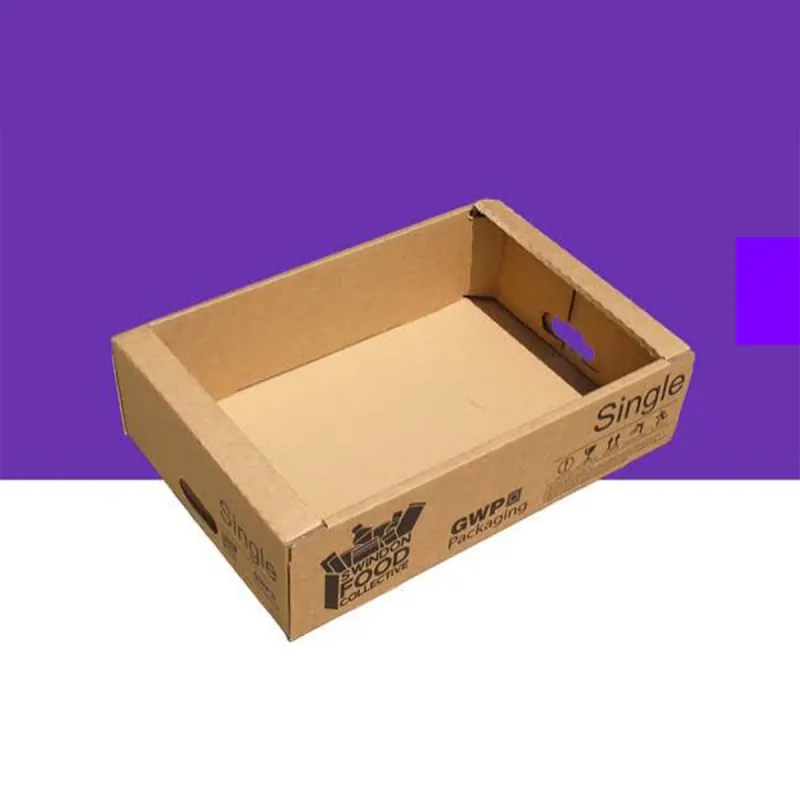
Starting from $0.30 per tray, with a minimum order of 100 and free shipping. Tell us the tray and the quantity and we reply within one working day.
A tray of brisket, sausage, ribs, sides and bread is a heavy object, it is wet with rendered fat and sauce, and it is frequently carried from a counter to a picnic table by somebody holding a drink in the other hand. That combination — weight, grease and one-handed carrying — is close to the hardest case for a board tray.
The specification that follows is fluted board rather than folding, a grease-resistant food-contact face without exception, and depth sized for the sides as well as the meat. Where trays are carried any distance, reinforced hand holes are worth the space they take out of the print area.
Deep fluted trays with a grease-resistant face, sized for a full plate with sides. Often the single highest-volume line in a Texas operation.
Taco holders, nacho trays with dip wells, and combination trays that carry a main plus rice and beans in one container.
College and professional sports are a substantial trade here, and the carrier tray is what sets the transaction value on a concourse.
Boil and shellfish formats along the coast, which need a genuine moisture barrier rather than a grease-resistant face alone.
Texas summers affect stored packaging more than most operators expect. Board held in an unconditioned store room or a trailer through a hot, humid stretch can lose stiffness before it is ever used, and coatings behave differently at high temperatures.
Store stock in the coolest, driest space available, keep it in its cartons until needed, and order in quantities you will use within a reasonable period rather than holding a year of stock through a summer.
Chosen against the requirements described above, not as a general catalogue listing.
A deli tray takes more punishment than most food packaging.
View tray & get pricing →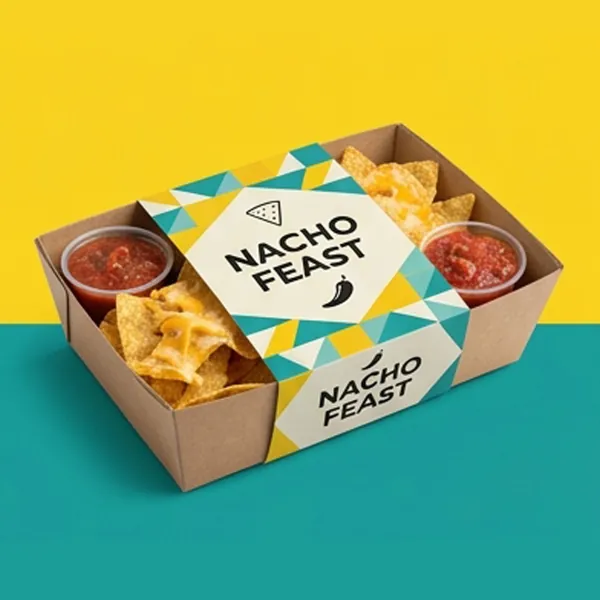
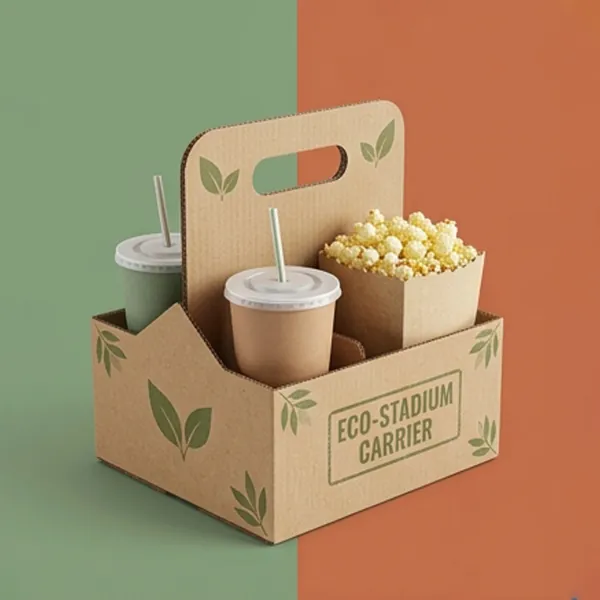
A stadium carrier has to be usable by somebody walking up concrete steps in a crowd, holding a phone, wearing a coat, in the dark.
View tray & get pricing →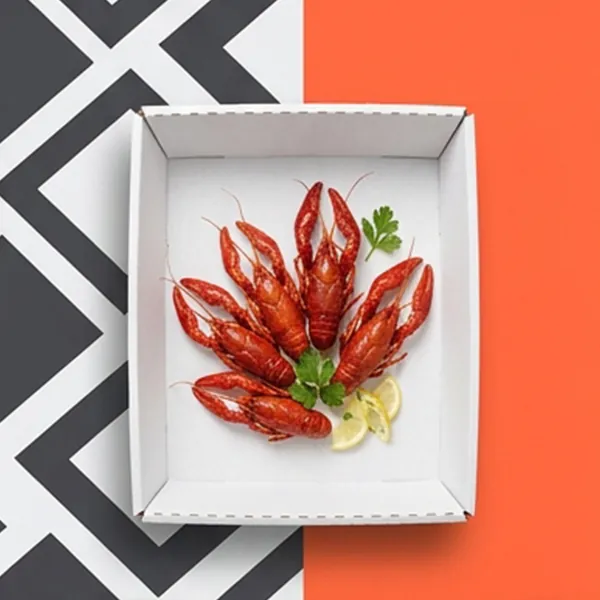
A crawfish tray carries several pounds of hot, wet, seasoned shellfish, often with corn and potatoes, straight out of a boil.
View tray & get pricing →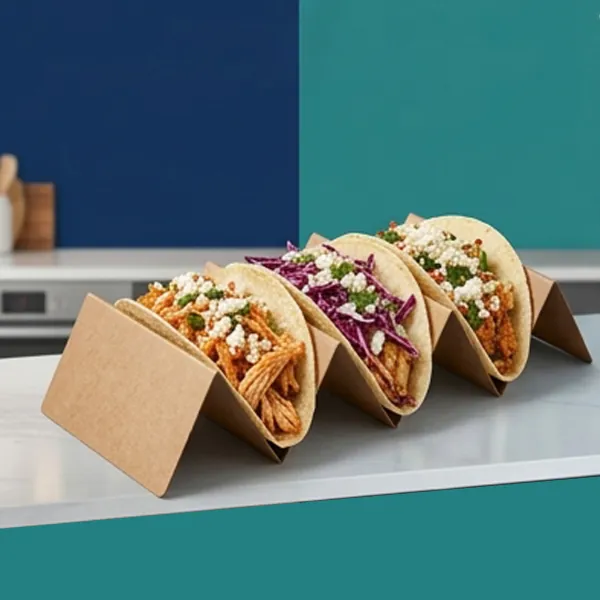
A taco holder does one thing: it stops tacos falling over.
View tray & get pricing →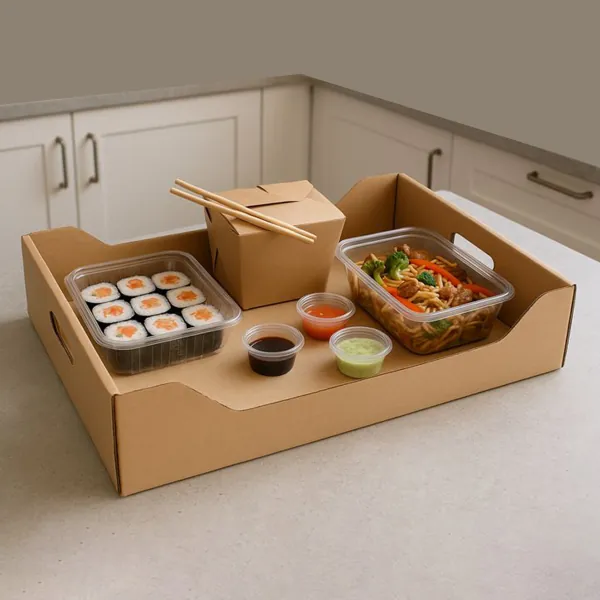
Corrugated trays exist for one reason: a loaded tray that has to be picked up from the middle without folding in half.
View tray & get pricing →A deep fluted tray with a grease-resistant food-contact face, sized for the meat and the sides together. Fat and sauce go into untreated board within minutes, and folding board of any caliper will flex under a full plate.
If customers carry loaded trays any distance, yes. They need reinforced walls to survive the load, and they take space out of your print area, so decide before artwork rather than after.
That needs a genuine moisture barrier rather than grease resistance alone — hot, wet and heavy at once is the hardest case for board. See the crawfish tray for how we specify it.
It can. Board takes on moisture from humid air and loses stiffness, and coatings behave differently when hot. Store stock in the coolest dry space you have and avoid holding a full year of stock through a Texas summer.
In our experience, consistently. A tray sized from a national average tends to come up short here, which is why we size from your actual portions rather than a nominal figure.
Yes. The carrier tray is the highest-leverage item — it sets how much one customer can carry, and therefore buy, at the busiest moment of an event. Cup holes have to be cut to your actual cups.
Yes. A combination tray carries a main plus rice and beans in one container, turning three containers into one and speeding up the counter. Full-height dividers and a treated face keep wet beans away from tortillas and chips.
Fluted board graded for the full loaded weight, often heavier than a national average suggests. Send the weight of your heaviest family pack with sides, and we specify a grade with margin; our guide to kraft versus corrugated trays explains the difference.
Yes. Volunteer crews do best with simple lock or pre-glued carriers that fold one way only. Carriers ship flat, so fold a batch before the gates open, and cut the apertures to the cups you actually serve.
A donut tray with a lid or dome, sized so a dozen sit in one layer without touching, plus a grease-resistant face for glazed or filled items. Plain custom sizes are a sensible first order before you add print.
Starting from $0.30 per tray, with a minimum order of 100 and free shipping. Production takes 7 to 10 business days after proof approval and payment, then 3 to 7 business days in transit.