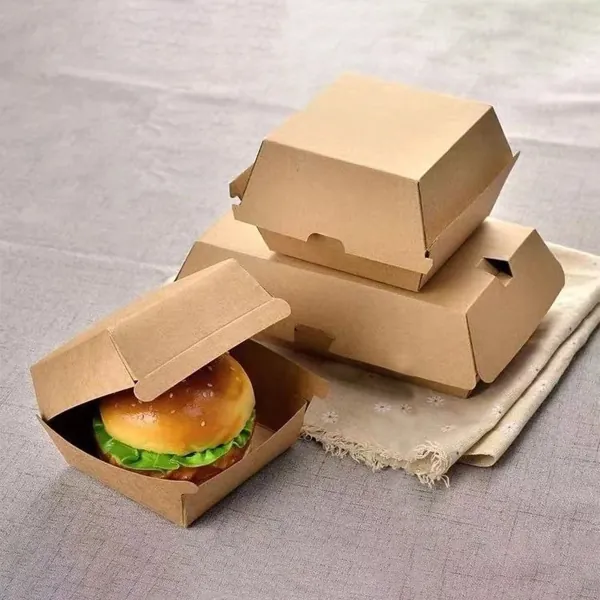
Burger Clamshell Tray
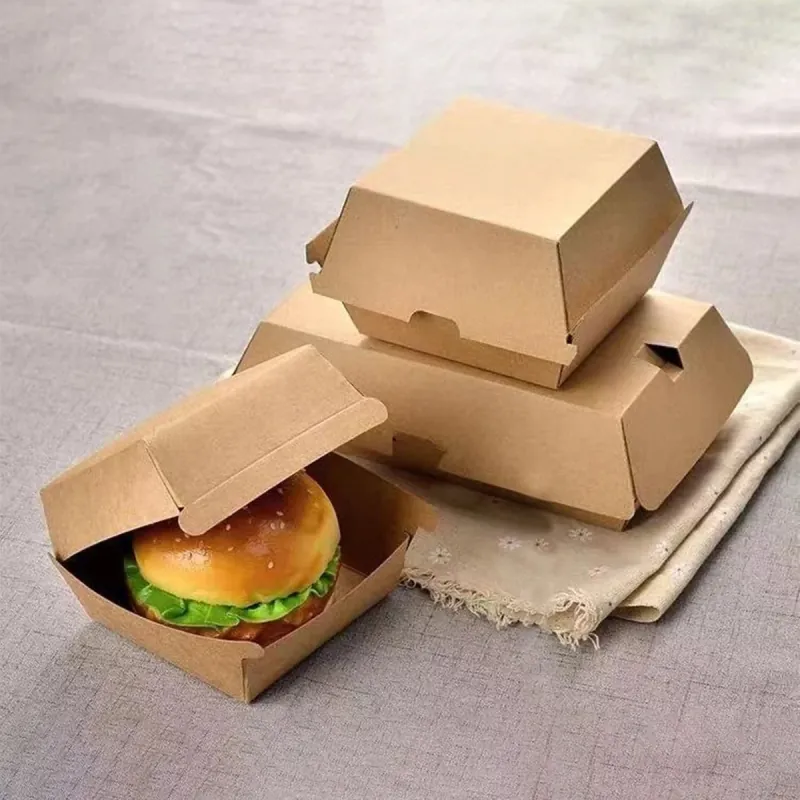
A burger clamshell is a hinged box that closes around a burger, and its whole purpose is to stop the build collapsing between the pass and the customer.
View tray & get pricing →Custom food packaging · US · UK · Canada · Australia
Industry guide
Restaurants have quietly become packaging businesses. A dining room that also runs delivery, collection and third-party platforms is putting its food into containers for a substantial share of its covers, and those containers determine what the customer experiences at the other end.
The gap between a restaurant that specifies its packaging and one that buys whatever the wholesaler stocks is visible in every delivery review.
Describe the operation and roughly how many trays you get through. We come back with the formats that fit, with pricing — usually within one working day.
Almost every complaint about delivered restaurant food comes down to one physical process: hot food in a closed container produces steam, steam condenses, and condensed water softens anything crisp. Batter, pastry, fried potato, bread and toasted items all fail the same way for the same reason.
The fixes are unglamorous and effective. Vent anything closed that contains fried food. Keep wet elements in a separate compartment. Send sauces in pots rather than over the food. Package the crisp element in an open or vented container even if the rest of the meal is sealed. None of these cost much, and together they change what arrives at the door.
If one dish drives your reputation, it deserves a container designed for it rather than the nearest stock size. It is also the dish most likely to be photographed.
The platform owns the customer relationship and the branding. Your packaging is often the only thing of yours that reaches the table.
A divided tray for a mixed sides order looks considered where three separate containers look like a supply problem.
Board trays for bar snacks and shared plates are cheaper than crockery to replace and give you a branding surface crockery cannot.
Order your own delivery, from your own restaurant, at your busiest hour. Then check:
Most restaurants score two or three out of five on this, and every one of the failures is a packaging specification rather than a kitchen problem.
| Menu item | Format |
|---|---|
| Burgers | Clamshell sized to your tallest build |
| Fried sides and fries | Open scoop or vented carton |
| Sharing plates and bar snacks | Shallow appetiser tray |
| Rice and curry meals | Compartment tray with a sealed lid |
| Wings and hot deli items | Deli tray with a grease-resistant liner |
| Desserts | Matt dessert platter |
Picked for the specific demands described above rather than as a general list.
A burger clamshell is a hinged box that closes around a burger, and its whole purpose is to stop the build collapsing between the pass and the customer.
View tray & get pricing →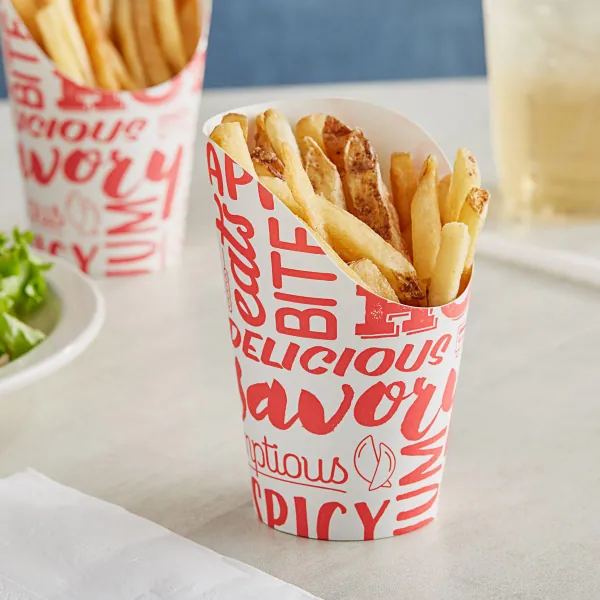
The fry scoop exists because of a specific piece of ergonomics: a member of staff should be able to fill it from a fryer basket with one hand, in one mo…
View tray & get pricing →
A deli tray takes more punishment than most food packaging.
View tray & get pricing →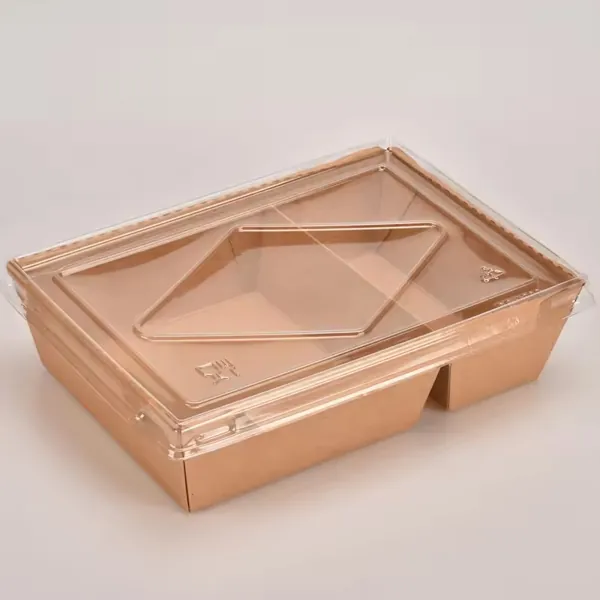
The lidded compartment tray is the format that meal-prep businesses, bento services and premium takeaway have converged on.
View tray & get pricing →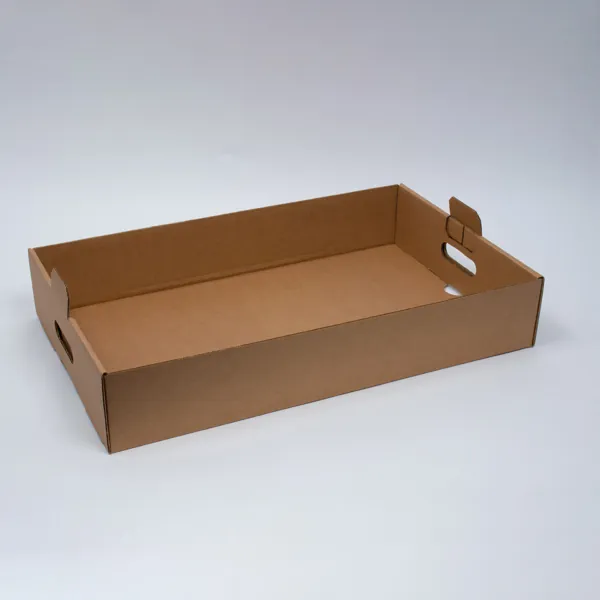
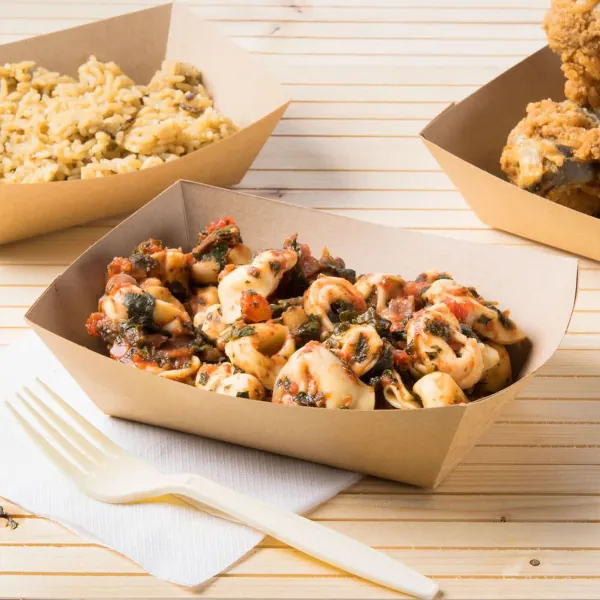
The kraft paper food tray is the one shape that every counter ends up buying.
View tray & get pricing →Vent anything closed that contains fried food. Steam is what softens batter and fries, and a sealed container guarantees it. Die-cut vents cost almost nothing and change what the customer actually eats.
It depends on how fast you use stock rather than how many sites you have. A busy single site can get through enough of one format in a quarter to make a printed run cost a few cents per unit. Ask for pricing at your real usage.
Sauce in sealed pots, not poured over the food or into an open compartment. A fitted lid will not hold liquid if the bag tips. If sauce must be in the container, that means film sealing and a compatible rim.
Rarely. Eat-in packaging can be open and simple because the food is eaten immediately. Delivery packaging has to manage steam, movement and time. Running two formats usually costs less than the complaints from compromising on one.
That is the point of ordering custom. Send us the plated dish, or photographs of it beside a ruler, and we will build the container around it rather than making the dish fit a stock size.
For anything fried or heavily sauced, yes. Untreated board darkens within minutes and it is the first thing a customer notices when they pick the container up. It costs very little.
Your name, and a reason to order direct next time. On a platform order, your packaging is often the only thing that reaches the customer that is yours — it is the cheapest direct-ordering advertisement you will ever run.
Yes — the United Kingdom, Canada and Australia as well. Portion conventions and menu formats differ between those markets, so we size from your actual dishes rather than assuming a regional standard.
Send the food, the volumes and the country you take delivery in. We reply with formats, material options and a full quote including freight.