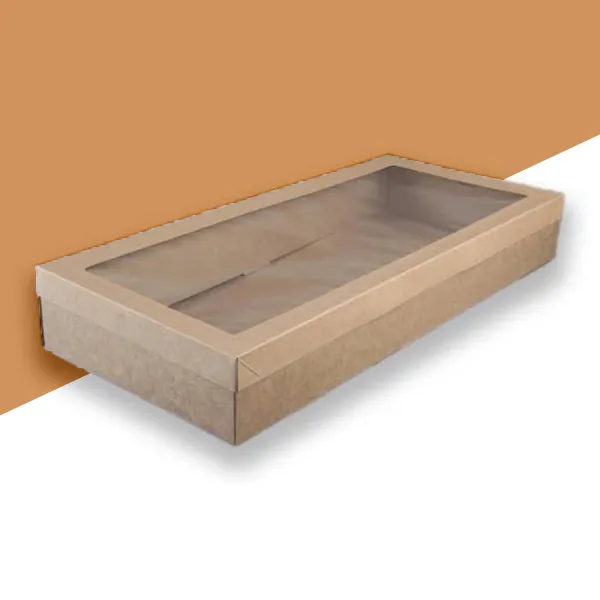
Catering Tray with Lid
The lidded catering tray is the format that most drop-off caterers standardise on, because it is the only one that solves the whole journey.
View tray & get pricing →Custom food packaging · US · UK · Canada · Australia
Food tray category — 5 trays
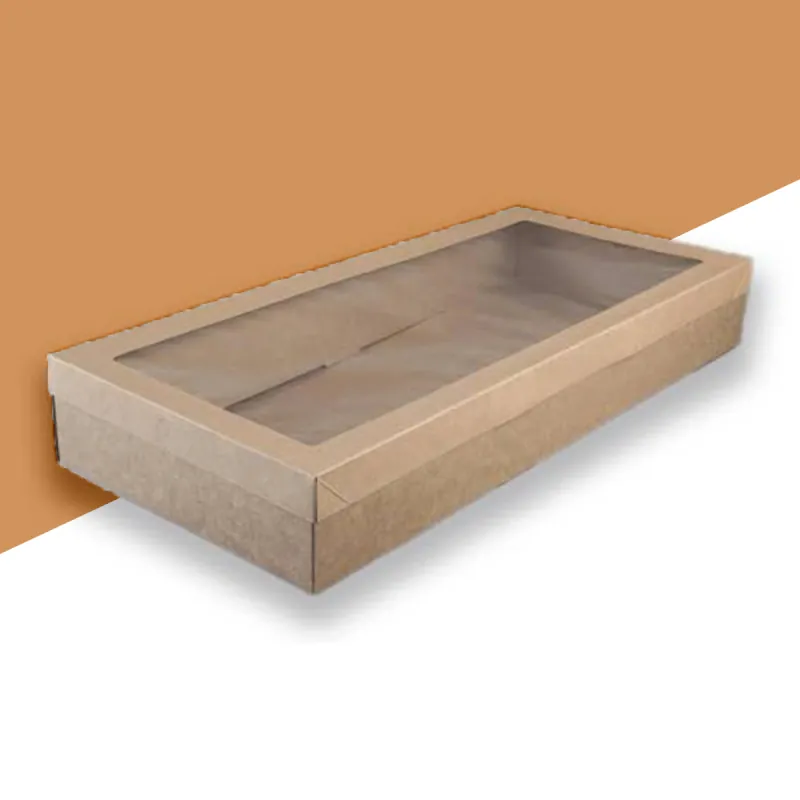
A catering tray has a harder job than a service tray. It is loaded in a kitchen, closed, carried, driven, carried again and then opened in front of the customer — and it has to look composed at the end of that. That means the lid has to stay on, the base cannot flex under a full load, and the print has to survive being handled with wet hands.
The trays in this section are built around that journey. Most take a fitted lid, several have integrated hand holes, and all of them can be printed so the client sees your name at the moment the lid comes off.
Tell us which of the catering trays you need, the size and roughly how many. We reply with a full quote, usually within one working day.
01 — The range
Lidded trays, party trays and carriers built to survive a van, a lift and a boardroom table. Every one is made to order, so treat the descriptions as starting points rather than fixed specifications.
The lidded catering tray is the format that most drop-off caterers standardise on, because it is the only one that solves the whole journey.
View tray & get pricing →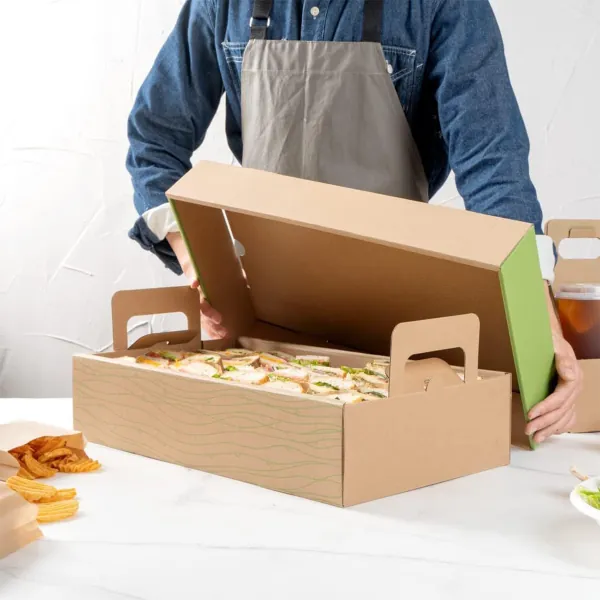
This is the working catering tray: fluted, deep, strong enough to hold several full foil pans, and usually built with a raised header board that turns t…
View tray & get pricing →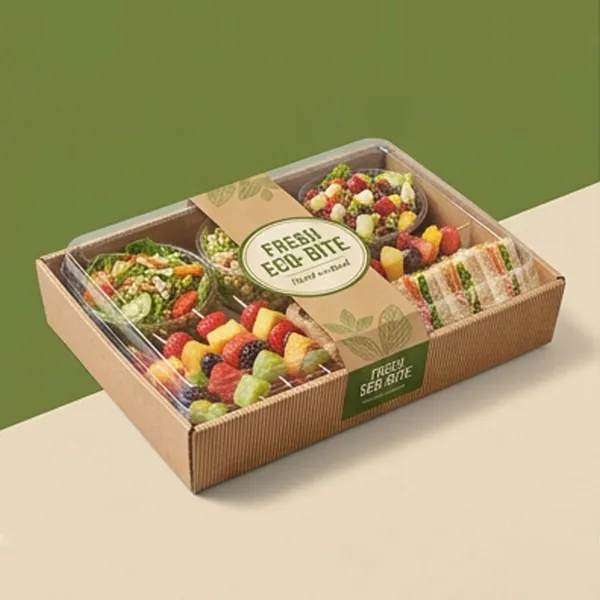
A party tray is a divided platter under a clear lid.
View tray & get pricing →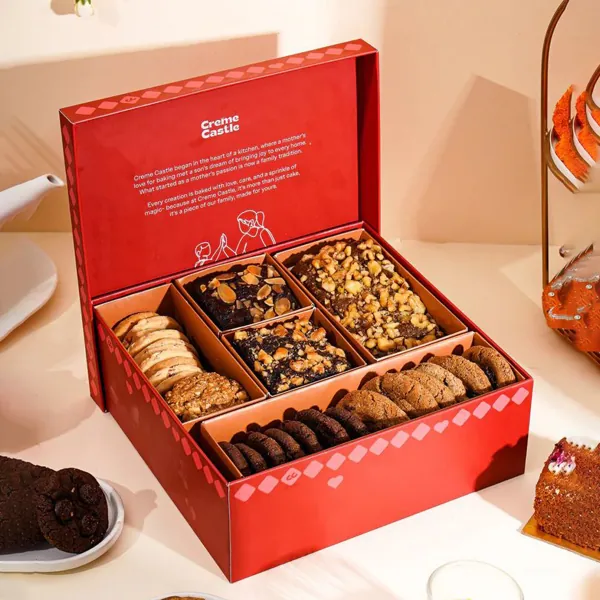
Rigid platters are what you use when the packaging is part of the price.
View tray & get pricing →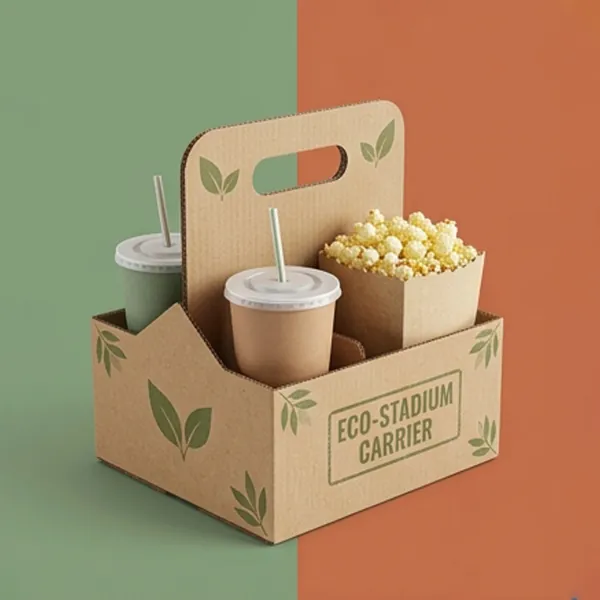
A stadium carrier has to be usable by somebody walking up concrete steps in a crowd, holding a phone, wearing a coat, in the dark.
View tray & get pricing →02 — In detail
Work through these in order and the tray tends to come out right the first time.
Decide how many covers one tray serves. Twelve sandwich halves, twenty canapés, six main portions — the number sets the internal footprint before anything else.
Measure your tallest garnish, not your average one. A lid that presses on a filled roll ruins the presentation you spent the morning building.
A fitted corrugated lid protects and stacks. A clear dome sells the contents at a buffet. Film is cheapest but shows every fingerprint. Pick for the moment the customer first sees it.
Hand holes change the wall construction. If a driver carries two stacked trays up a stairwell, say so — it changes the board grade we specify.
Once the structure is fixed we send a dieline showing exactly where the fold lines and hand holes fall, so your logo does not end up creased in half.
A fitted board lid is the strongest and the cheapest per unit, and it stacks — which matters when a driver has six trays in a van. Its weakness is that the customer cannot see what is inside, so labelling has to do the work.
A clear dome sells the food. On a buffet line or a retail chiller it lifts perceived value noticeably, which is why domed crudité trays and grazing boards use them. Domes cost more, take more storage space and do not stack as densely.
Film sealing is the flattest and the lightest, and is the usual answer for supermarket-style catering platters. It needs a compatible rim, so it is a decision to make before the die is cut rather than afterwards.
Catering packaging is one of the few places where print genuinely converts, because the tray is opened in front of a room full of potential customers.
For a full breakdown of file formats, bleed and colour setup, see the artwork guide before your designer starts.
The difference between these five is mostly about the journey the food takes before anybody sees it.
03 — Questions
There is no standard — it depends entirely on the portion. As a working guide, a tray around 18 by 12 inches typically presents food for eight to twelve people at buffet portions. Tell us the covers per tray and the food, and we will suggest a footprint rather than sell you a size you then have to work around.
A properly specified fitted lid with the right overlap will. Problems almost always come from a lid that is too shallow for the tray or a board grade that flexes when the base is loaded. If you have had lids pop off before, send us the tray you use now and we will tell you which of the two caused it.
Yes, if the walls are specified for it. Stack strength comes from the corner posts and the board grade, not from the lid. Tell us how many loaded trays go on top of each other and we will build the wall to carry that load with margin.
We do. Hand holes are die-cut into the side walls and reinforced so they do not tear under a full load. Bear in mind they take space out of your print area, so it is worth deciding on them before artwork is finalised.
Board catering trays are designed for ambient and chilled food. Hot food generates steam, which softens board and spoils presentation. If you are transporting hot service, tell us and we will specify a moisture-resistant construction or point you towards a format that handles it better.
Usually yes, and it is often cheaper than two separate runs because the artwork and setup are shared. The constraint is that the two sizes need to run on compatible board. Ask for both in one quote and we will show you the combined position.
Allow time for a dieline round, artwork approval and production. A first custom catering tray with a fitted lid is a slower job than a plain service tray because there are two tools involved. We give you real dates once the structure is signed off.
Yes. The lid and the base are separate components with separate tooling, so they can carry entirely different artwork. Many caterers put branding on the lid and practical information — reheating, allergens, storage — on the base.
Yes. Catering trays ship to the United States, United Kingdom, Canada and Australia. Because lidded trays are bulky, freight is a meaningful part of the landed cost on long-haul routes, so we quote it explicitly rather than folding it into a vague per-unit figure.
Describe the food, the portion and the setting. We will tell you which tray in this range fits, and say so plainly if the answer is a format from somewhere else on the site.