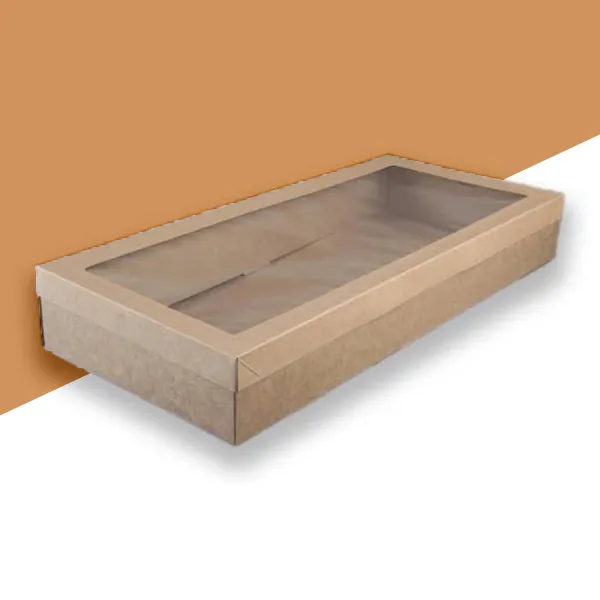
Catering Tray with Lid
The lidded catering tray is the format that most drop-off caterers standardise on, because it is the only one that solves the whole journey.
View tray & get pricing →Custom food packaging · US · UK · Canada · Australia
Catering Trays
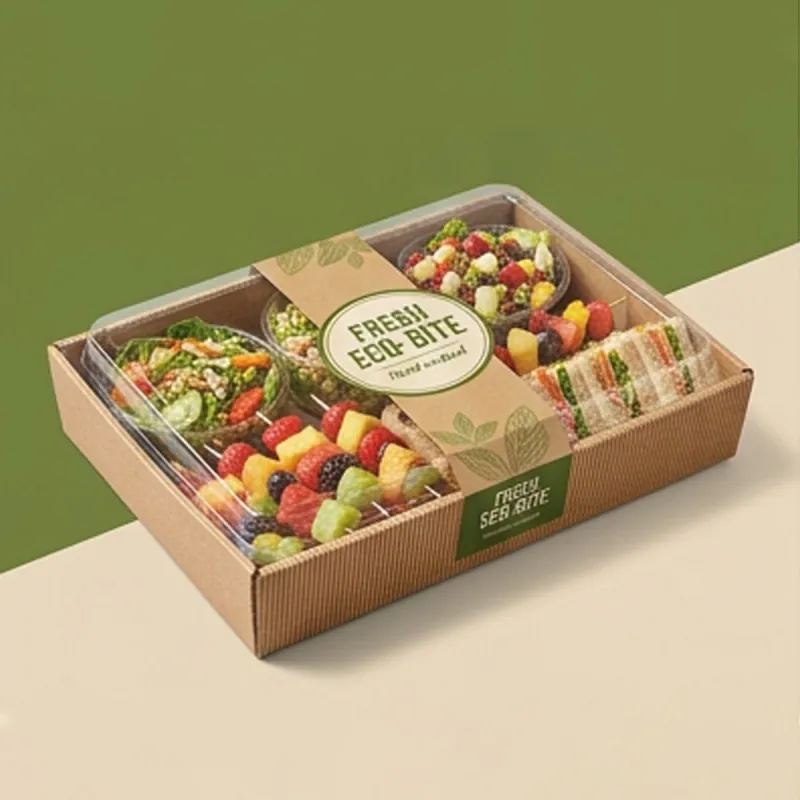
A party tray is a divided platter under a clear lid. The divisions turn a pile of mixed food into a composed selection, and the lid lets the customer see it without touching it — which is the entire commercial argument for the format.
It sells well in retail chillers, it works for corporate grazing orders, and it has become the standard shape for the mixed sharing boxes that dominate event catering.
Pricing starts from $0.30 per tray
The unit price depends on the size, board, printing, finishing, quantity and delivery country, so every quote is worked out for your specification rather than taken from a list.
Send the size and the run length. We reply with pricing, material options and a production date — usually within one working day.
01 — Specification
Every element below is set when we quote. Nothing here is a fixed catalogue entry — if a line does not match what you need, say so and we will change it.
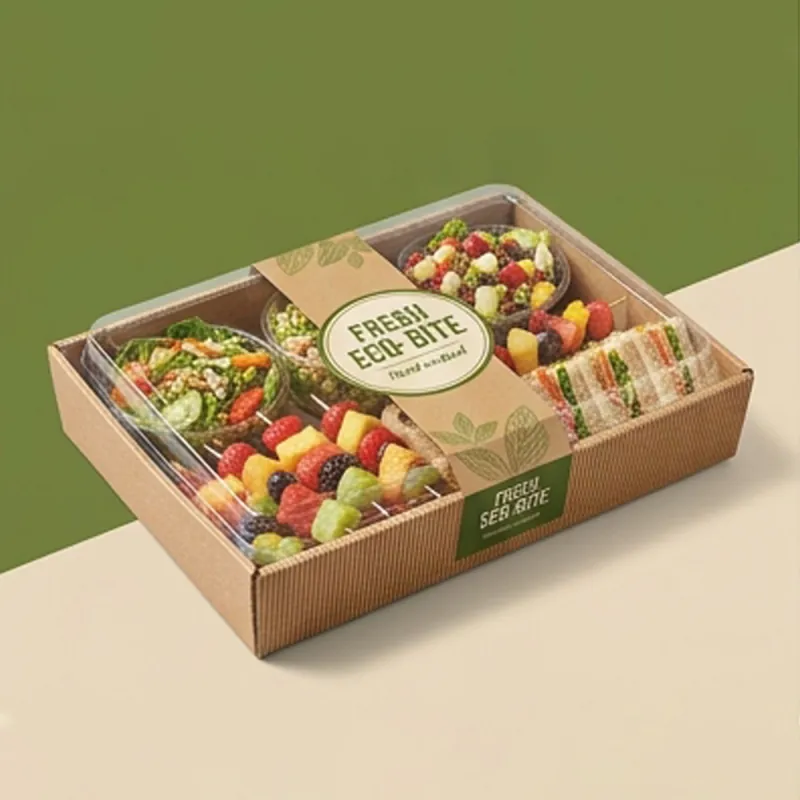
02 — Build the spec
The same five questions we would ask on a phone call, with the corrugated party tray with lid already selected. You get a properly detailed brief at the end, which is what makes a first quote accurate rather than approximate.
Prefer the full builder with a live sketch? Open the tray designer.
03 — In detail
Compartment layout is a merchandising decision as much as a structural one. Three approaches work, and they suit different products.
Six or nine identical compartments in a regular grid. Reads as generous and orderly, is the easiest to fill consistently, and photographs well. Best where every item is roughly the same size — canapés, cupcakes, sliders.
One large compartment for the main item and several smaller ones around it. Works when the selection has an obvious centrepiece — a wheel of cheese, a dip, a main protein — and lets you signal value with the size of the hero section.
Three or four full-width bands rather than a grid. Suits items that are laid in rows: sandwich halves, sushi, wraps, biscuits. Filling is faster because staff work along a row rather than placing items individually.
Depth is set by the tallest item, and a common error is to size for the average.
| Contents | Typical clearance needed | Watch out for |
|---|---|---|
| Canapés and small bites | About 30–40 mm | Garnishes stand taller than the base item |
| Sandwich halves stood upright | About 60–70 mm | Filling adds height at the top of the cut edge |
| Cupcakes and iced items | About 70–90 mm | Icing is the tallest point and the easiest to damage |
| Mixed grazing selection | About 50–60 mm | Cheese wedges and grapes are the usual height offenders |
04 — Nearby
Chosen because operators who buy the corrugated party tray with lid usually need one of these in the same order, not because they happen to sit in the same category.
The lidded catering tray is the format that most drop-off caterers standardise on, because it is the only one that solves the whole journey.
View tray & get pricing →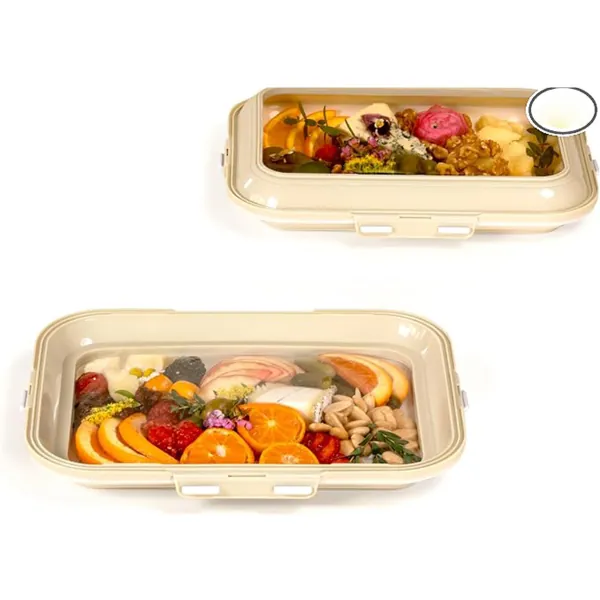
A crudité platter has a problem that other platters do not: the food is meant to stand up.
View tray & get pricing →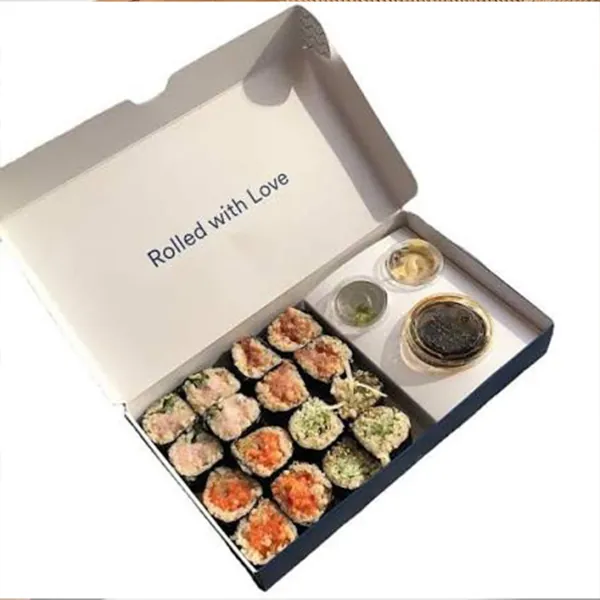
Grazing is a business where the packaging is most of what gets photographed and much of what justifies the price.
View tray & get pricing →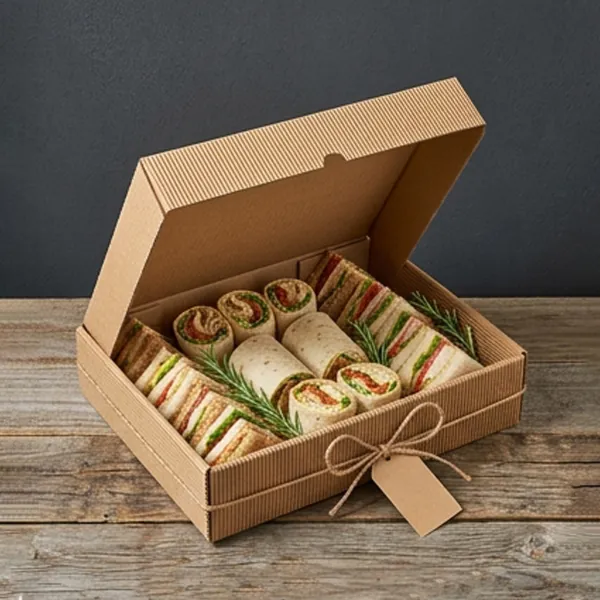
The corporate sandwich platter is one of the highest-volume formats in catering, and the specification is almost entirely determined by how you cut your…
View tray & get pricing →05 — Questions
Between four and nine covers almost every use. Fewer than four does not read as a selection; more than nine makes each portion too small to be satisfying. Build your selection physically first and let the food decide.
Yes, and it is often better. A large hero compartment with smaller supporting ones signals where the value is, and it suits selections built around a centrepiece rather than an even mix.
A clear fitted lid, in almost all cases — the arrangement is the product and hiding it defeats the purpose. A board lid with a window is a cheaper alternative that keeps some visibility while adding print area.
Yes, which is one of its practical advantages over an open platter. Tell us the stack height so we can specify the walls to carry it without pressing on the food below.
Yes, either printed directly on the tray between the compartments or as separate applied labels. Separate labels are more flexible for a changing selection; printed is cheaper at volume for a fixed range.
With a moisture-resistant construction, yes — it is one of the main uses. Condensation is the thing to manage: pack product cold, and expect some misting on the lid if warm product goes in.
Compartments sized close to the items, and a lid that sits down properly. Movement almost always means compartments that are too generous for the contents, which is worth checking with a loaded sample before committing.
A new compartment layout means a new cutting die, so it is not a per-order change. If you expect to vary the selection, design a layout that accommodates the range rather than optimising for one specific mix.
Send the dimensions, the quantity and the country you want it delivered to. We come back with a full quote — material, print, finishing, freight and a production date.