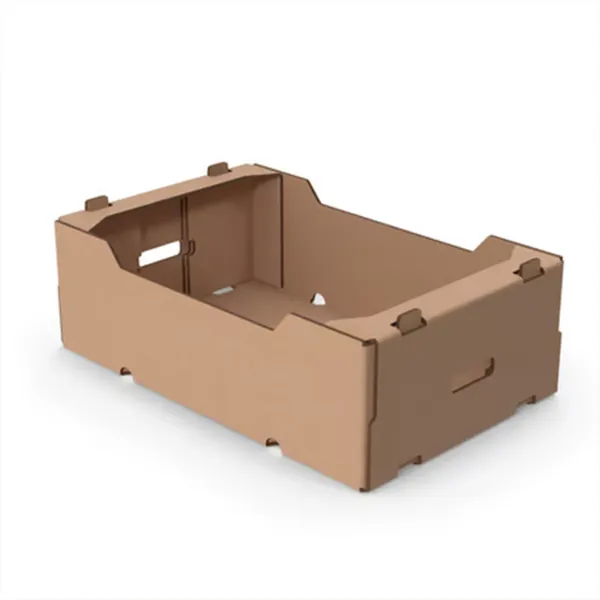
Corrugated Veggie Platter
Vegetables need two things from a tray that most food packaging does not have to provide: airflow and stack strength.
View tray & get pricing →Custom food packaging · US · UK · Canada · Australia
Charcuterie & Grazing Boards
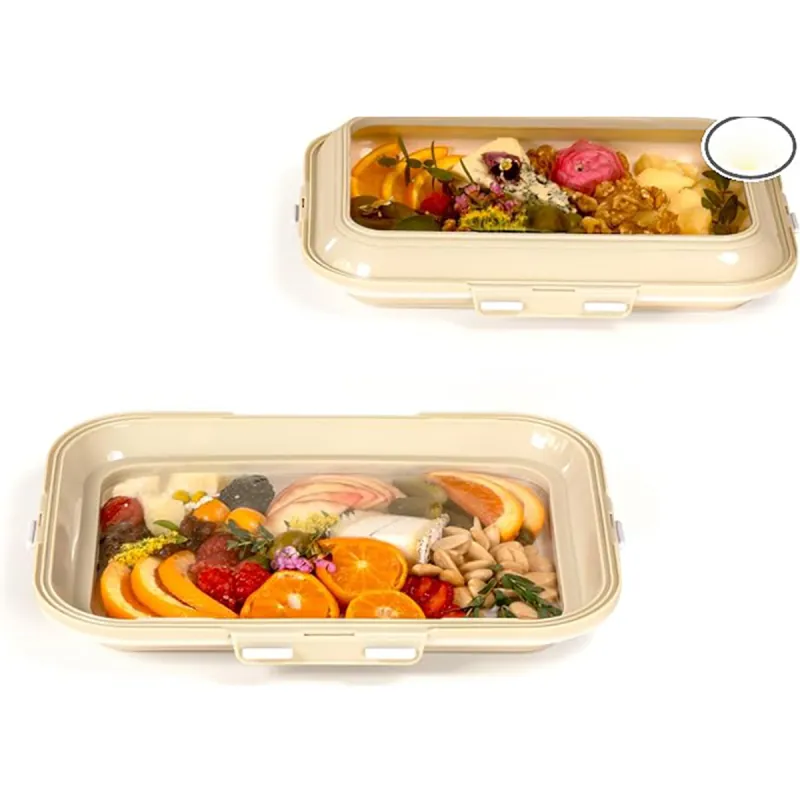
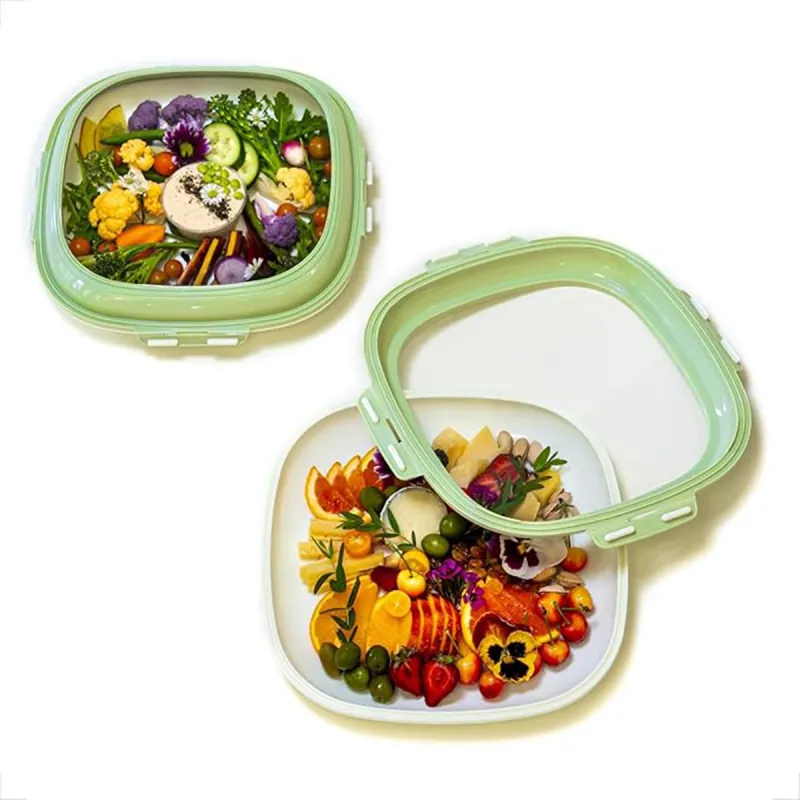
A crudité platter has a problem that other platters do not: the food is meant to stand up. Carrot and celery sticks arranged upright look abundant and deliberate; the same sticks lying flat look like leftovers. Everything about this format is aimed at keeping them vertical.
That means compartments with the right depth, a dip well that does not swamp the vegetables, and a dome tall enough to clear the sticks without pressing them over.
Pricing starts from $0.30 per tray
The unit price depends on the size, board, printing, finishing, quantity and delivery country, so every quote is worked out for your specification rather than taken from a list.
Send the size and the run length. We reply with pricing, material options and a production date — usually within one working day.
01 — Specification
Every element below is set when we quote. Nothing here is a fixed catalogue entry — if a line does not match what you need, say so and we will change it.
02 — Build the spec
The same five questions we would ask on a phone call, with the crudite tray with dome already selected. You get a properly detailed brief at the end, which is what makes a first quote accurate rather than approximate.
Prefer the full builder with a live sketch? Open the tray designer.
03 — In detail
Sticks stand because the compartment supports them below their centre of gravity. Too shallow and they fan outward and fall; too deep and they disappear and the platter looks half-empty. Somewhere between a third and a half of the stick length is the working range.
Narrow enough that the sticks pack together and hold each other up. A wide compartment with a few sticks in it will always look sparse and the sticks will lean.
Measured from your longest stick standing in the deepest compartment. Get this wrong and the dome flattens the arrangement the moment it goes on — the most common complaint on this format.
| Option | Best for | Trade-off |
|---|---|---|
| Central well, filled directly | Event and buffet service | Needs a moisture-resistant surface; no extra component |
| Central well holding a pot | Retail and chilled display | Extra component, but a sealed pot gives shelf life |
| Corner well | Rectangular platters and smaller packs | Less visually central; more room for vegetables |
| Two wells | Two-dip offerings | Reduces vegetable area noticeably on small platters |
A crudité platter is inexpensive to make and sells at a price that has very little to do with the cost of the vegetables. What creates that gap is presentation: an arrangement that looks abundant, generous and deliberately composed, visible through a dome.
That makes the packaging the profit centre rather than a cost. A platter where the sticks stand up properly and the dome is clear and well-fitted will outsell a technically identical product in a poorly specified tray by a margin that is easy to underestimate.
04 — Nearby
Chosen because operators who buy the crudite tray with dome usually need one of these in the same order, not because they happen to sit in the same category.
Vegetables need two things from a tray that most food packaging does not have to provide: airflow and stack strength.
View tray & get pricing →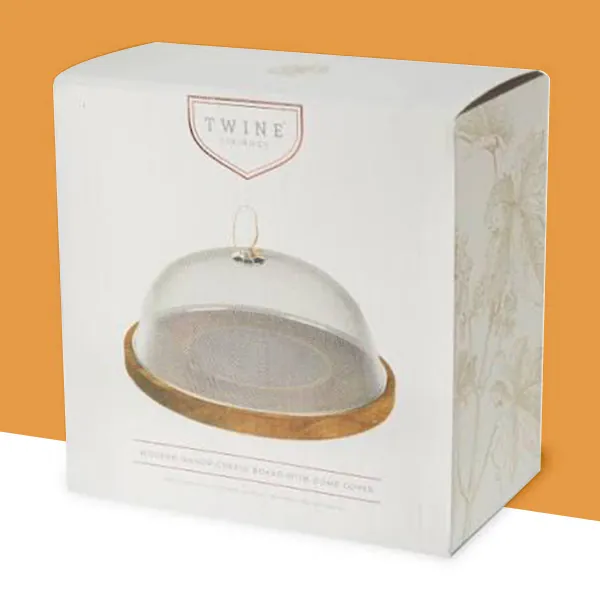
A dome turns a grazing board into a product you can put on a shelf.
View tray & get pricing →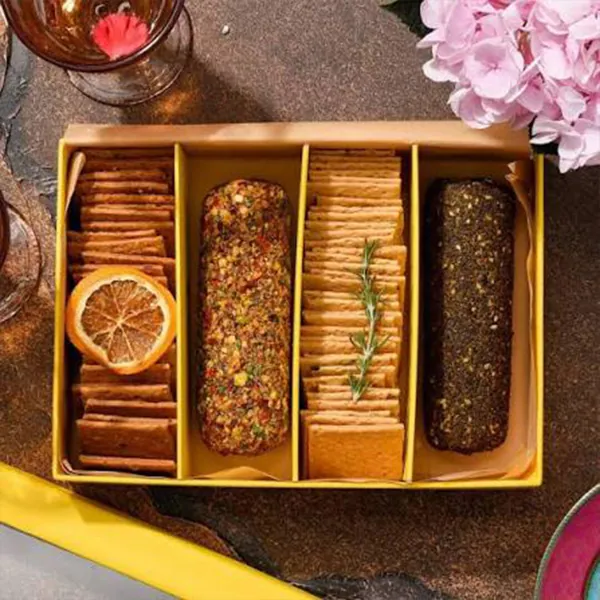
The cheese and cracker tray has one specific enemy: moisture.
View tray & get pricing →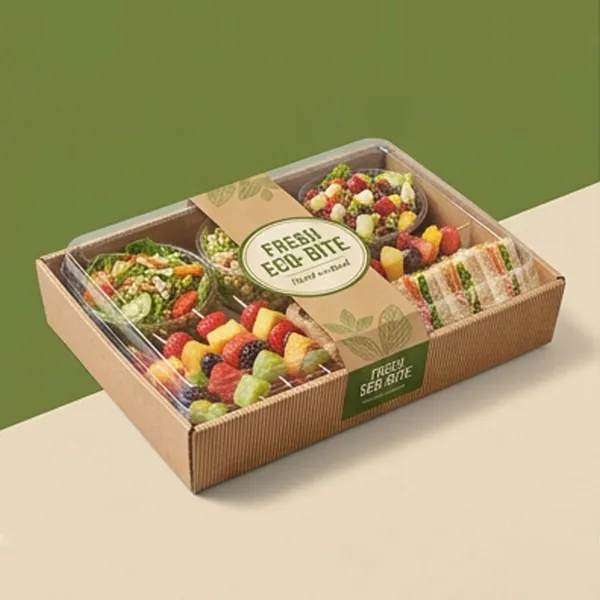
A party tray is a divided platter under a clear lid.
View tray & get pricing →05 — Questions
Between about a third and a half of the stick length, so the sticks are supported below their centre of gravity. Shallower and they fan out and fall; deeper and the platter looks half-empty.
Measure your longest stick standing in the deepest compartment and add clearance. A dome that presses on the arrangement flattens it immediately, and it is the most common problem we are asked to fix on this format.
A pot for retail, because it gives you a seal and a shelf life. Directly into the well for event and buffet service, where it is eaten the same day and one fewer component is worth having.
With a moisture-resistant construction, yes. Cut vegetables release moisture and condensation forms as the platter changes temperature, so plain untreated board will soften over a multi-day shelf life.
Warm product going into a sealed dome, or a platter moving from a chiller into a warm room. Pack fully chilled. Where misting persists on a retail line, anti-fog dome material is available at extra cost.
Yes, though on a small platter two wells noticeably reduce the vegetable area and the product starts to look mean. On a larger event platter it works well.
Moulded fibre gives properly formed deep compartments and handles moisture well. Moisture-resistant board is cheaper and works where the compartments are shallower. Which is right depends on your compartment depth and your shelf life.
Not densely — the dome sets the pitch. Plan chiller space and van space around the domed height rather than the tray height.
On board, yes. On moulded fibre, printing is limited and an applied label or a band around the dome base is a better result. Retail versions need a flat panel for the barcode and legal information either way.
Send the dimensions, the quantity and the country you want it delivered to. We come back with a full quote — material, print, finishing, freight and a production date.