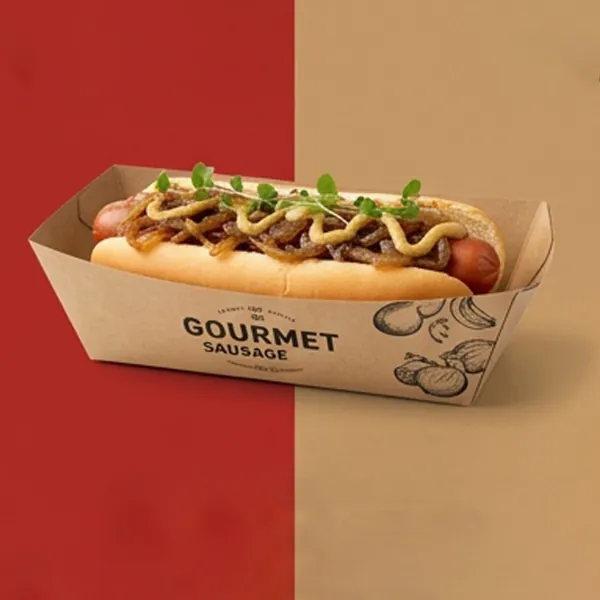
Custom Printed Hot Dog Tray
A hot dog tray is a small piece of packaging with an unusually large branding opportunity.
View tray & get pricing →Custom food packaging · US · UK · Canada · Australia
Fast Food & Concession Trays
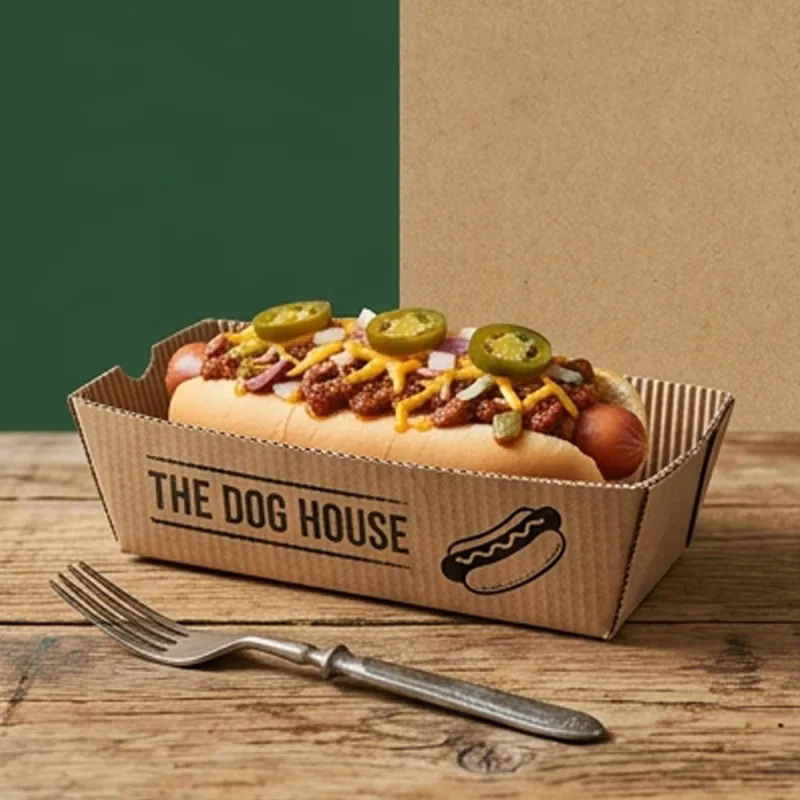
The hot dog tray is one of the oldest shapes in food packaging and it has barely changed, because it does not need to. A shallow open boat supports the bun along its length, keeps the toppings visible, and lets somebody eat it standing up with one hand.
What varies is the length, the depth and the board treatment — and those three, matched to your actual product, are the difference between a tray that works and one that customers wrestle with.
Pricing starts from $0.30 per tray
The unit price depends on the size, board, printing, finishing, quantity and delivery country, so every quote is worked out for your specification rather than taken from a list.
Send the size and the run length. We reply with pricing, material options and a production date — usually within one working day.
01 — Specification
Every element below is set when we quote. Nothing here is a fixed catalogue entry — if a line does not match what you need, say so and we will change it.
02 — Build the spec
The same five questions we would ask on a phone call, with the kraft hot dog tray already selected. You get a properly detailed brief at the end, which is what makes a first quote accurate rather than approximate.
Prefer the full builder with a live sketch? Open the tray designer.
03 — In detail
Length is measured from the bun, not the sausage. Buns vary noticeably between bakeries and between batches within the same bakery, so measure a dozen over a few days and size to the longest plus a little clearance. A tray that fits on average will be too short for part of your stock.
Depth is decided by your toppings. A plain dog with mustard needs almost nothing — the walls exist to stop it rolling. A loaded chilli-cheese dog with onions and jalapeños needs enough wall that the toppings stay on the dog rather than on the customer. If you serve both, size for the loaded one.
| Build | Suggested depth | Note |
|---|---|---|
| Plain dog with a condiment | Shallow, around 30 mm | Walls only need to stop it rolling |
| Dog with onions and relish | About 40 mm | Contains loose toppings on the sides |
| Chilli cheese dog | About 50 mm | Also needs a grease-resistant face |
| Loaded speciality dog | About 55–60 mm | Deep enough that the build stays on the sausage |
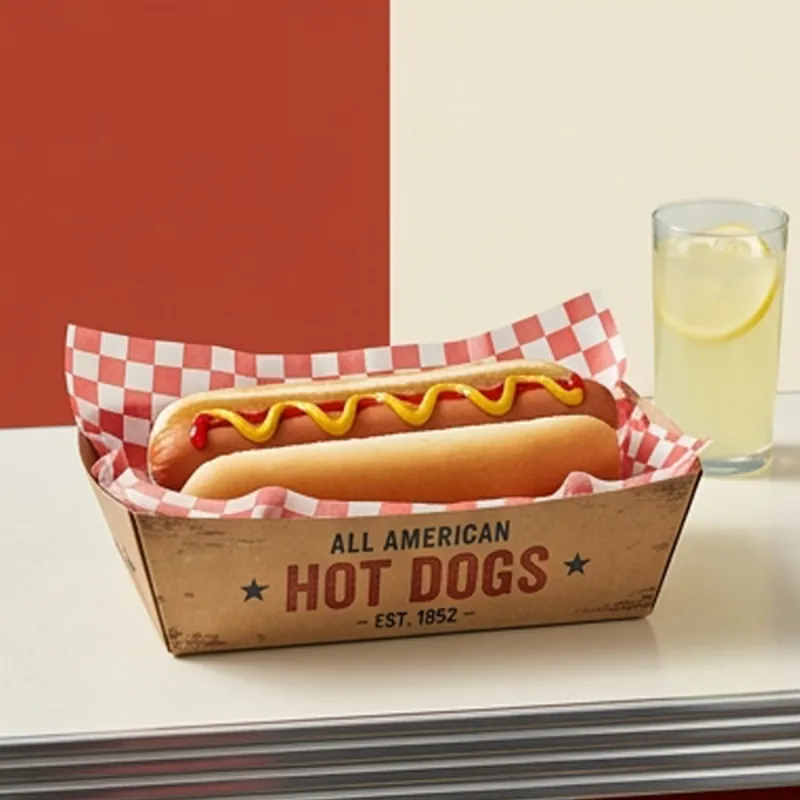
Plenty of operators run plain kraft trays permanently and it does not read as cheap. The brown board, the simple shape and the visible fold lines are a look, and it is the one most craft and street-food brands are aiming at when they commission a design.
The usual pattern is to start plain while artwork is developed and move to a single-colour print on the second order. The die is the same, so the only additional cost is plates.
04 — Nearby
Chosen because operators who buy the kraft hot dog tray usually need one of these in the same order, not because they happen to sit in the same category.
A hot dog tray is a small piece of packaging with an unusually large branding opportunity.
View tray & get pricing →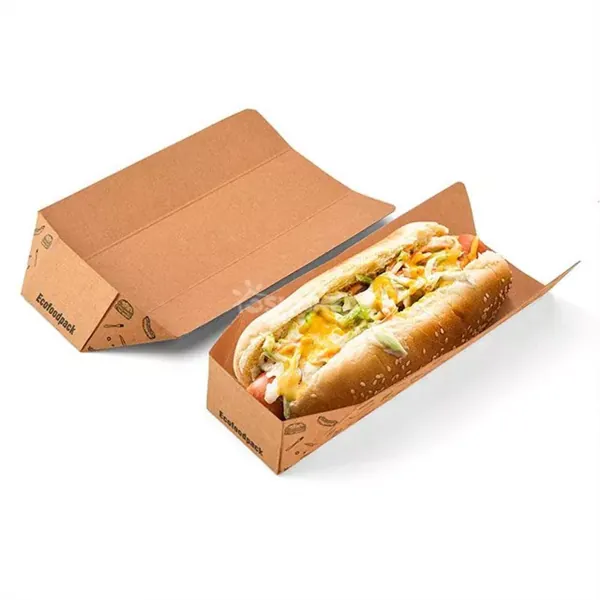
Corn dogs are eaten from a stick, which sounds like it removes the need for packaging entirely.
View tray & get pricing →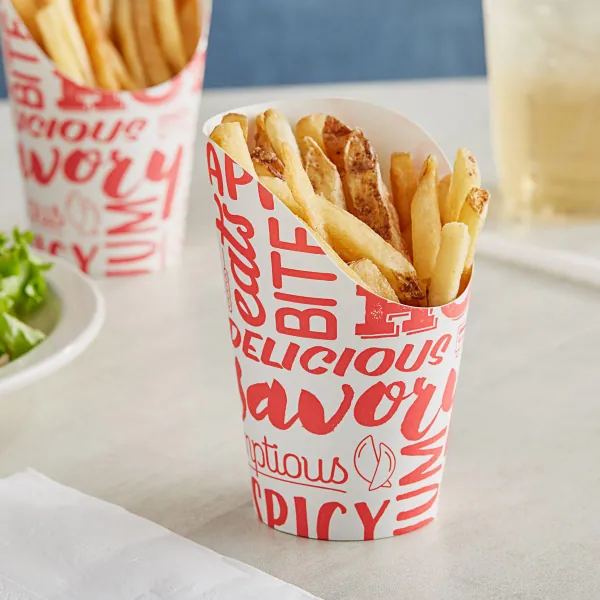
The fry scoop exists because of a specific piece of ergonomics: a member of staff should be able to fill it from a fryer basket with one hand, in one mo…
View tray & get pricing →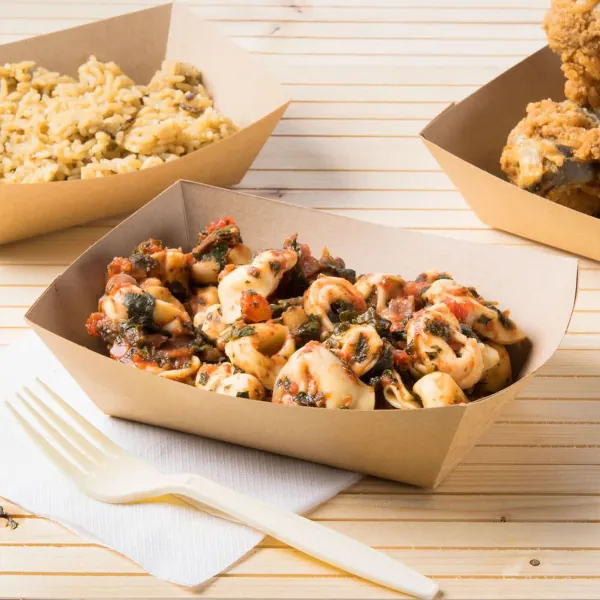
The kraft paper food tray is the one shape that every counter ends up buying.
View tray & get pricing →05 — Questions
Measure your bun rather than your sausage, take the longest of a dozen measured over several days, and add clearance. Bun length varies more between batches than most operators expect.
Shallow for a plain dog, around 50 mm for a chilli cheese build, and deeper still for loaded speciality dogs. If your menu spans both, size for the loaded one — a plain dog looks fine in a deeper tray, but a loaded one overflows a shallow one.
For chilli, cheese and sauced builds, yes. For plain dogs served immediately, plain board is usually fine. If trays sit under a heat lamp before service, specify the treatment regardless.
Yes — see the custom printed hot dog tray for the printed version. Structurally they are the same product, so you can run plain and printed from the same die.
Assembled trays nest partially, which is enough for the common stadium pattern of loading a rack of trays before a rush. Tell us if pre-loading matters and we will check the taper.
A couple of seconds each once practised. At very high volume, batch-assembling during quiet periods is more efficient than folding at the counter. Pre-glued versions exist but cost considerably more in freight.
Only if it is cut for one. A footlong needs a longer die and usually a heavier board, because the longer span means more flex under a loaded build. Tell us the full range you serve.
Yes, a wider footprint with a divider. It sells well because it removes a second container from the transaction. Tell us the fry portion size and we will proportion the two sections.
Plain uncoated kraft is paper and is widely accepted in paper streams where it is not saturated with food. A grease-resistant treatment changes that, and local rules differ. We state the construction so you can check it where the tray is used.
Send the dimensions, the quantity and the country you want it delivered to. We come back with a full quote — material, print, finishing, freight and a production date.