Resource guide
Choosing Trays for Hot and Greasy Foods
Why fried food ruins untreated board, how grease-resistant treatments work, and why venting matters more than sealing for anything that has to stay crisp.
Updated August 28, 2026 · About 8 minutes to read
Fried food is the hardest thing a paper tray has to hold. It is hot, it is oily, it produces large amounts of steam, and the customer expects it to still be crisp several minutes later. Three separate physical processes are working against you, and each has a different answer.
Three problems, three answers
Grease migration
Oil moves into paper fibre by capillary action. On untreated board it shows within minutes as a translucent dark patch that spreads outward from wherever the food sits. The answer is a grease-resistant treatment on the food-contact face, which slows the migration dramatically.
This is the most visible packaging failure in food service, and it is also among the cheapest to prevent.
Steam
Hot fried food releases water vapour. In an open container it escapes; in a closed one it condenses on the lid, drips back onto the food, and softens whatever coating you spent effort making crisp.
The answer is venting — die-cut apertures that let vapour out. This is the single biggest improvement most delivery operations can make, and it costs almost nothing in the cutting die.
Heat
Prolonged contact with very hot food softens board independently of grease or steam. A tray sitting under a heat lamp for an hour is a different proposition from one filled and handed over immediately.
The answer is board grade and treatment specified together, and honest information from you about how long trays sit before service.
Sealing tightly makes fried food worse, not better. This is counterintuitive and it is the single most common mistake in delivery packaging. A tight seal traps every bit of steam the food produces. Seal the wet things; vent the crisp things.
What to specify by menu item
| Item | Grease resistance | Venting | Note |
|---|---|---|---|
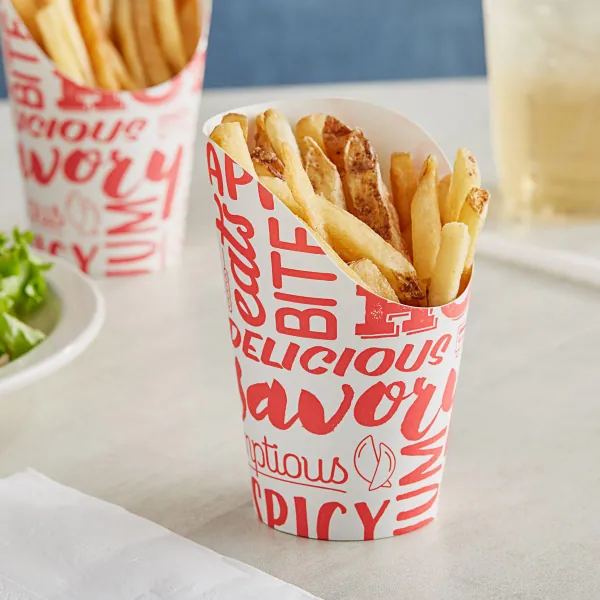
| Fries and fried potato | Essential | Essential if closed | Open formats are traditional for a reason |
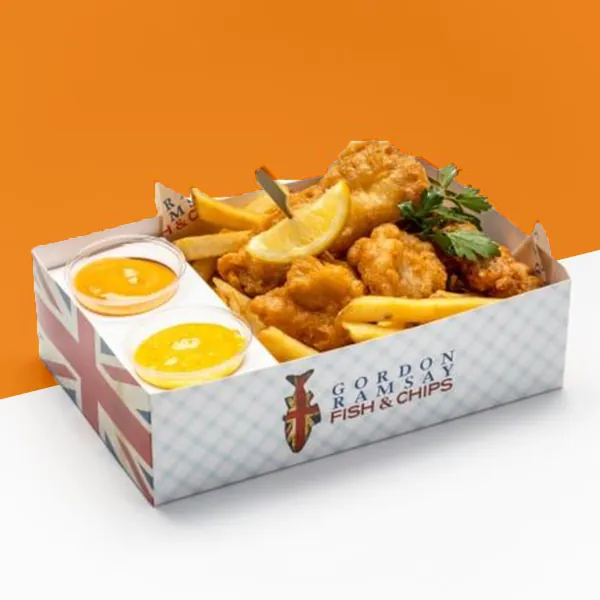
| Battered fish | Essential | Essential if closed | The most steam-sensitive item on most menus |
| Fried chicken and wings | Essential | Strongly recommended | High grease and high steam together |
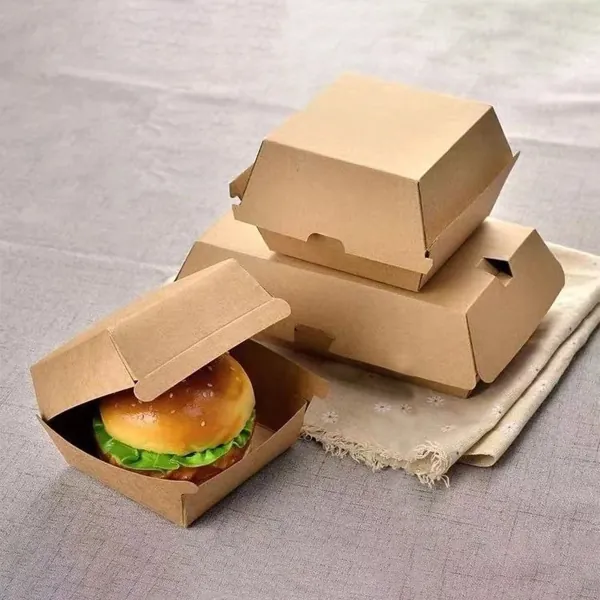
| Burgers | Essential | Recommended for delivery | Steam softens the bun rather than a coating |
| Pizza slices | Recommended | Essential | Classic case: a sealed box produces a soggy base |
| Dry baked items | Not needed | Not needed | Nothing to migrate and little steam |
Practical measures that cost nothing
Before changing your packaging specification, these are worth doing.
- Drain fried food properly before it goes into the tray — thirty seconds over the fryer removes a surprising amount of oil.
- Do not stack hot items on top of each other in a bag; the lower one steams.
- Keep crisp items and wet items in separate containers, always.
- Do not seal a container while the food is still steaming hard.
- Pack the bag so hot containers are not pressed against cold ones.
How grease-resistant treatments work
A grease-resistant food-contact face works by giving the board a surface that oil does not wick into readily. It is not a plastic film in the sense people often assume, and the specifics vary between grades.
What matters commercially is that it is inexpensive, it is applied on the food-contact side only, and it makes a visible difference within the first few minutes of service. What matters practically is that it changes how the board behaves at end of life, so we state the exact construction in writing rather than making a general recyclability claim.
Formats built around this problem
Every format in the fast food and concession range is designed around grease and steam, because that is what its menu produces all day.
The clearest single-item case is a loaded build eaten standing up, covered in the guide for hot dog stands.
Questions this guide gets asked
How quickly does untreated board go greasy?
Under hot fried food, within minutes — you can watch the translucent patch spread. It is the first thing a customer notices when they pick the tray up, and it is one of the cheapest problems to prevent.
Does grease resistance stop food going soggy?
No — those are different problems. Grease resistance keeps the board looking right. Sogginess comes from steam, and the answer to steam is venting or an open format.
Why does sealing make fried food worse?
Because it traps the steam the food is producing. That steam condenses on the lid and drips back onto the food. A sealed container is the reliable way to make batter soft.
Do vents let the food go cold?
Slightly, and it is a real trade-off — but a customer notices soggy food far more than food a few degrees cooler. In practice a vented container with a bag around it holds heat acceptably while letting vapour out.
Is a treated tray still recyclable?
It depends on the treatment and on your local facility, and the rules differ between countries. We state the exact construction of what you order so you can check it locally rather than relying on a blanket claim.
Can any tray in your range be grease-resistant?
Most of the board and fluted formats can be specified with a grease-resistant food-contact face. Tell us the food and how long it sits and we will specify the right treatment rather than a default one.