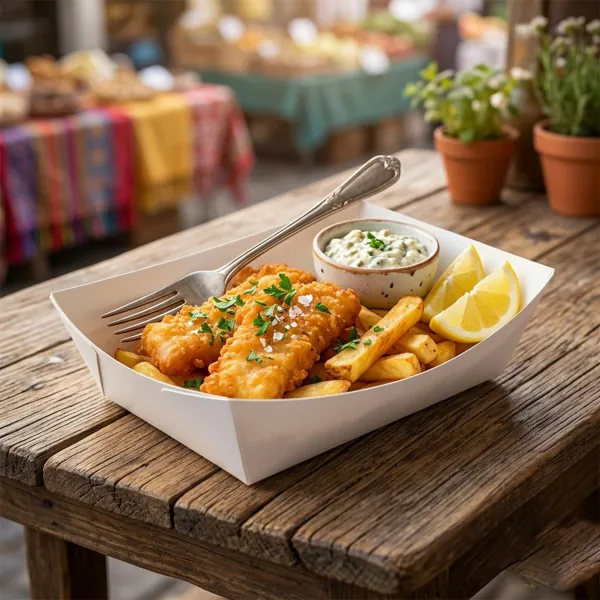
White Paper Food Tray
The white paper food tray is the same shape as the kraft version with a different surface underneath.
View tray & get pricing →Custom food packaging · US · UK · Canada · Australia
Kraft Food Trays
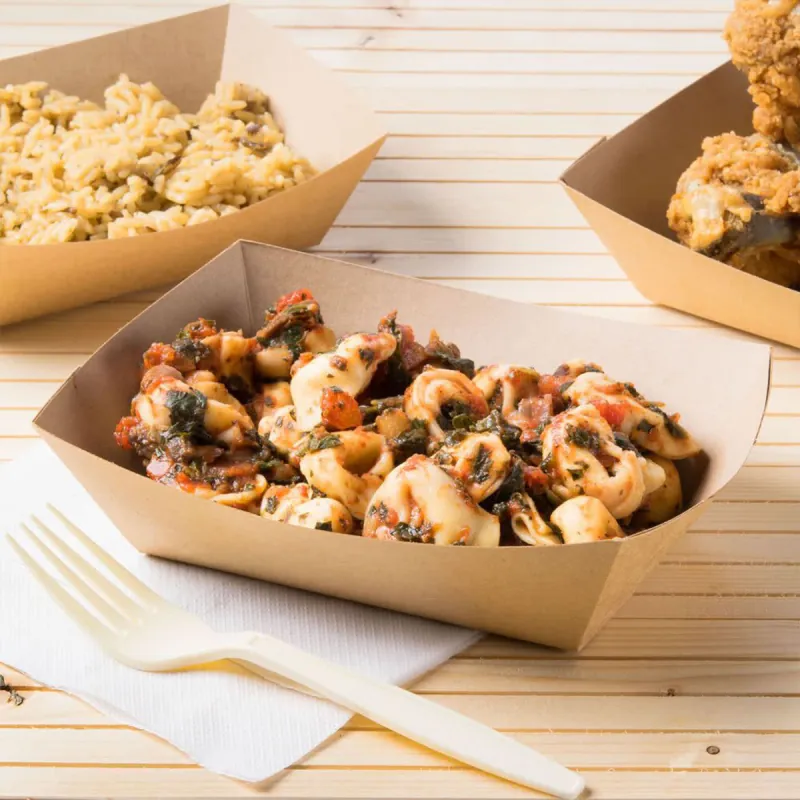
The kraft paper food tray is the one shape that every counter ends up buying. It is an open, tapered tray with folded corners that holds a portion, sits flat on a counter, and costs little enough that nobody minds throwing it away. Fries, wings, loaded nachos, tacos, sides, samples — it handles all of them.
What makes a good one is unglamorous: the right board weight for the portion, corners that do not spring open when the tray is full, and a food-contact face that does not go translucent under hot oil. We cut these to whatever footprint you need rather than pushing you into a stock size.
Pricing starts from $0.30 per tray
The unit price depends on the size, board, printing, finishing, quantity and delivery country, so every quote is worked out for your specification rather than taken from a list.
Send the size and the run length. We reply with pricing, material options and a production date — usually within one working day.
01 — Specification
Every element below is set when we quote. Nothing here is a fixed catalogue entry — if a line does not match what you need, say so and we will change it.
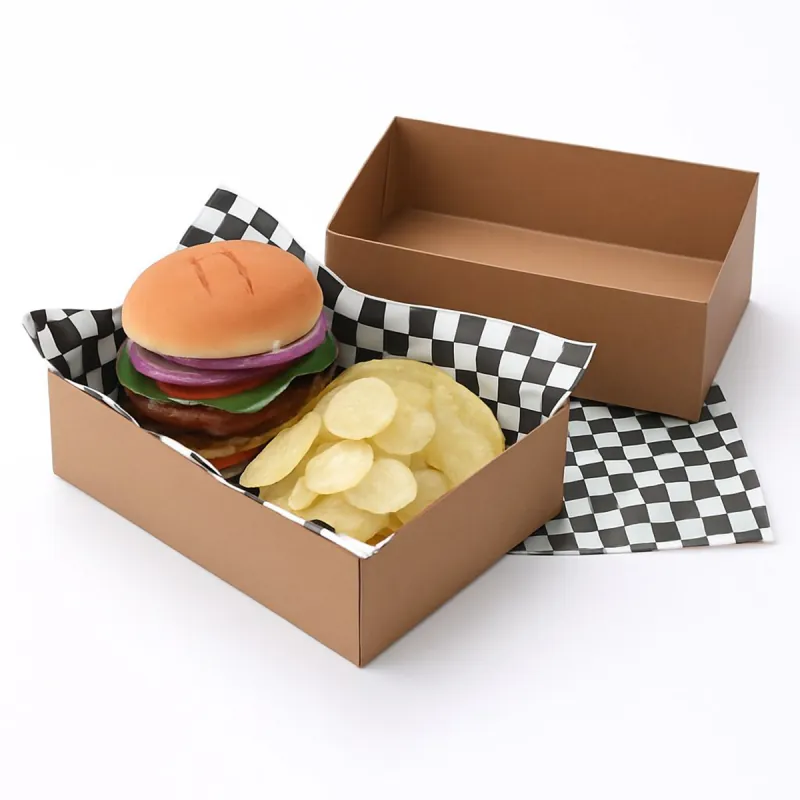
02 — Build the spec
The same five questions we would ask on a phone call, with the kraft paper food tray already selected. You get a properly detailed brief at the end, which is what makes a first quote accurate rather than approximate.
Prefer the full builder with a live sketch? Open the tray designer.
03 — In detail
Almost every disposable food tray you have eaten from is a variation on the same geometry: a flat base, four walls that flare outward, and corners folded rather than glued. The flare is what makes it work. It lets the trays nest inside each other flat in a carton, it lets a member of staff fill the tray from directly above without catching the rim, and it means the customer can reach the food without tipping it.
It is also why board weight matters more than it looks. A flared wall is only as stiff as the crease at its base. Too light a board and a full tray of wings will bow outward at the long sides; too heavy and the corners fight the person assembling them. Getting that balance right for your portion weight is the single most useful thing we do on this product.
Tray sizes are traditionally quoted as "1lb", "2lb" and so on, which describes the portion rather than the dimensions. Here is roughly what each is used for, but the real answer is to weigh your own portion.
| Nominal size | Typical portion | Common uses |
|---|---|---|
| 1lb | A single side portion | Regular fries, onion rings, a scoop of coleslaw, samples |
| 2lb | A generous single serving | Loaded fries, six to eight wings, a taco portion |
| 3lb | A shared portion for two | Nachos to share, mixed fried platter, a small basket meal |
| 5lb | A group or basket portion | Table baskets, seafood boils, shareable sides at events |
If you are moving from a competitor’s tray, the quickest route is to send us the tray itself. Failing that, how to measure a food tray shows exactly which three numbers we need.
A single-colour logo on the long side of a food tray is one of the cheapest pieces of brand exposure a food business can buy. It sits in front of a customer for the whole time they eat, it appears in every photograph they take of their food, and it does not need anybody to notice it consciously to do its job.
Because the setup cost is fixed rather than per unit, printing gets cheaper the faster you use stock. A single busy stand often gets through enough trays in a quarter to make a printed run cost less per tray than plain stock bought in small quantities.
The cheapest option and the right one for dry or lightly dressed food — chips, bread, pastries, dry snacks. Hot oil will darken it over time, so it is not the choice for a fryer-led menu.
A treatment applied to the food-contact face that slows fat migration significantly. This is what most fried-food operators should be ordering, and it costs far less than the difference it makes to how the tray looks after ten minutes.
For full-colour artwork and for menus where a bright, clean surface suits the food better than brown. Pair it with grease resistance, because staining is far more visible on white.
04 — Nearby
Chosen because operators who buy the kraft paper food tray usually need one of these in the same order, not because they happen to sit in the same category.
The white paper food tray is the same shape as the kraft version with a different surface underneath.
View tray & get pricing →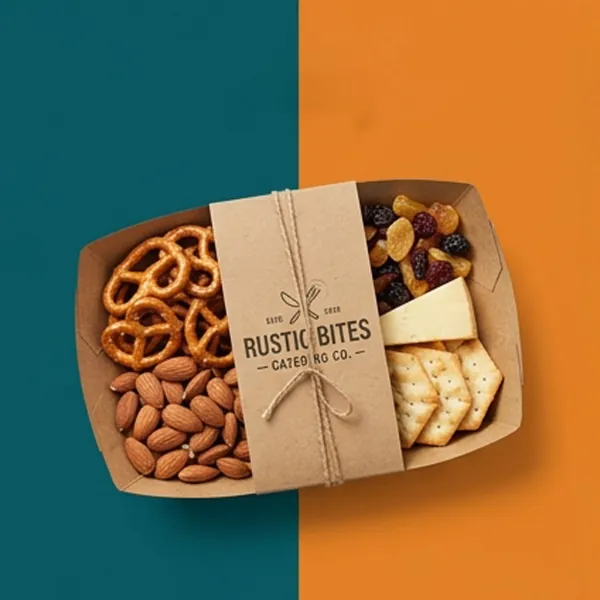
A snack tray is a small divided tray that turns loose items into a product.
View tray & get pricing →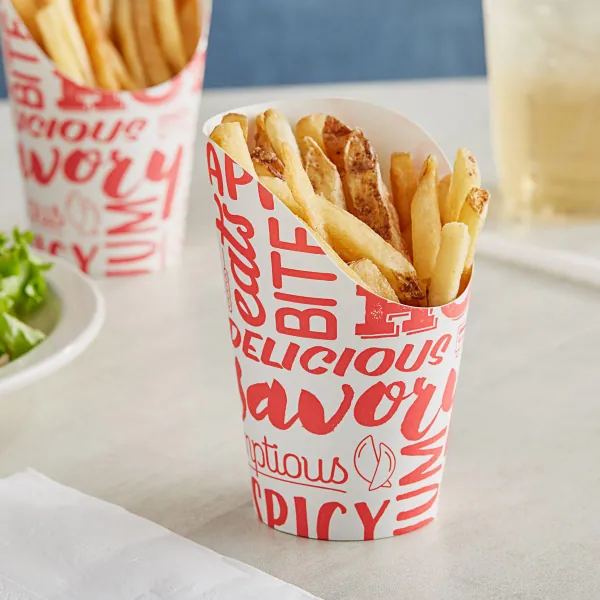
The fry scoop exists because of a specific piece of ergonomics: a member of staff should be able to fill it from a fryer basket with one hand, in one mo…
View tray & get pricing →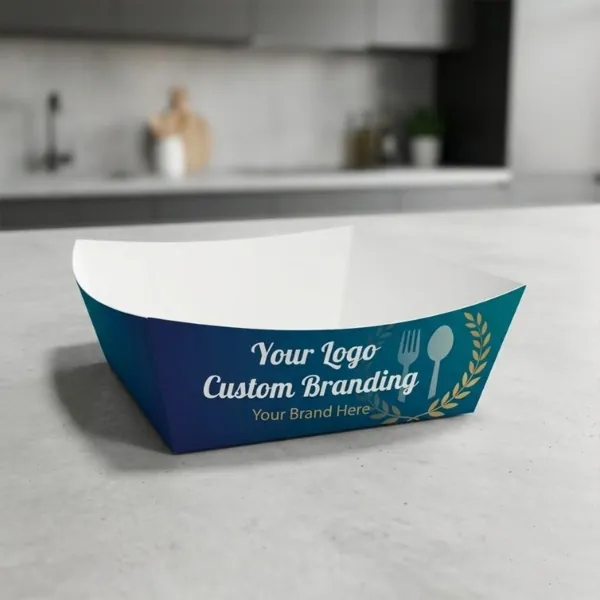
This is the general-purpose printed tray: any of our shapes, in your board, carrying your artwork.
View tray & get pricing →05 — Questions
The common nominal sizes run from a 1lb side portion up to a 5lb basket, but every tray we make is cut to a die, so the size is whatever you specify. Send us the internal length, width and depth you want — or the tray you use now — and we cut to that.
A plain untreated tray will darken where hot oil sits against it. A grease-resistant food-contact face slows that dramatically and is what we recommend for any fried menu. Steam is a separate issue: open trays vent it naturally, which is why fries stay crisper in a tray than in a closed box.
The long side wall is the usable area, and it is generous — on a 2lb tray that is typically enough for a logo and a short line of text at a readable size. We supply a dieline showing the exact safe area before your designer starts, so nothing lands across a crease.
They ship flat and lock together by hand. Most people get to about two seconds per tray after a few minutes of practice. If your service is too fast for that, ask about glued-corner versions, which arrive formed but cost more per unit and take far more storage space.
Yes, and it is a sensible way to start. Many customers buy plain stock while artwork is being developed, then move to a printed run on the second order. The cutting die is reusable, so the second order only carries plate cost.
Plain uncoated kraft with no metallic ink generally tolerates a short reheat, but performance depends on the exact board and treatment. We will state the construction of what you order so you can test it in your own equipment rather than relying on a general claim.
Uncoated kraft board is paper and is widely accepted in paper streams where it is not saturated with food. Grease-resistant treatments and any laminate change that, and local rules differ. We tell you the exact construction so you can check it against the scheme where the tray is used.
It depends on the size and the print. Small one-colour runs start considerably lower than four-colour work. Ask for pricing at two or three quantities and the unit cost curve will show you where it makes sense to commit.
In almost every case, yes. Post us the tray or send photographs with a ruler in shot. We reverse-engineer the flat blank from the folded tray, which means your racks, sleeves, carriers and portioning all stay unchanged.
Yes. Kraft trays ship flat, which keeps freight efficient on long-haul routes. Tell us the delivery country and postcode at quote stage so the pricing reflects landed cost rather than a factory-gate number.
Send the dimensions, the quantity and the country you want it delivered to. We come back with a full quote — material, print, finishing, freight and a production date.