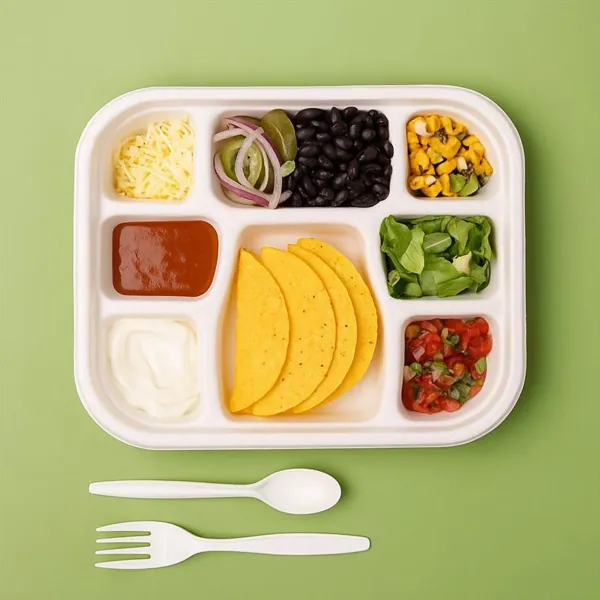
Bagasse School Meal Tray
School meal trays have a specification nobody else has to meet.
View tray & get pricing →Custom food packaging · US · UK · Canada · Australia
Industry guide
School meal trays are specified against constraints that come from the building rather than the food. Servery rails, trolley shelves, tray returns and dishwashing equipment are all fixed, expensive to change, and typically older than the current catering contract.
That makes school catering the one setting where the tray is designed from the fixture inward rather than from the meal outward.
Describe the operation and roughly how many trays you get through. We come back with the formats that fit, with pricing — usually within one working day.
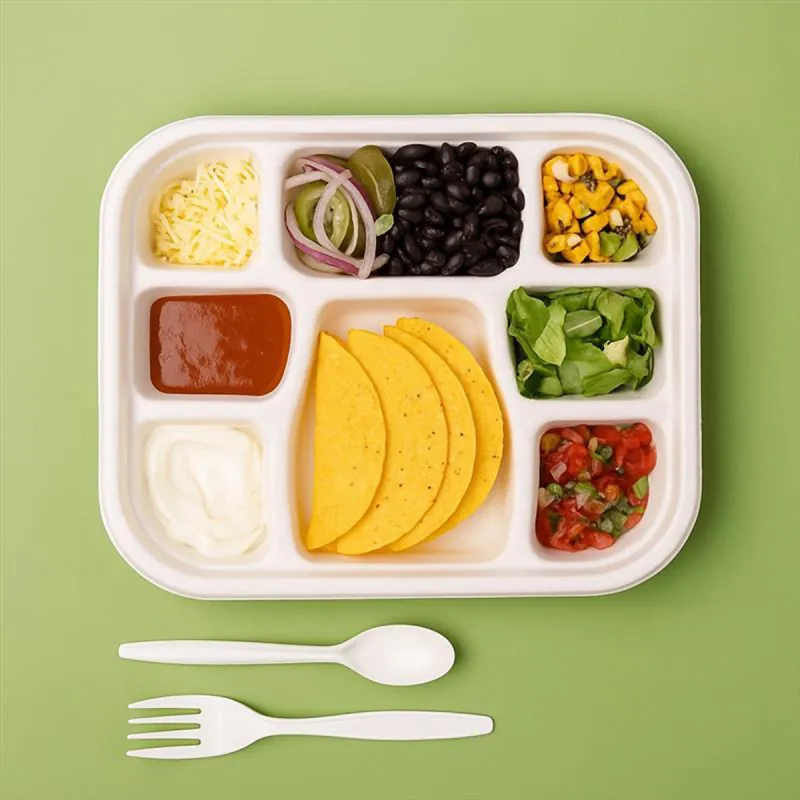
Before anything else, measure three things: the servery rail spacing, the usable trolley shelf, and the tray return aperture. Those numbers give an outer footprint, and everything about the compartment layout follows from it.
Then check the menu. A four-week cycle usually contains one service that is more demanding than the rest — a stew with a separate dumpling, a curry with rice and a side, a roast with three vegetables. Design the wells for that service, not for the average one, or the tray will fail once a fortnight in a way that is visible to every child in the queue.
Trays are knocked against door frames and other people. A radiused corner survives; a square one dents and eventually splits.
Wide enough for small hands to hold securely without touching the food. This is the difference between a carried tray and a dropped one.
A child cannot reach as far across a tray as an adult. Put the most-used well nearest the front.
Primary and secondary portions differ materially. If your estate covers both, decide whether one tray serves everyone or whether two are justified.
These are different products with different economics, and the decision should be made before pricing is sought.
| Single-use | Returnable | |
|---|---|---|
| Typical material | Moulded bagasse fibre | Rigid washable tray |
| Per-meal cost | Ongoing consumable | Capital, then washing cost |
| Labour | Disposal only | Collection, washing, storage |
| Infrastructure | Waste handling | Dishwashing capacity |
| Best suited to | Sites without dishwashing capacity, satellite kitchens | Sites with existing wash facilities |
Picked for the specific demands described above rather than as a general list.
School meal trays have a specification nobody else has to meet.
View tray & get pricing →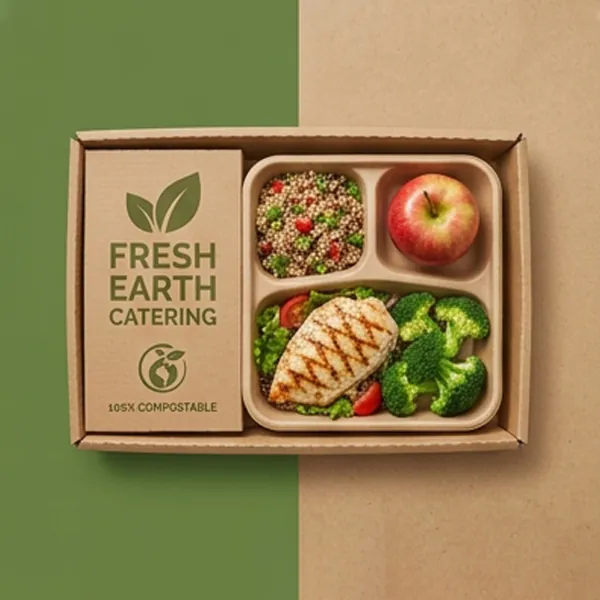
A cafeteria tray carries an entire meal — main, sides, dessert, cutlery, sometimes a drink — from a servery to a table, held by one person who is also c…
View tray & get pricing →
The lidded compartment tray is the format that meal-prep businesses, bento services and premium takeaway have converged on.
View tray & get pricing →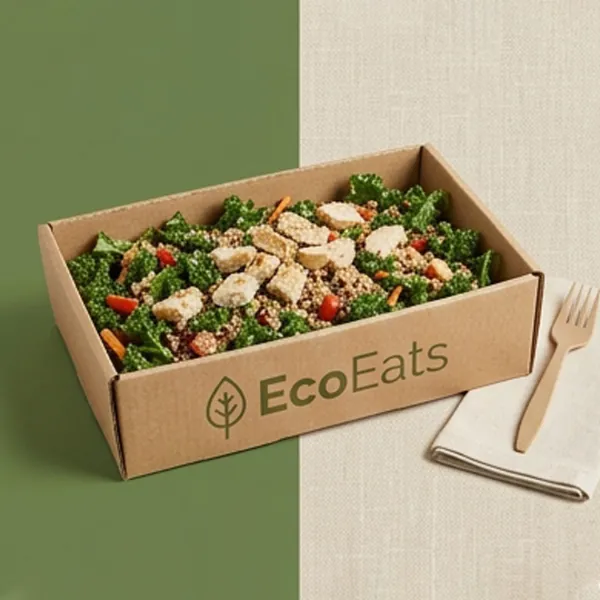
The lunch tray sits between a takeaway container and a proper meal tray.
View tray & get pricing →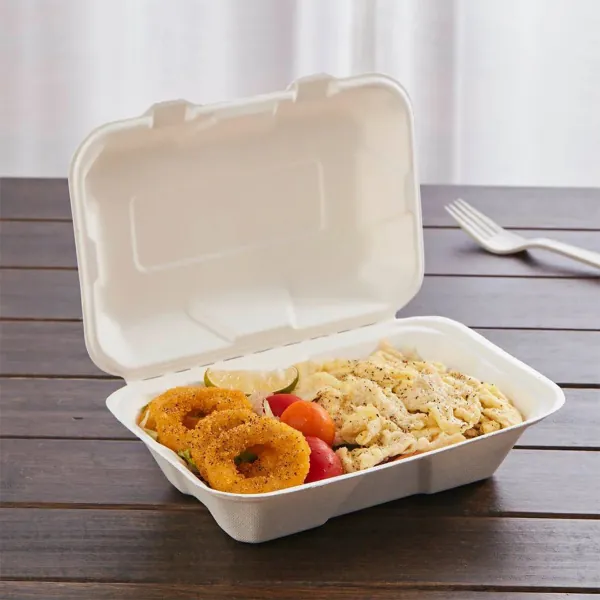
Moulded fibre trays are formed by pressing wet pulp against a heated tool.
View tray & get pricing →From the building, not the meal. Measure the servery rail spacing, the trolley shelf and the tray return, then work inward to the compartments. Those fixtures are expensive to change and the tray is not.
Four is the most common, covering a main, two sides and a dessert. Base the decision on your full menu cycle and design for its most demanding service rather than a typical day.
Portion sizes differ materially, so it is a real question. One tray with generous wells can serve both, but two sizes can reduce food waste noticeably. It depends on the size of the estate and the tooling budget.
Yes — that is why the format is used for school meals. It tolerates hot food far better than uncoated board. We confirm the tested temperature range for the specific grade supplied.
It depends on whether the site has dishwashing capacity. Returnable trays shift cost from a consumable to labour and infrastructure. Decide before seeking pricing, because they are genuinely different products.
Only very simply on fibre, which is textured and absorbent. Most school programmes run plain trays, which is the cheapest option and has no downside in a captive setting.
We supply the material specification and any certification the grade holds. Tenders often name specific certifications, so send us the exact wording of the requirement and we will tell you plainly whether the material meets it.
More than a board product, because fibre tooling is a formed metal mould. Start the conversation well before the summer break. Where timing is tight we can sometimes trial on an existing tool with a close layout.
Send the food, the volumes and the country you take delivery in. We reply with formats, material options and a full quote including freight.