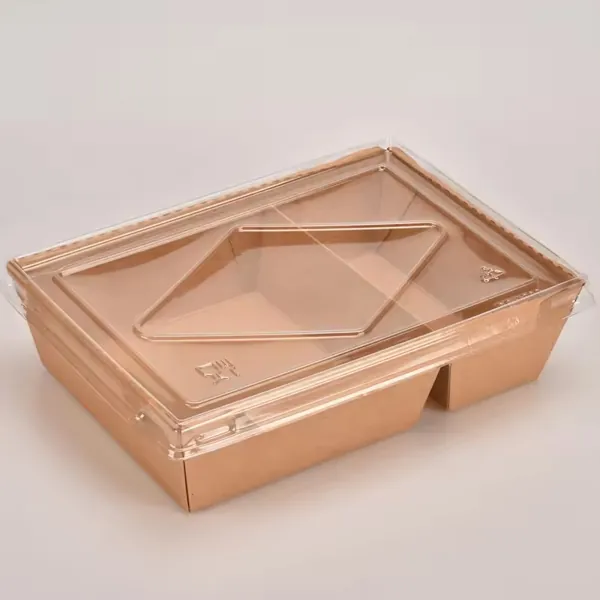
Compartment Tray with Lid
The lidded compartment tray is the format that meal-prep businesses, bento services and premium takeaway have converged on.
View tray & get pricing →Custom food packaging · US · UK · Canada · Australia
Compartment & Meal Trays
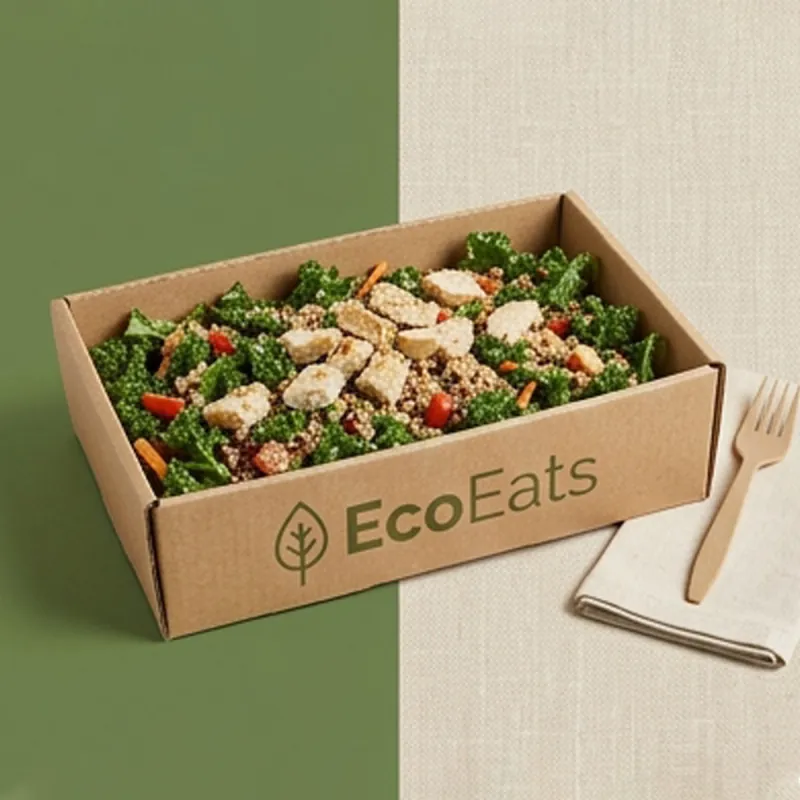
The lunch tray sits between a takeaway container and a proper meal tray. It is deep enough to hold a full portion, flat enough to eat from at a desk, and rigid enough to be carried in one hand from a counter to a table without folding.
It has become the default format for meal-prep businesses, office catering rounds and school lunch programmes, largely because it prints well enough to carry a brand and still costs a fraction of a rigid container.
Pricing starts from $0.30 per tray
The unit price depends on the size, board, printing, finishing, quantity and delivery country, so every quote is worked out for your specification rather than taken from a list.
Send the size and the run length. We reply with pricing, material options and a production date — usually within one working day.
01 — Specification
Every element below is set when we quote. Nothing here is a fixed catalogue entry — if a line does not match what you need, say so and we will change it.
02 — Build the spec
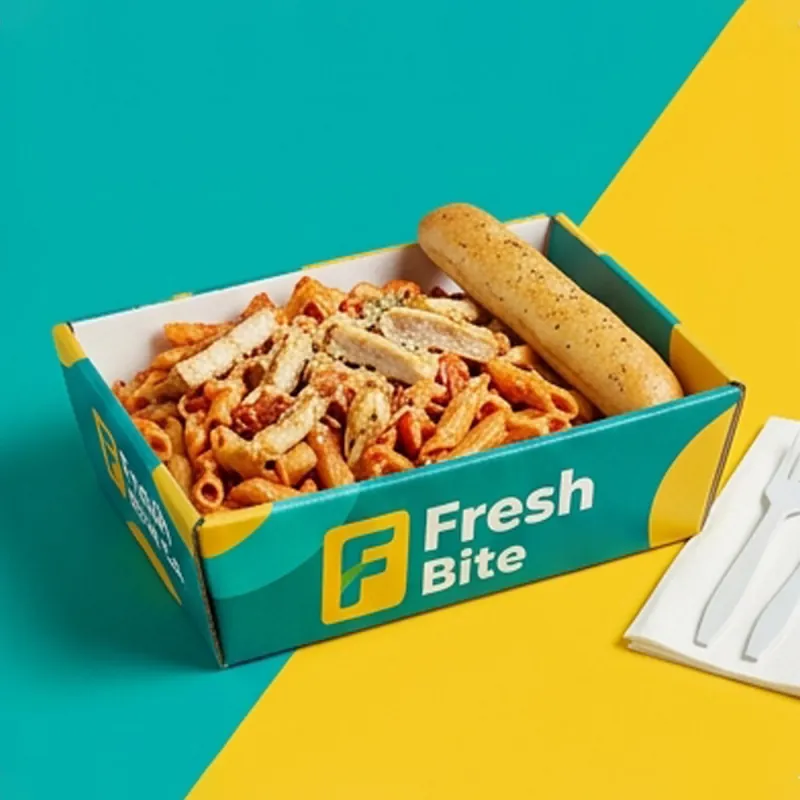
The same five questions we would ask on a phone call, with the corrugated lunch tray already selected. You get a properly detailed brief at the end, which is what makes a first quote accurate rather than approximate.
Prefer the full builder with a live sketch? Open the tray designer.
03 — In detail
The sequence matters — designing the graphics before the structure is the usual expensive mistake.
Plate the actual meal on a table and measure the space it takes. Menu descriptions do not tell you how much room a portion of rice and curry needs.
A single bay is cheaper and holds more. Compartments keep a wet element off a dry one. If your menu has both, the compartments pay for themselves in customer complaints avoided.
Measure the insulated bags your couriers use and work out how many trays fit per bag. Sizing to the bag is free at the design stage and impossible afterwards.
A fitted lid stacks and protects. A film seal is the only option that reliably contains liquid. Open with a band is cheapest and fine for immediate service.
On the dieline we supply, so the brand does not land across a fold or under the lid overlap.
Needs a reliable seal, a flat surface for a label with nutrition and reheating information, and a shape that stacks in a domestic fridge. Print is doing brand work because the customer sees the same tray several times a week.
Needs to look composed on a boardroom table and be openable without a knife. Presentation matters more than sealing, because it is eaten immediately. Compartments keep a salad away from a dressing.
Needs to be quick to fill on a servery line, to fit the trolley, and to survive being carried by a child. Compartment sizes are usually smaller and the tray footprint is driven by the serving fixture. See food trays for school meals.
The assumption that corrugated cannot carry a proper brand comes from experience with heavy B-flute shipping cases. E-flute is a different proposition — the flutes are fine enough that four-colour process holds well, and a lunch tray printed on it does not look like a shipping box.
That matters commercially. A meal-prep customer sees your tray several times a week; a corporate catering client sees it in front of colleagues. Both are situations where the packaging is doing brand work, and E-flute is good enough to do it.
04 — Nearby
Chosen because operators who buy the corrugated lunch tray usually need one of these in the same order, not because they happen to sit in the same category.
The lidded compartment tray is the format that meal-prep businesses, bento services and premium takeaway have converged on.
View tray & get pricing →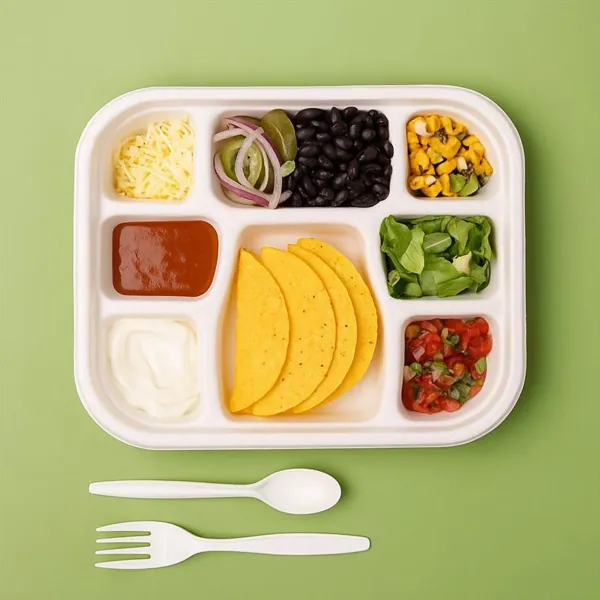
School meal trays have a specification nobody else has to meet.
View tray & get pricing →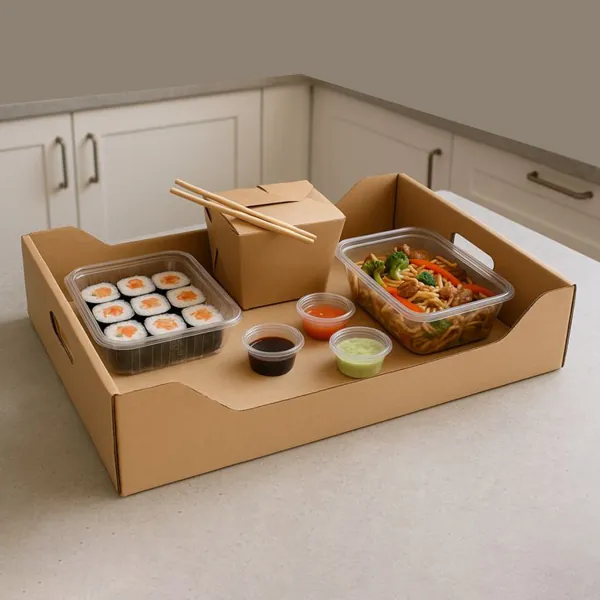
Corrugated trays exist for one reason: a loaded tray that has to be picked up from the middle without folding in half.
View tray & get pricing →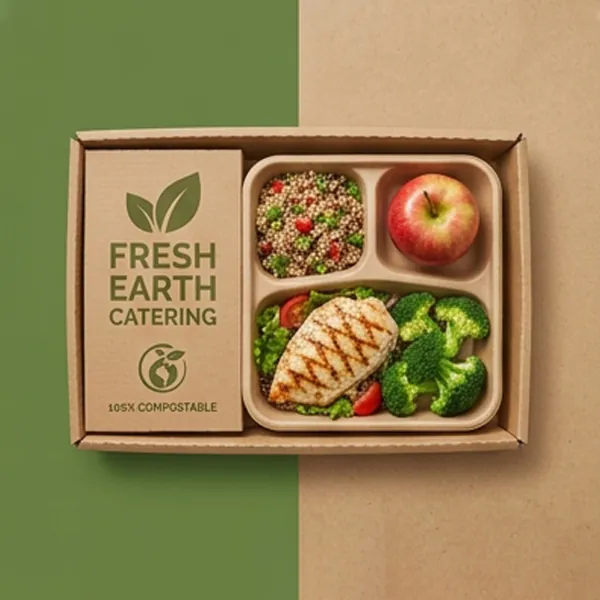
A cafeteria tray carries an entire meal — main, sides, dessert, cutlery, sometimes a drink — from a servery to a table, held by one person who is also c…
View tray & get pricing →05 — Questions
Compartments if any part of your meal is wet and any part is meant to stay crisp. A single bay if the meal is homogeneous — a curry, a pasta, a stew. Compartments cost slightly more and prevent the most common complaint in meal delivery.
With a moisture-resistant liner, for the length of a normal delivery. Prolonged steam softens board, so tell us the temperature the meal goes in at and how long it travels, and we will specify for it.
Yes, if we build a compatible rim profile. Tell us the sealing machine and tooling you use — the rim has to match your die, so this has to be designed in rather than added later.
Plain board with no metallic ink generally tolerates a short reheat, but liners and coatings vary. We will state the exact construction of what you order so you can test it in your own equipment before making any claim to customers.
It depends on the bag. Measure the internal dimensions of the bags your couriers use and tell us how many trays you want per bag. Sizing to that is free at design stage and expensive to fix afterwards.
Yes, on E-flute the result is genuinely good — close enough to folding carton that customers will not read it as a shipping box. That is the reason most meal-prep brands specify E-flute rather than B.
With a fitted lid, yes, which matters for meal-prep customers storing several days of food. Without a lid they do not stack safely. If your customers store trays at home, plan on lids.
On a flat panel — usually the lid or the long side. Decide this before artwork, because a label placed over a fold will not sit flat and will peel. We mark the label area on the dieline.
Yes. They are separate components with separate tooling. A common pattern is branding on the lid and practical information — reheating, allergens, storage — on the tray itself.
Send the dimensions, the quantity and the country you want it delivered to. We come back with a full quote — material, print, finishing, freight and a production date.