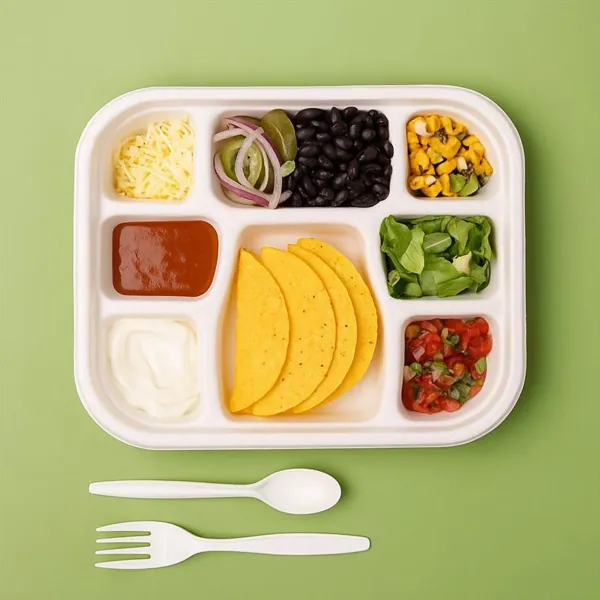
Bagasse School Meal Tray
School meal trays have a specification nobody else has to meet.
View tray & get pricing →Custom food packaging · US · UK · Canada · Australia
Compartment & Meal Trays
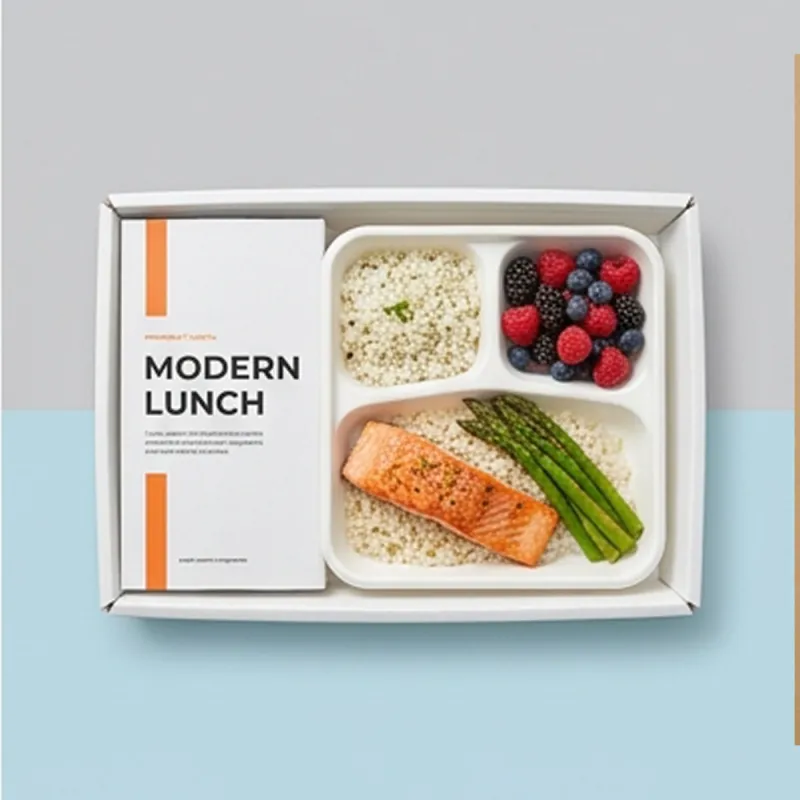
A cafeteria tray carries an entire meal — main, sides, dessert, cutlery, sometimes a drink — from a servery to a table, held by one person who is also carrying a bag. It has to be rigid enough not to bend under that, and it has to be a footprint that fits your servery rails and your trolleys.
That last constraint is usually the binding one, and it is why cafeteria trays are so much less flexible in size than other formats.
Pricing starts from $0.30 per tray
The unit price depends on the size, board, printing, finishing, quantity and delivery country, so every quote is worked out for your specification rather than taken from a list.
Send the size and the run length. We reply with pricing, material options and a production date — usually within one working day.
01 — Specification
Every element below is set when we quote. Nothing here is a fixed catalogue entry — if a line does not match what you need, say so and we will change it.
02 — Build the spec
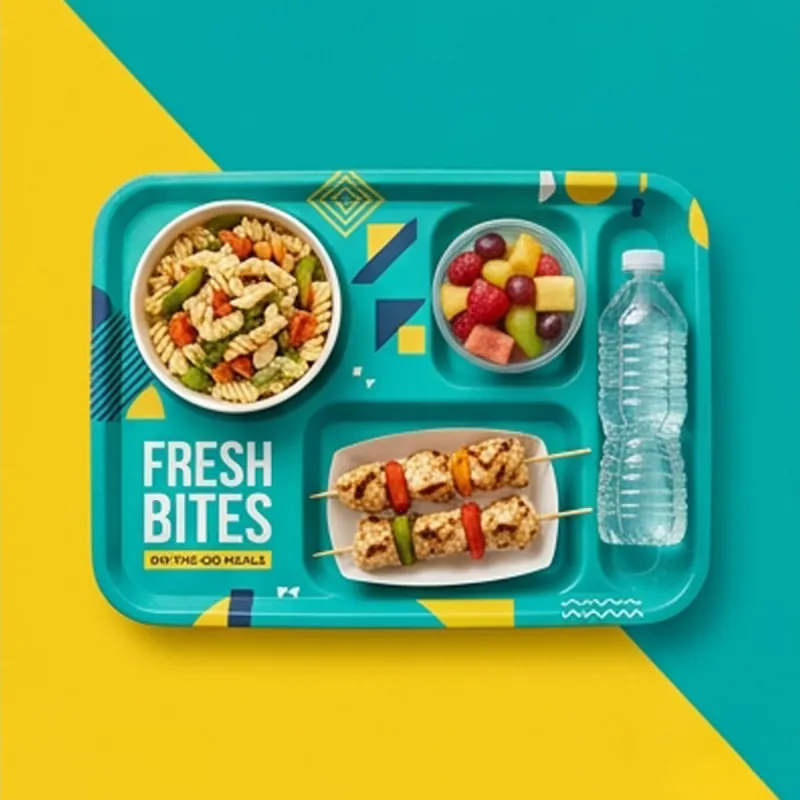
The same five questions we would ask on a phone call, with the rigid cafeteria tray already selected. You get a properly detailed brief at the end, which is what makes a first quote accurate rather than approximate.
Prefer the full builder with a live sketch? Open the tray designer.
03 — In detail
Almost every other tray on this site is sized from the food outward. A cafeteria tray is sized from the fixture inward, because the servery rails, the trolley shelves and the tray return are all fixed and expensive to change.
Measure the rail spacing, the usable trolley shelf, and the tray return aperture. Those three numbers give us an outer footprint. Then we work inward to the compartments, and if the meal does not fit we will tell you rather than quietly making the wells too small.
Loaded trays are frequently carried one-handed by somebody holding something else. That is a bending load across the middle, and it is what determines rigidity.
Food sits on the tray from the servery to the table and often for the length of a meal. Board that softens under warm food will not survive a lunch service.
Returned trays are stacked before clearing, often with spilled liquid on them. This is the condition that ruins under-specified trays fastest.
In a school setting, trays are carried by people who are not paying attention. Rounded corners and a grippable rim matter more than they do in a staff canteen.
Single-use or returnable? These are different products. A single-use tray is optimised for cost and disposal. A returnable tray has to survive washing and repeated handling, which changes the material entirely. Decide this before asking for pricing — it is the biggest single factor in what we quote.
04 — Nearby
Chosen because operators who buy the rigid cafeteria tray usually need one of these in the same order, not because they happen to sit in the same category.
School meal trays have a specification nobody else has to meet.
View tray & get pricing →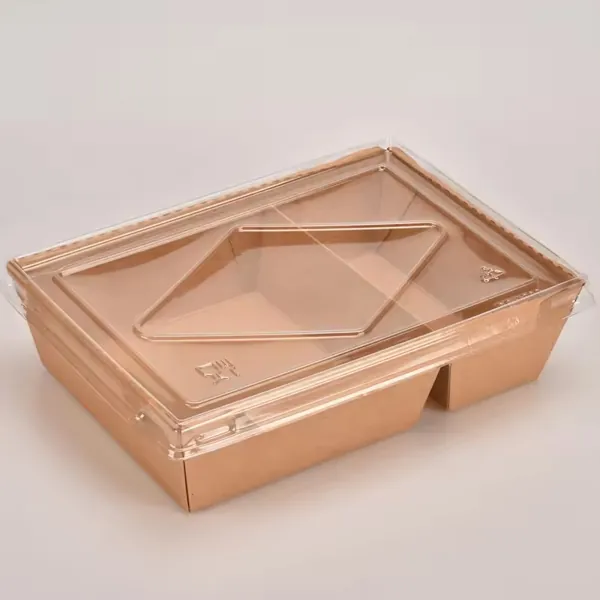
The lidded compartment tray is the format that meal-prep businesses, bento services and premium takeaway have converged on.
View tray & get pricing →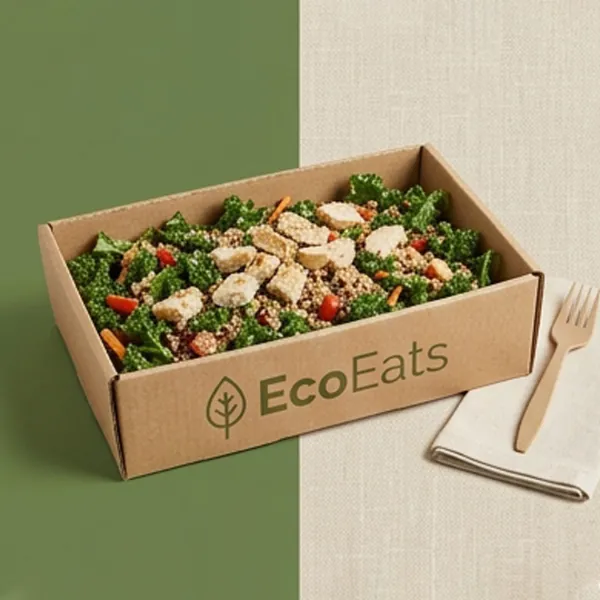
The lunch tray sits between a takeaway container and a proper meal tray.
View tray & get pricing →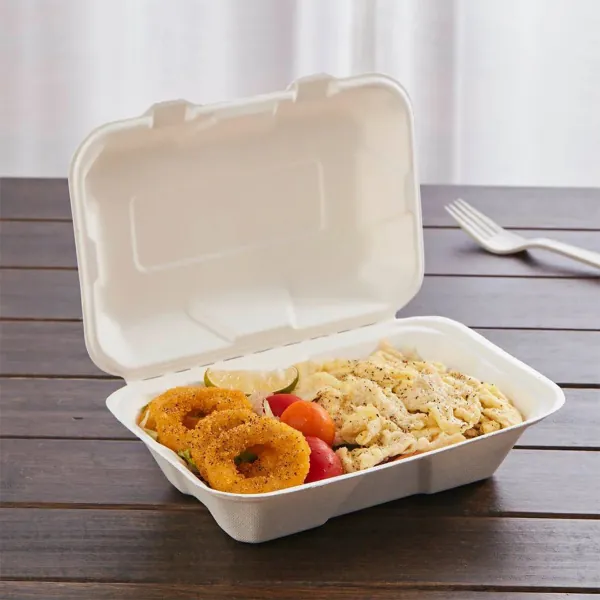
Moulded fibre trays are formed by pressing wet pulp against a heated tool.
View tray & get pricing →05 — Questions
Determined by your servery rails, trolley shelves and tray return, not by the meal. Measure all three and we work inward to the compartments. Changing a servery is expensive; changing a tray is not.
Three to five covers most menu cycles: a main, two sides, and a small well for dessert or sauce. Look at your actual four-week menu rather than a typical meal, and design for the most demanding service on it.
We supply both, but they are genuinely different products. Returnable trays have to survive washing and repeated handling, which changes the material and the cost. Decide which you need before asking for pricing.
Not if it is specified for it. A loaded tray carried one-handed is a bending load across the middle, and that is what determines the rigidity we specify. Tell us the loaded weight.
Yes, and school use has specific requirements — rounded corners, a grippable rim and a footprint sized to a child’s reach. See food trays for school meals for how this fits a wider school programme.
Yes — nesting when empty is essential for return and storage. Consistent well depths make the nest cleaner, which is worth considering when the compartment layout is designed.
On board, yes. On moulded fibre, only in a limited way. In practice most canteen trays are plain, because print wears in a returnable setting and adds cost in a single-use one with no customer-facing benefit.
Not if the material is specified for hot service. Moulded fibre handles hot food better than uncoated board. Tell us the food temperature and how long it sits, and we will specify to it.
Yes. Send one and we will match the footprint and the compartment layout so your servery, trolleys and tray return all continue to work unchanged.
Send the dimensions, the quantity and the country you want it delivered to. We come back with a full quote — material, print, finishing, freight and a production date.