Resource guide
Compostable Food Tray Material Guide
What moulded fibre, bagasse and compostable trays actually are, what compostable and biodegradable legally mean, and how to make claims you can support.
Updated August 28, 2026 · About 9 minutes to read
This guide exists because the language around compostable packaging is used loosely, and a buyer who repeats a supplier’s loose claim on their own packaging is the one carrying the regulatory risk. What follows separates the material facts from the claims.
The materials
Moulded fibre
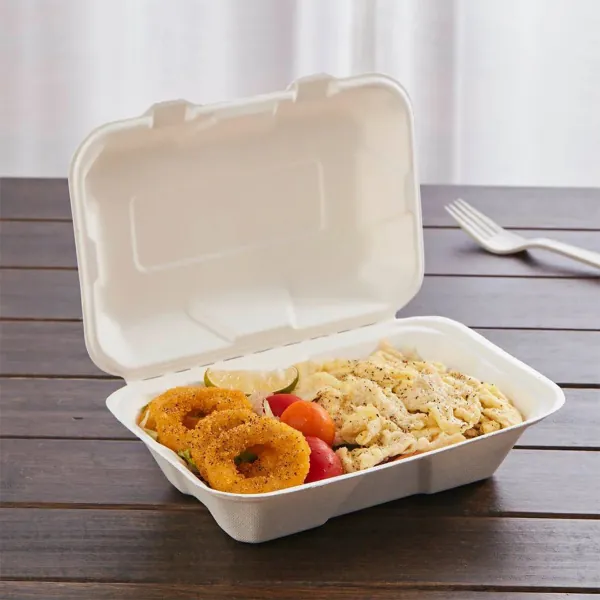
A manufacturing process, not a single material: wet pulp pressed against a heated tool. The pulp can come from several feedstocks. What makes fibre useful is the process — deep formed wells, tolerance of hot food, and absorbency — rather than any inherent environmental property.
Bagasse
The fibrous material left after sugarcane is pressed for juice. It is an agricultural residue rather than a purpose-grown crop, which is a genuine point in its favour. It is commonly used for food-contact fibre packaging and is often paler than recovered-pulp fibre.
Recovered pulp
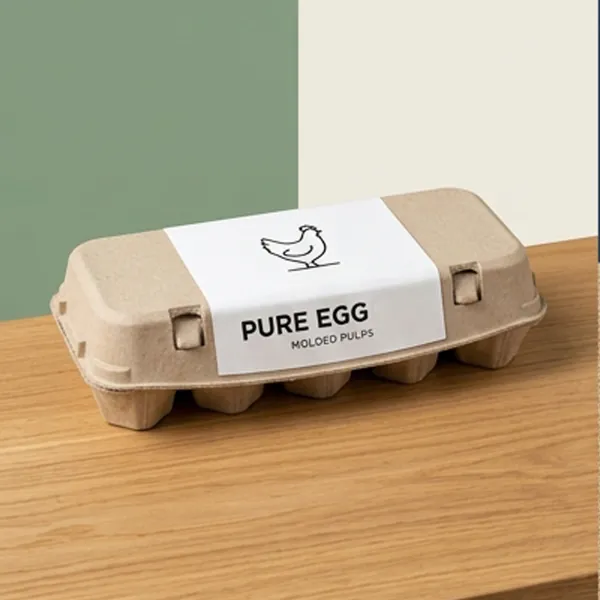
Fibre made from recovered paper. Widely used for egg packaging, produce trays and transit packaging. Typically grey or brown and generally not specified for direct contact with wet ready-to-eat food.
Barrier-treated fibre
Any of the above with a treatment applied to handle wet or oily food. The treatment is what makes some products suitable for their application — and it is also the thing most likely to affect an end-of-life claim.
What the terms actually mean
These are not synonyms and they are not interchangeable in marketing copy.
| Term | What it means | What it requires |
|---|---|---|
| Biodegradable | Breaks down by biological action, eventually, under unspecified conditions | Almost meaningless without a timeframe and conditions; regulated in several markets |
| Industrially compostable | Breaks down in a commercial composting facility within a defined period | Certification against a specific standard, plus access to such a facility |
| Home compostable | Breaks down in a domestic compost heap within a defined period | A separate and more demanding certification than industrial |
| Recyclable | Can be processed in an existing recycling stream | Depends on local infrastructure and on any coating applied |
| Made from renewable material | A statement about the feedstock | Says nothing about end of life |
Our position, stated plainly: we will tell you the feedstock, the manufacturing process, any barrier applied, and any certification the specific material carries. We will not describe a tray as compostable, home compostable or biodegradable unless the material you order holds that certification in the market where you sell. Those definitions differ between the United States, United Kingdom, Canada and Australia, and the risk of an unsupported claim sits with whoever prints it on the pack.
How to make a claim you can defend
- Ask your supplier for the material specification in writing, including any barrier treatment.
- Ask which certification, if any, the material holds, and to which standard and in which market.
- Check whether the infrastructure your claim relies on actually exists where your customers are.
- Prefer specific, verifiable statements — "made from sugarcane fibre" — over broad ones like "eco-friendly".
- If you cannot document it, do not print it. An accurate, modest claim is worth more than a bold one you cannot support.
Where fibre genuinely wins on its merits
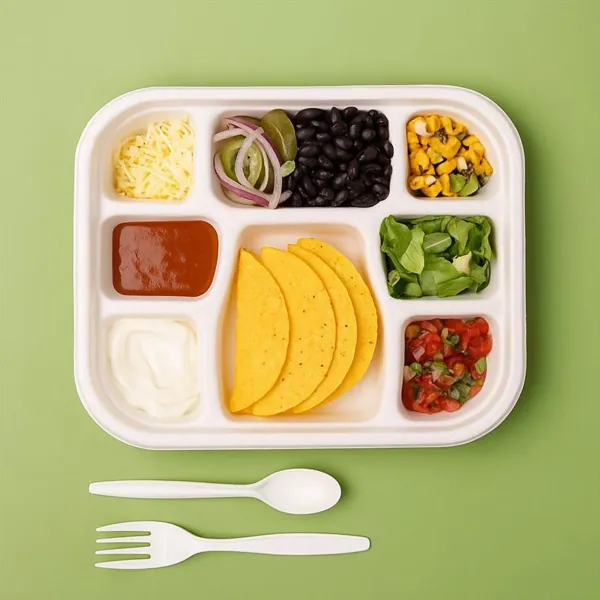
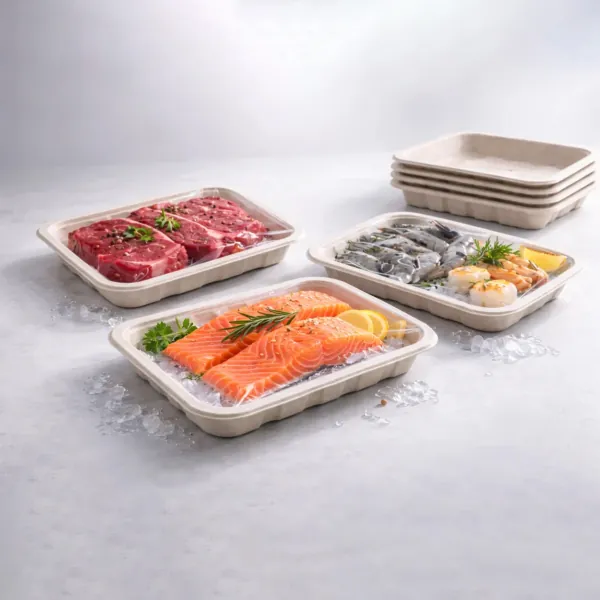
Setting the claims aside, fibre is chosen for good practical reasons: it holds hot food without softening, it absorbs liquid rather than pooling it, and it can be formed into deep wells that folding board cannot produce. Those are the reasons school meal trays, meat trays and egg packaging are made from it, and they have nothing to do with marketing.
If you are choosing fibre for those properties, you are on solid ground. If you are choosing it purely for an environmental claim, get the certification documentation first — and be prepared for the answer that a plain uncoated board tray is the simpler product at end of life.
Where fibre earns its place
The strongest functional case for fibre is chilled protein and shellfish, which is why so much of the sushi and seafood range is moulded rather than folded.
For counters selling raw product by weight, the liquid-management argument is the whole decision, as set out in the seafood market guide.
Questions this guide gets asked
Is bagasse compostable?
Bagasse is a plant fibre, but whether a specific bagasse product is certified compostable depends on that product, any treatment applied to it, and the certification scheme in your market. We supply the specification and certification for what you order so you can check rather than assume.
What is the difference between biodegradable and compostable?
Compostable means breaking down within a defined period under defined conditions, verified against a standard. Biodegradable, without a timeframe or conditions attached, means very little and is regulated in several markets for that reason.
Can I put a compostable logo on my packaging?
Only if the material you have ordered holds that certification in the market where you sell. Those marks are controlled and printing one you are not entitled to creates a regulatory exposure that sits with you, not your supplier.
Does a barrier treatment stop a tray being compostable?
It can, and it depends entirely on the treatment. This is exactly why the material specification matters — a fibre tray with one barrier and a fibre tray with another can have completely different end-of-life profiles.
Is fibre better for the environment than board?
Not automatically. Both are paper-based. A plain uncoated board tray is often the simpler product at end of life than a treated fibre one. Choose fibre for its functional properties and treat the environmental question as a separate, documented one.
What should I ask a supplier?
The feedstock, any barrier treatment, any certification held, the standard it is certified to, and the market that certification applies in. If a supplier cannot answer all five in writing, treat their environmental claims with caution.
Do compostability rules differ between countries?
Substantially. The standards, the permitted claims and the available infrastructure all differ between the United States, United Kingdom, Canada and Australia. A claim that is fine in one market can be non-compliant in another.