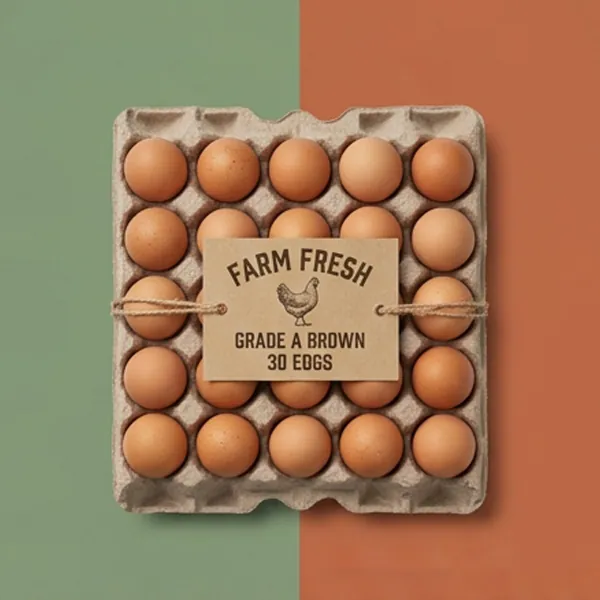
Moulded Pulp Egg Flat
The egg flat is the oldest moulded fibre product still in daily use, and it has barely changed because the design was right the first time.
View tray & get pricing →Custom food packaging · US · UK · Canada · Australia
Compostable & Molded Fiber Trays
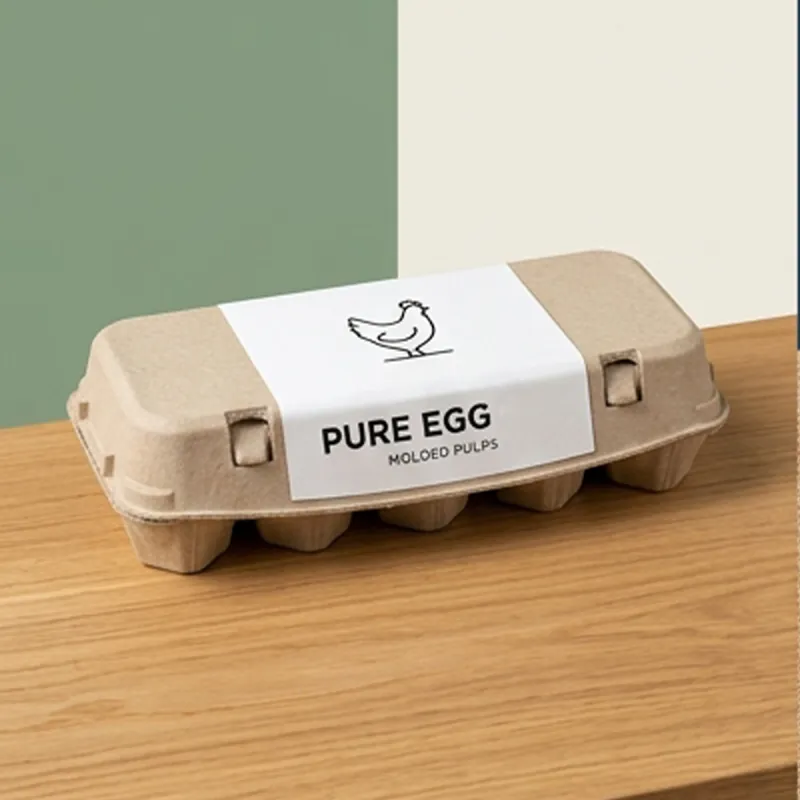
An egg carton is the retail end of the same technology as the wholesale flat, with two additions: a lid that closes properly and a surface that has to sell the product. Farm gate and speciality egg producers live or die on the second one, because a carton is most of what distinguishes their eggs from the supermarket line on the next shelf.
$0.30 per tray, plain or printed
Minimum order 100 trays, with free shipping to the United States, United Kingdom, Canada and Australia. You approve a free digital proof before anything is printed, then pay by PayPal invoice or bank transfer, or cash on delivery in the US and Canada.
Starting from $0.30 per tray
Plain or printed with your artwork. Minimum order 100 trays. Free shipping to the United States, United Kingdom, Canada and Australia.
01 — Specification
The details below describe how we usually make this tray. If a line does not match what you need, say so in your order notes and we will confirm it on the proof.
02 — Build the spec
The same five questions we would ask on a phone call, with the kraft egg carton already selected. You get a detailed brief at the end, which makes your first proof accurate.
Prefer the full builder with a live sketch? Open the tray designer.
03 — In detail
A carton that opens in a shopping bag is a broken product and a customer who does not come back. The closure has to hold under the specific way people carry eggs: swinging in a bag, put down on a car seat, stacked under something heavier.
That means specifying a positive tab or hinge closure rather than accepting whatever the tooling produces. It is a small detail that determines whether the product works, and it is worth asking about explicitly.
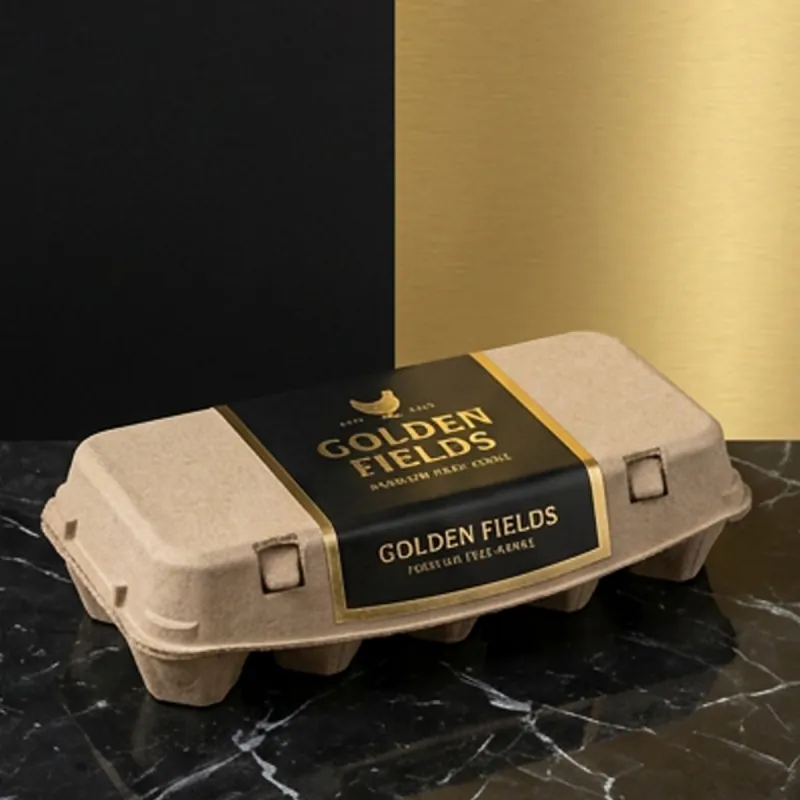
Wraps the closed carton. Full colour, sharp detail, cheap to reprint for a change of information, and it holds the carton shut as a secondary benefit. This is what most speciality producers use.
A printed label on the lid face. Simpler than a band, easy to change, and it leaves the fibre texture visible around it, which some producers prefer.
Possible, but limited to simple marks. The absorbent, textured surface will not hold fine type or detail. It is cheapest at very high volume and is what large commercial packers use.
Egg labelling is one of the more heavily regulated areas in food packaging, and the requirements — grading terminology, date marking, producer codes, farming method declarations — differ meaningfully between the United States, United Kingdom, Canada and Australia.
We print what you supply on a clearly defined panel. What that panel has to say is a question for the rules in your market, and we would strongly encourage checking it before artwork rather than after a print run.
04 — Nearby
Chosen because operators who buy the kraft egg carton usually need one of these in the same order, not because they happen to sit in the same category.
The egg flat is the oldest moulded fibre product still in daily use, and it has barely changed because the design was right the first time.
View tray & get pricing →
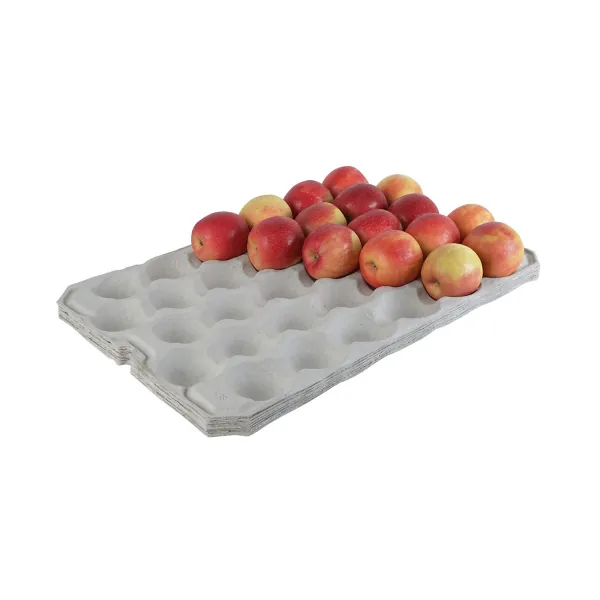
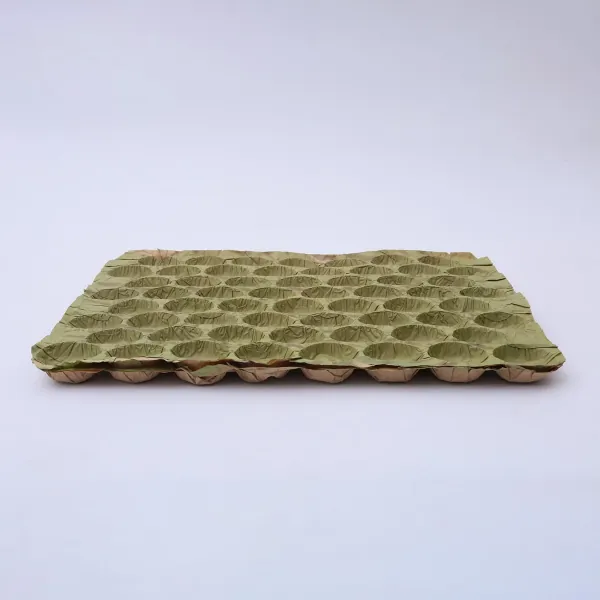
This is the pocketed fibre tray used to move and display fruit, made in a warm kraft tone rather than the grey of a standard pulp tray.
View tray & get pricing →05 — Questions
With a properly specified tab or hinge closure, yes. A carton that pops open in a bag is the single worst failure this product can have, so ask about the closure explicitly rather than accepting a default.
Six and twelve-egg cartons are the standard retail formats. Other counts are possible with dedicated tooling. For twenty and thirty-egg wholesale trays, see the moulded pulp egg flat.
A printed band or sleeve gives you full colour and sharp detail, and it holds the carton shut. An applied label is the simplest option. Direct print on the fibre is possible but only for very simple marks.
If we size them to your grade. Mixed-grade supply is common at farm gate, so tell us the range you pack and we will size for the largest with an acceptable fit on the smallest.
That depends entirely on your market — the US, UK, Canada and Australia all have different requirements for grading, dates, producer codes and farming method. We print what you supply on a defined panel; the content is a regulatory question to settle before artwork.
Dyed fibre is available in a limited palette. Natural fibre with a printed band is the more common route for speciality producers, because the band gives you far more design freedom than the carton colour does.
With dedicated tooling, yes. Cone size is entirely different, so it is a bespoke tool rather than an adaptation. Send sample eggs so we size the cones from the actual product.
100 bands minimum, the same as the cartons. Many small producers run standard cartons with their own bands, which is the simplest route to a branded product.
Yes, and closed cartons stack better than open flats. If your retail customer stacks several high, tell us — the lid has to carry that load rather than the eggs inside.
Yes. Ask for a plain sample in a similar footprint, load it with your largest grade, close it and carry it in a bag before committing to a full run. Cone fit and closure are the two things that decide whether a kraft egg carton works, and both are easier to judge in the hand than on a drawing.
Every kraft egg carton is starting from $0.30 per tray, with a minimum order of 100 and free shipping to the US, UK, Canada and Australia. Order on this page, or message us with any question first.