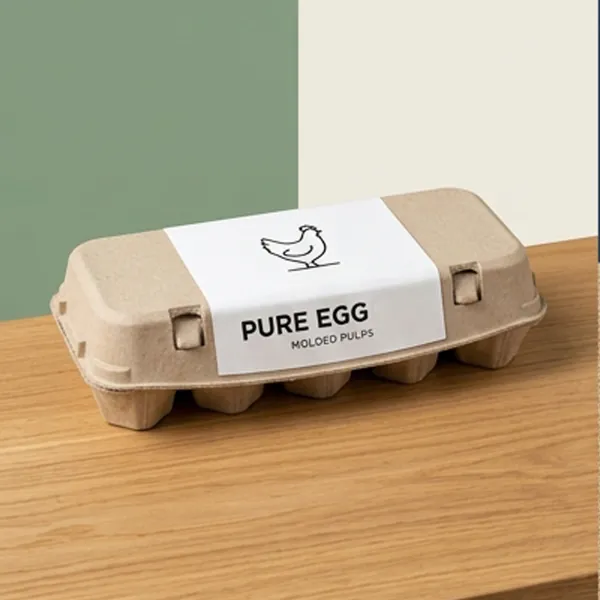
Kraft Egg Carton
An egg carton is the retail end of the same technology as the wholesale flat, with two additions: a lid that closes properly and a surface that has to s…
View tray & get pricing →Custom food packaging · US · UK · Canada · Australia
Compostable & Molded Fiber Trays
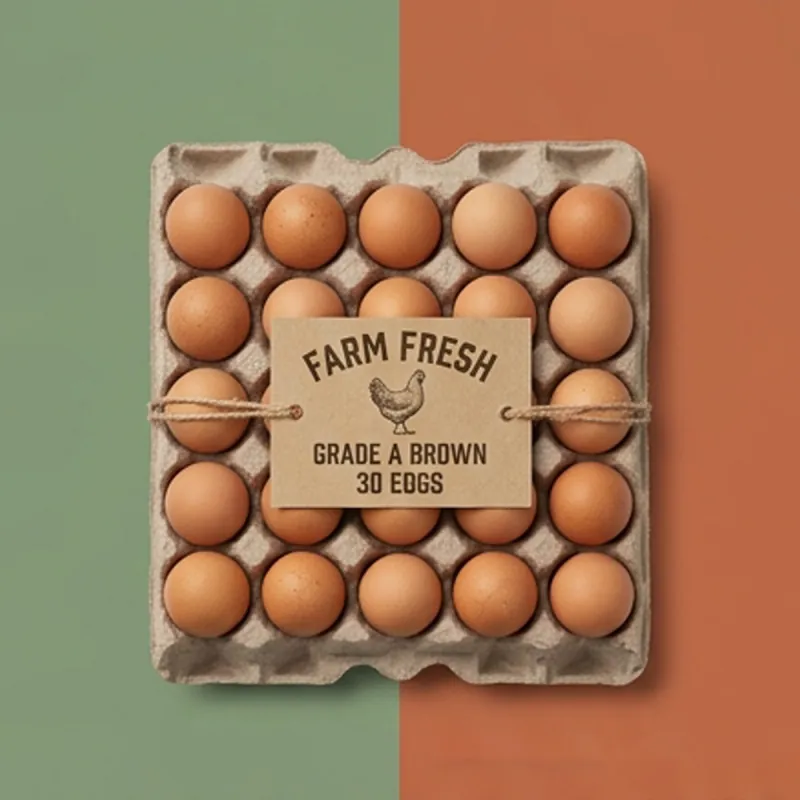
The egg flat is the oldest moulded fibre product still in daily use, and it has barely changed because the design was right the first time. Each egg sits in a cone that supports it at its strongest point, the cones interlock when trays are stacked, and the fibre crushes rather than shattering under impact.
It is the wholesale format — farm gate, packing house, catering supply — where eggs move in tens rather than sixes.
Pricing starts from $0.30 per tray
The unit price depends on the size, board, printing, finishing, quantity and delivery country, so every quote is worked out for your specification rather than taken from a list.
Send the size and the run length. We reply with pricing, material options and a production date — usually within one working day.
01 — Specification
Every element below is set when we quote. Nothing here is a fixed catalogue entry — if a line does not match what you need, say so and we will change it.
02 — Build the spec
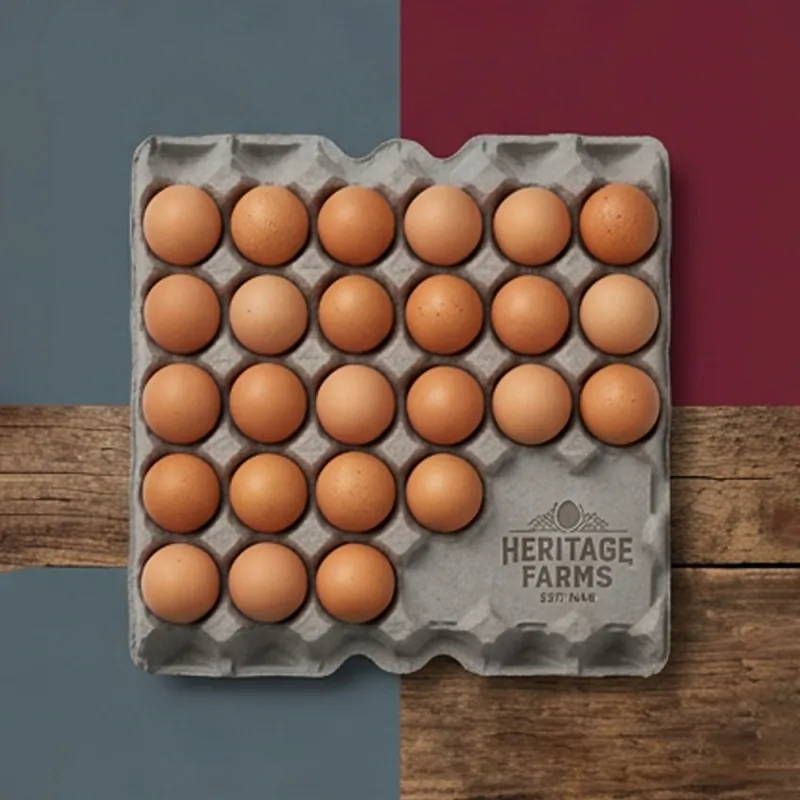
The same five questions we would ask on a phone call, with the moulded pulp egg flat already selected. You get a properly detailed brief at the end, which is what makes a first quote accurate rather than approximate.
Prefer the full builder with a live sketch? Open the tray designer.
03 — In detail
An egg is strongest along its long axis and weakest across the middle. A fibre cone supports it at the ends and holds it upright, so any force applied to a stack travels down the cone walls rather than across the shell.
The interlock between trays does the rest: the cones of the tray above sit into the gaps between the cones of the tray below, which means a stack of loaded flats is carrying weight through the fibre structure and not through the eggs. It is an elegant piece of engineering that predates most modern packaging thinking.
| Layout | Typical use | Note |
|---|---|---|
| 30-egg flat | Packing houses, wholesale, catering supply | The standard; fits most egg handling equipment |
| 20-egg flat | Smaller farm gate and specialty supply | Lighter and easier to handle manually |
| Custom counts | Duck, quail and speciality eggs | Cone size changes with the egg, so tooling is bespoke |
For retail six and twelve-egg packs with a lid, see the kraft egg carton, which is a different product with different requirements.
Cone diameter is set by the egg. A flat for large eggs lets medium eggs sit low and move; a flat for medium will not seat large eggs properly. Tell us your grade or your grade mix.
How many loaded flats go on top of each other in your handling and transport. This determines the fibre weight we specify.
If flats are handled by automated equipment, dimensional tolerance matters more than it does for manual handling. Say so early.
Farm name, grade, date and lot information usually go on a band or a label rather than being printed on the fibre.
04 — Nearby
Chosen because operators who buy the moulded pulp egg flat usually need one of these in the same order, not because they happen to sit in the same category.
An egg carton is the retail end of the same technology as the wholesale flat, with two additions: a lid that closes properly and a surface that has to s…
View tray & get pricing →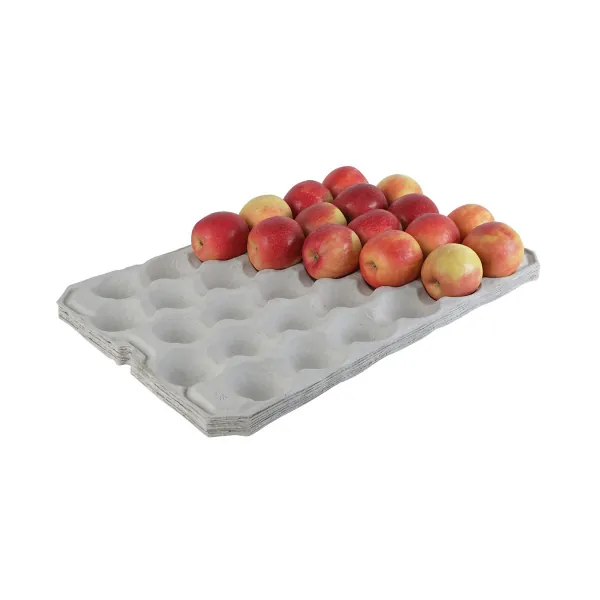

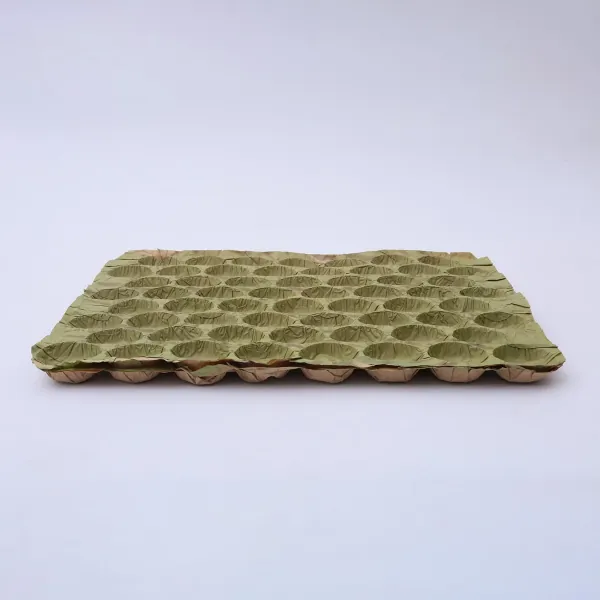
This is the pocketed fibre tray used to move and display fruit, made in a warm kraft tone rather than the grey of a standard pulp tray.
View tray & get pricing →05 — Questions
A flat is an open tray of 20 or 30 eggs used for wholesale and bulk handling. A carton is a lidded retail pack of six or twelve. Different products for different points in the chain — see the kraft egg carton for the retail version.
If we size them to your grade. A cone cut for large eggs lets medium ones sit low and move in transit; one cut for medium will not seat a large egg. If your supply spans grades, tell us the range.
That depends on the fibre weight and your handling. The interlock means weight travels through the cones rather than the eggs, but there is a limit. Tell us your stack height and we specify to it with margin.
Only very simply — the surface is textured and absorbent. Farm name, grade and lot information almost always go on a printed paper band, a sleeve or an applied label, which is also easier to change.
Yes, though the cone size is entirely different so it needs its own tooling. Send us sample eggs and we will size the cones properly rather than approximating from a chicken egg flat.
In practice many are reused within a farm or a supply chain until they degrade. They are not designed or specified as a washable returnable product, and we would not describe them as one.
Dyed fibre is available in a limited palette and is sometimes used to distinguish grades or lines within a packing operation. Natural is the standard and the cheapest.
Egg flats are a high-volume commodity item, so quantities are typically substantial. Tell us your annual usage and we will quote at the levels that make sense rather than at a token minimum.
Send the dimensions, the quantity and the country you want it delivered to. We come back with a full quote — material, print, finishing, freight and a production date.