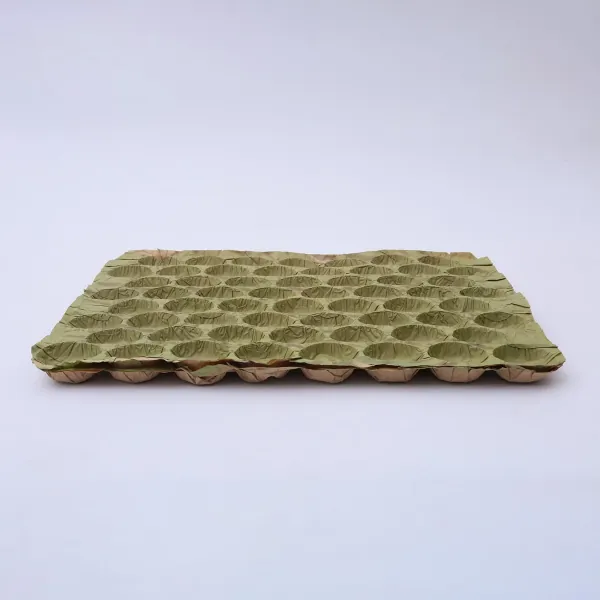
Kraft Fruit Tray
This is the pocketed fibre tray used to move and display fruit, made in a warm kraft tone rather than the grey of a standard pulp tray.
View tray & get pricing →Custom food packaging · US · UK · Canada · Australia
Compostable & Molded Fiber Trays
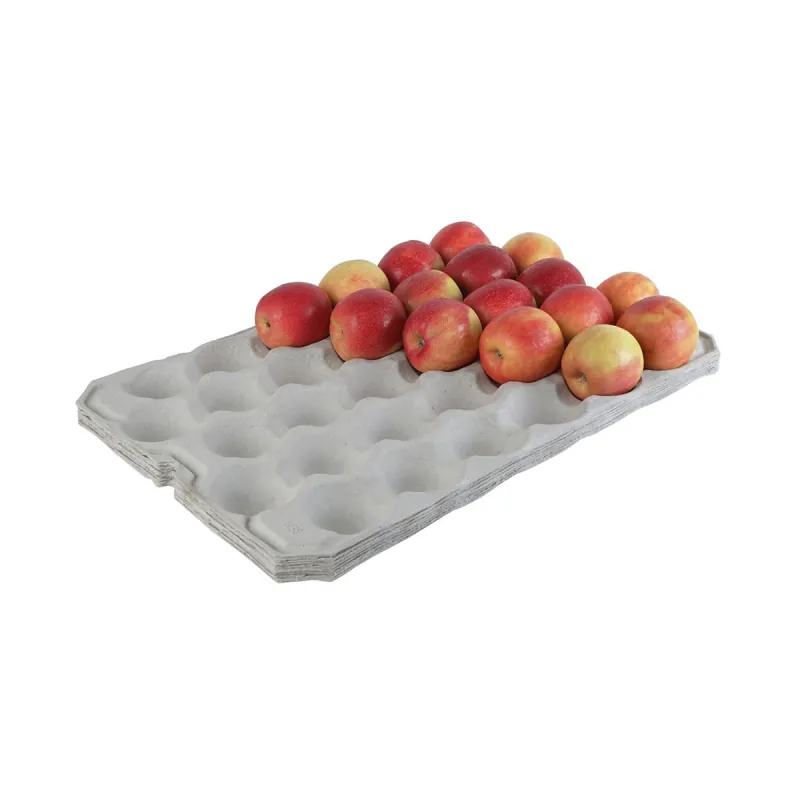
Fruit bruises where it touches other fruit. A moulded pocket tray gives each piece its own recess with a fibre wall between it and its neighbour, and the fibre crushes progressively under impact rather than transmitting it.
That is the whole product: separation and shock absorption, in a material that also lets the fruit breathe.
Pricing starts from $0.30 per tray
The unit price depends on the size, board, printing, finishing, quantity and delivery country, so every quote is worked out for your specification rather than taken from a list.
Send the size and the run length. We reply with pricing, material options and a production date — usually within one working day.
01 — Specification
Every element below is set when we quote. Nothing here is a fixed catalogue entry — if a line does not match what you need, say so and we will change it.
02 — Build the spec
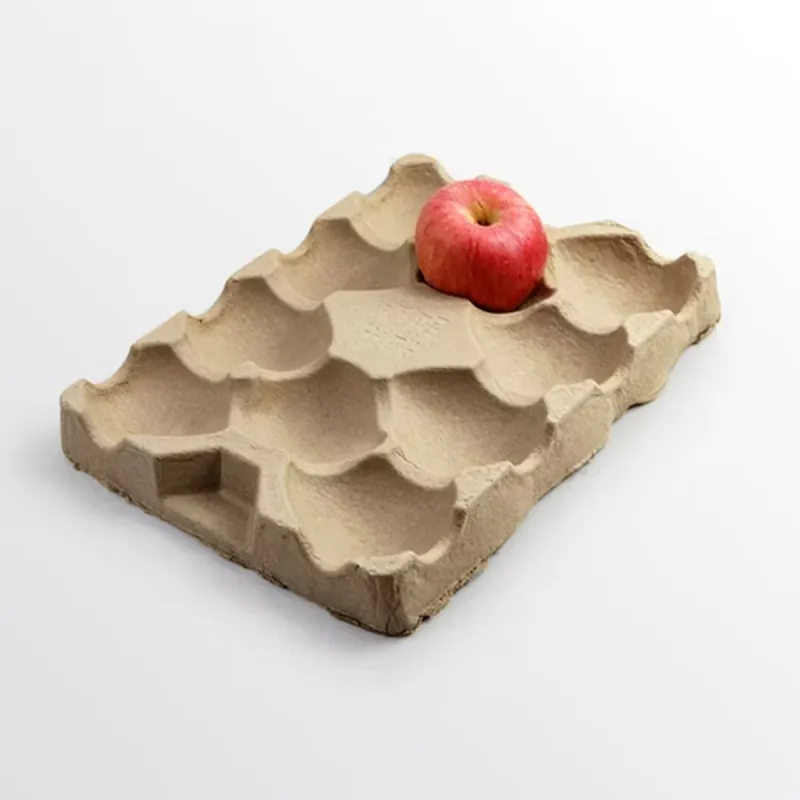
The same five questions we would ask on a phone call, with the moulded pulp produce tray already selected. You get a properly detailed brief at the end, which is what makes a first quote accurate rather than approximate.
Prefer the full builder with a live sketch? Open the tray designer.
03 — In detail
Each piece sits in its own pocket with a wall between it and the next. Most bruising in transit comes from fruit knocking against fruit, so removing that contact removes the majority of the damage.
Fibre deforms and absorbs energy under impact rather than bouncing it back into the product. This is the same property that has kept eggs travelling in fibre for a century.
Loaded trays stack with the pockets of one tray sitting against the base of the tray above, so the weight travels through the tray walls rather than through the fruit.
Fibre does not trap a film of moisture against the skin the way an impermeable surface can. Produce respires, and a breathable pocket helps rather than hinders that.
| Produce | Pocket type | Consideration |
|---|---|---|
| Apples and pears | Deep round pockets | The classic application; grading determines pocket size |
| Citrus | Medium round pockets | Tolerates handling better; pockets can be shallower |
| Tomatoes | Shallow wide pockets | Soft skin; pressure marks show quickly |
| Stone fruit | Deep soft-sided pockets | Highly susceptible to bruising at the shoulders |
| Avocados | Deep oval pockets | Irregular shape needs a generous pocket |
04 — Nearby
Chosen because operators who buy the moulded pulp produce tray usually need one of these in the same order, not because they happen to sit in the same category.
This is the pocketed fibre tray used to move and display fruit, made in a warm kraft tone rather than the grey of a standard pulp tray.
View tray & get pricing →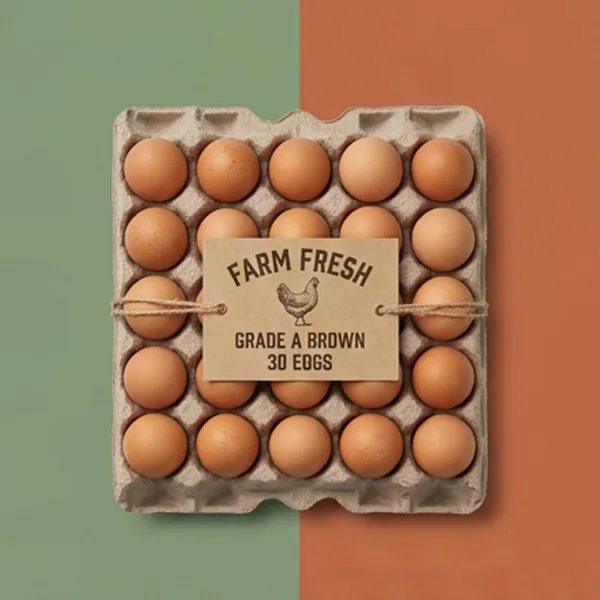
The egg flat is the oldest moulded fibre product still in daily use, and it has barely changed because the design was right the first time.
View tray & get pricing →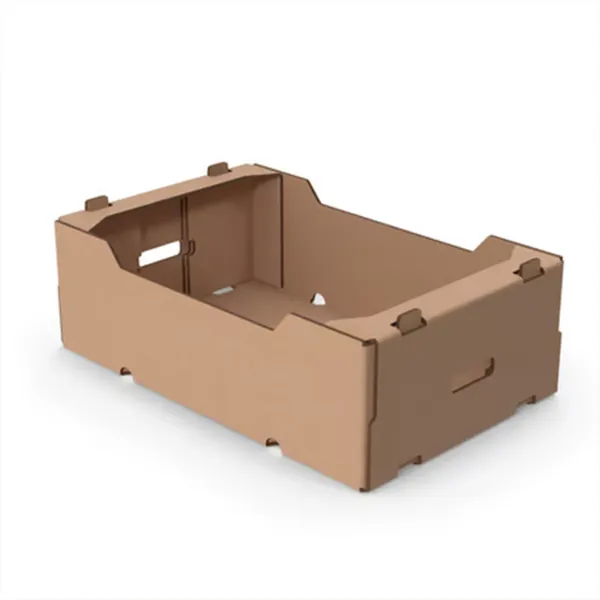
Vegetables need two things from a tray that most food packaging does not have to provide: airflow and stack strength.
View tray & get pricing →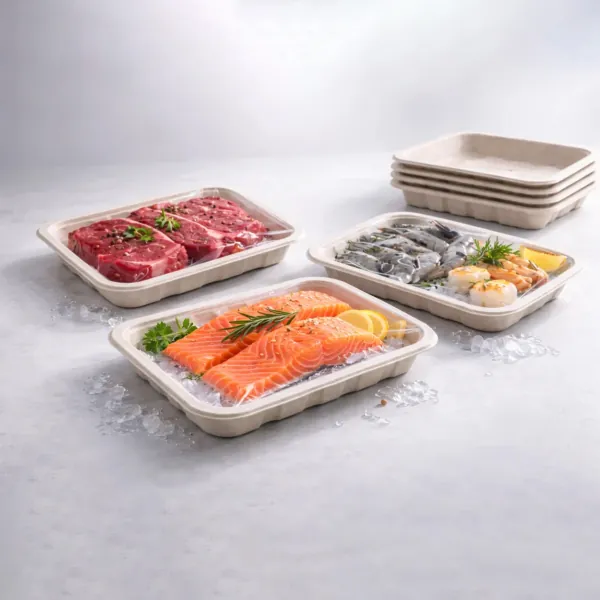
The whole argument for a fibre meat tray is what happens to the liquid.
View tray & get pricing →05 — Questions
To the largest fruit in your grade rather than the average. A piece that will not seat properly sits proud, gets crushed by the tray above, and is worse than a smaller piece sitting a little loose in its pocket.
They remove fruit-on-fruit contact, which is where most transit bruising comes from, and the fibre absorbs impact rather than transmitting it. Both effects are real and measurable in a supply chain.
Yes — that is part of the design. The pockets of one tray bear against the base of the tray above, so the weight travels through the tray walls rather than through the fruit. Tell us the stack height.
We match standard produce case footprints so trays fit your existing cases and pallet patterns, or we cut to your own dimensions. Tell us the case you use and we work to it.
Frequently, yes — a produce tray that arrives in a case can go straight onto a shelf. If that is the plan, tell us, because a display tray benefits from a cleaner rim and sometimes a printed band.
They do not trap moisture against the skin the way an impermeable surface can, which helps. Shelf life is mostly determined by temperature and handling, but breathable separation is a contributing factor rather than a neutral one.
Dyed fibre is available in a limited palette. Natural is the most common and the cheapest. Colour is sometimes used to distinguish grades or lines within a packhouse, which is a practical use for it.
Tell us the full size range across the season. We can design a pocket that works across the spread, or, where the range is very wide, two trays. Designing for a single mid-season size is the usual mistake.
Send the dimensions, the quantity and the country you want it delivered to. We come back with a full quote — material, print, finishing, freight and a production date.