
Kraft Charcuterie Board
Grazing is a business where the packaging is most of what gets photographed and much of what justifies the price.
View tray & get pricing →Custom food packaging · US · UK · Canada · Australia
Charcuterie & Grazing Boards
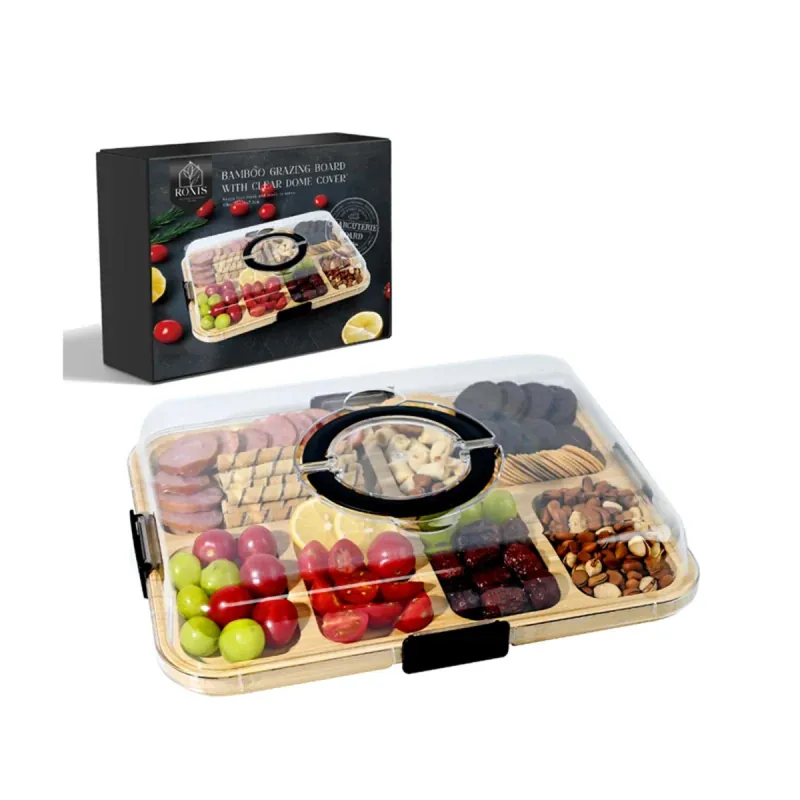
A dome turns a grazing board into a product you can put on a shelf. The arrangement stays untouched, it stays visible, and the whole assembly reads as a gift rather than as catering — which is why domed boards have become a fixture in premium retail and corporate gifting.
The cost is real: domes are bulky, they do not stack densely, and they add a component. This page is about deciding whether that cost is buying you something.
Pricing starts from $0.30 per tray
The unit price depends on the size, board, printing, finishing, quantity and delivery country, so every quote is worked out for your specification rather than taken from a list.
Send the size and the run length. We reply with pricing, material options and a production date — usually within one working day.
01 — Specification
Every element below is set when we quote. Nothing here is a fixed catalogue entry — if a line does not match what you need, say so and we will change it.
02 — Build the spec
The same five questions we would ask on a phone call, with the grazing board with dome already selected. You get a properly detailed brief at the end, which is what makes a first quote accurate rather than approximate.
Prefer the full builder with a live sketch? Open the tray designer.
03 — In detail
Three things, and it is worth being clear about which of them you need. It protects the arrangement, so the board can be built hours ahead and moved without being rebuilt. It displays the arrangement, so a customer can assess the product without a member of staff opening it. And it signals gift, because a domed board reads as an object rather than as a meal.
If you only need the first, a fitted lid is cheaper and stacks better. If you only need the third, a printed outer carton may do the work at lower cost. The dome is worth it when you need the display as well.
None of these are reasons not to use a dome. They are reasons to be sure you need one before you commit to it as your standard format.
Then measure the tallest point including garnish. Dome height comes from that plus clearance, and it is the number people most often get wrong.
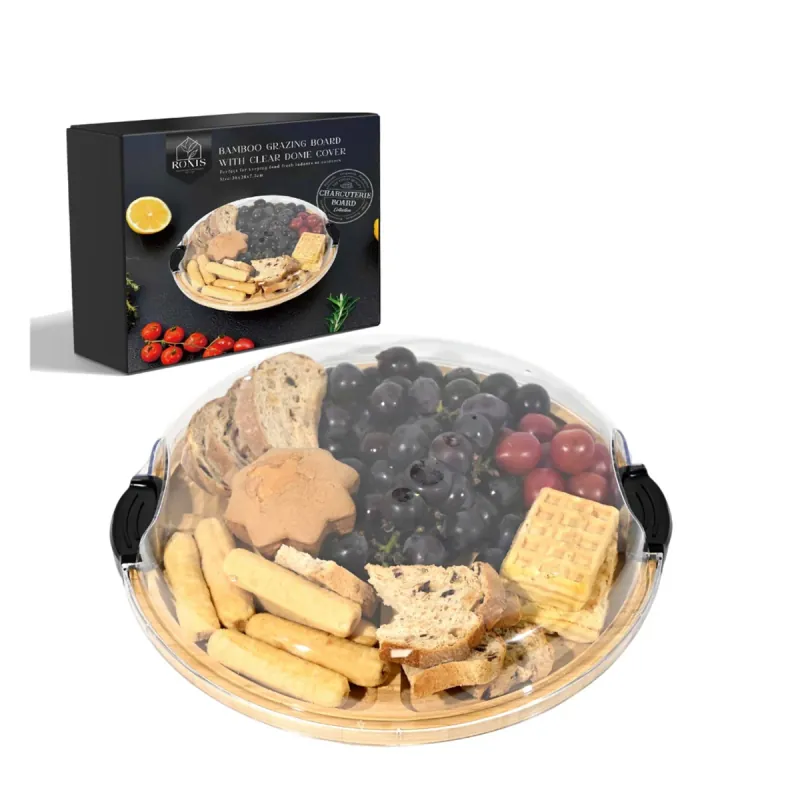
Round suits a radial arrangement and photographs beautifully. Rectangular fits shelves and vans more efficiently. Retail shelf space usually decides this one.
A compartment insert keeps the arrangement intact through handling and makes building consistent. It is the difference between a board that arrives as packed and one that arrives rearranged.
These must be ordered together the first time. A dome that is close but not matched will lift in transit, which is the most common failure on this format.
For retail and gifting, a printed carton protects the dome, stacks properly, and gives you a large branding surface the dome cannot provide.
04 — Nearby
Chosen because operators who buy the grazing board with dome usually need one of these in the same order, not because they happen to sit in the same category.
Grazing is a business where the packaging is most of what gets photographed and much of what justifies the price.
View tray & get pricing →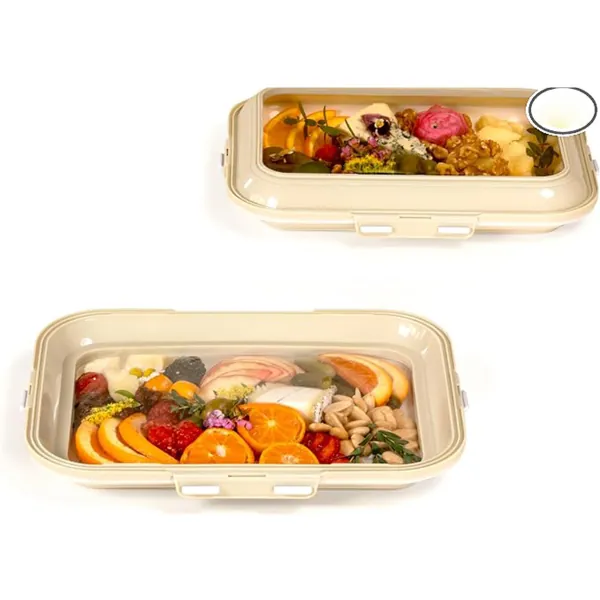
A crudité platter has a problem that other platters do not: the food is meant to stand up.
View tray & get pricing →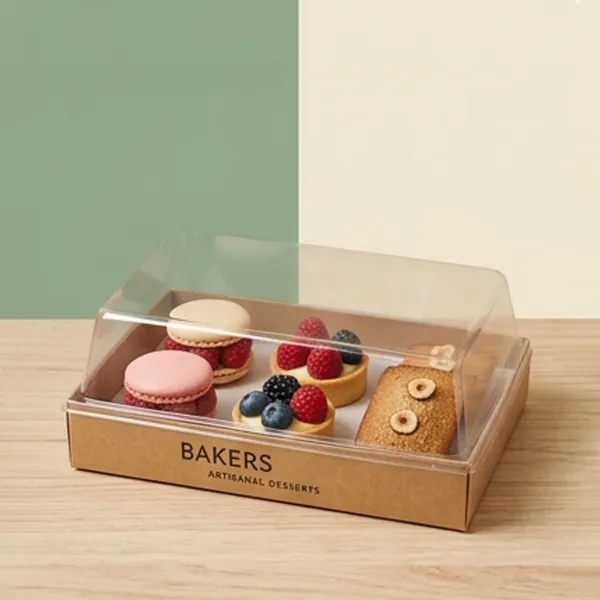
A dome over a kraft tray is the standard presentation for a mixed patisserie selection sold from a counter.
View tray & get pricing →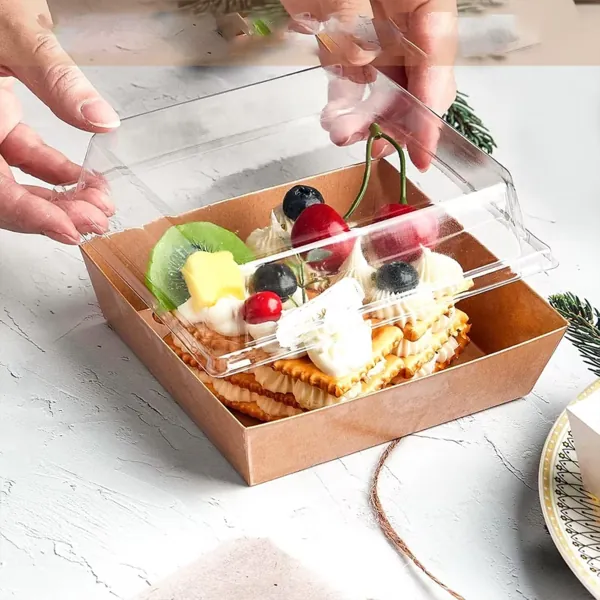
Individual grazing boxes have grown from a novelty into a substantial category, driven by corporate catering that needs single-serve portions and by ret…
View tray & get pricing →05 — Questions
A lid protects and stacks better and costs less. A dome also displays. If customers choose the board on appearance — retail shelf, gift counter, buffet — the dome earns its cost. If your boards are pre-ordered and opened by the recipient, a lid is the better buy.
Tallest element plus clearance, measured on an actual built board rather than estimated. Grapes, rolled charcuterie and stood crackers all reach higher than people expect, and a dome that presses on the arrangement ruins it.
If the dome and the board rim are dimensionally matched, yes. Domes lifting in transit almost always means a dome sourced separately from the board and only approximately matched. Order the first set together.
Round photographs beautifully and suits a radial arrangement. Rectangular uses shelf space and van space far more efficiently. If the board sells from a retail shelf, the shelf usually decides.
Not densely — the dome sets the pitch. This is the format’s main practical cost. Some businesses use a flat lid for delivery and reserve the dome for display and collection.
An applied label or a printed band around the base of the dome works. Printing directly on a clear dome is possible but tends to look busy and obscures the arrangement, which is the reason you bought the dome.
For retail and gifting, usually yes. It protects the dome, stacks properly on a shelf and in a van, and gives you a proper printed surface. For collection from a counter, the dome alone is often enough.
A compartment insert cut to your selection. Without one, the arrangement shifts every time the board is picked up, and a domed board that arrives rearranged is worse than an undomed one, because the customer can see it.
Yes, and it is worth doing here more than on most formats, because dome fit and insert design both benefit from a physical round before you commit to volume.
Send the dimensions, the quantity and the country you want it delivered to. We come back with a full quote — material, print, finishing, freight and a production date.