Resource guide
Food Tray Coatings and Finishes
What each coating and finish on a food tray actually does: grease and moisture barriers, matt and gloss laminates, varnishes, foiling — and what they cost you at end of life.
Updated August 28, 2026 · About 8 minutes to read
Coatings on a food tray fall into two entirely different groups that get discussed as if they were one. Functional barriers exist to stop grease or moisture reaching the board. Decorative finishes exist to change how the printed surface looks and feels. They are applied for different reasons, on different faces, and have different consequences.
Functional barriers
Grease resistance
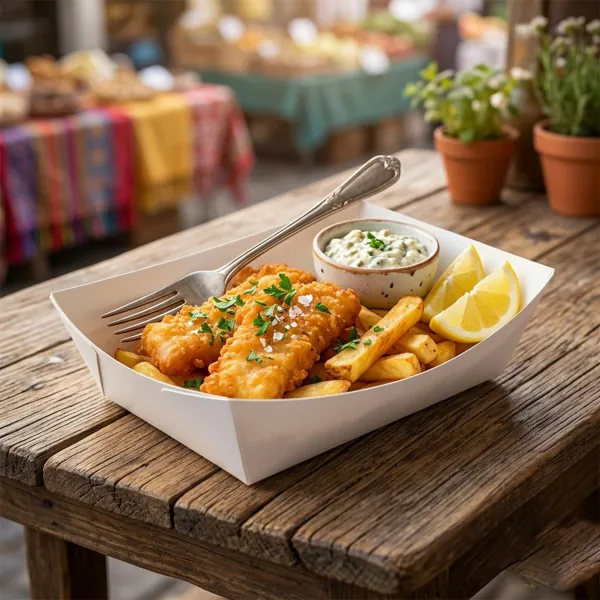
Applied to the food-contact face. Slows the migration of oil into the board, which otherwise shows within minutes as a translucent spreading patch. Inexpensive, and it is the most cost-effective specification available on any tray that holds fried food.
Moisture resistance
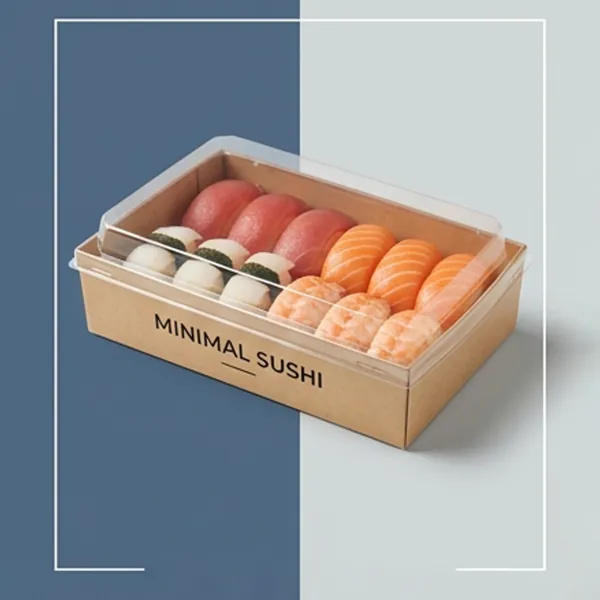
A different problem from grease. Aimed at condensation, wet food and chilled display rather than oil. Needed for sushi, seafood, chilled retail and anything sitting in a cold cabinet for a day.
Combined barriers
Many trays need both — hot fried food is greasy and wet at once. Specify against what the food actually does rather than choosing one and hoping.
Decorative finishes
Matt lamination
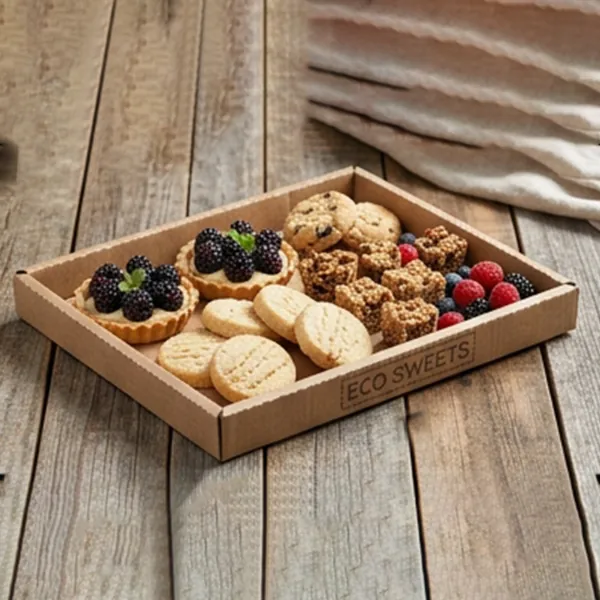
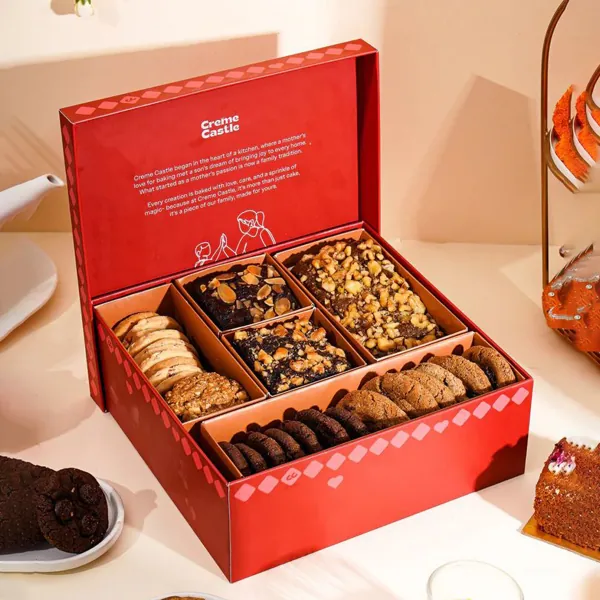
A matt film over the printed face. Removes reflections, which matters enormously for anything photographed — dessert platters, grazing boards, retail packs. It also hides fingerprints. It is the default recommendation wherever appearance matters.
Gloss lamination
Increases colour saturation and makes the surface wipeable. It also reflects every light source and shows every fingerprint, which is why it has fallen out of favour for premium food packaging.
Varnish
A coating applied on press rather than a film. Cheaper than lamination and available as a spot treatment, so you can gloss-varnish a logo on a matt background for contrast. Less protective than a laminate.
Foiling and embossing
Metallic foil and raised or recessed impressions. Available on rigid board and folding board, not on fluted or fibre. Effective on one element; cluttered when used everywhere.
What to specify by situation
| Situation | Specify |
|---|---|
| Fried food, served immediately | Grease-resistant food-contact face |
| Chilled retail display | Moisture-resistant face; matt laminate outside |
| Hot wet food, transported | Combined barrier, plus venting |
| Photographed product | Matt laminate or matt board |
| Premium gift packaging | Matt laminate plus spot foiling on one element |
| Dry ambient food | Usually nothing; save the cost |
Every coating changes end-of-life behaviour. A plain uncoated board tray is straightforwardly paper. Add a laminate or a barrier and whether a given facility accepts it depends on the specific construction and on local rules, which differ between countries and often between cities. We state exactly what is on the board you order so you can check it where the tray is actually used.
Common mistakes
- Specifying gloss on a product that gets photographed — it will reflect the light source in every image.
- Adding a barrier to a tray holding dry food, which is money spent on nothing.
- Assuming grease resistance also handles moisture, or the reverse. They are different treatments.
- Laminating both faces when only the printed face needs it.
- Foiling multiple elements, which reads as cluttered rather than premium.
Where finish is the whole product
Nowhere does finish matter more than in the bakery and dessert range, where fat migration and reflected light are both visible to the customer.
The commercial case for matt over gloss is strongest for businesses that sell through photographs, which is set out in the dessert shop guide.
Questions this guide gets asked
What is the difference between grease and moisture resistance?
They target different things. Grease resistance stops oil migrating into the board from fried food. Moisture resistance handles condensation, wet food and chilled display. Hot fried food needs both.
Should I choose matt or gloss?
Matt, in almost every food application. Gloss saturates colour but reflects every light source and shows fingerprints, which is exactly wrong for a product that gets photographed. Matt is the default for premium food packaging.
What is spot varnish for?
Applying a gloss finish to one element — usually a logo — against a matt background. It creates contrast through finish rather than colour, and it is cheaper than a full laminate.
Can I foil a corrugated tray?
Not usefully. Foiling and embossing need a smooth, firm surface, which means folding board or rigid. On fluted board the result is uneven, and on moulded fibre it does not work at all.
Do coatings make a tray non-recyclable?
They change what a given facility will accept, and the answer differs by construction and by locality. We state the exact construction so you can check it against the rules where the tray is used rather than relying on a general claim.
Do I need a coating on both sides?
Rarely. A functional barrier goes on the food-contact face; a decorative laminate goes on the printed face. Coating both is usually money spent for no benefit.
Is an uncoated tray ever the right answer?
For dry ambient food — bread, pastries without high butter content, packaged snacks — yes, and it is cheaper and simpler at end of life. Coatings should be specified against a problem, not applied by default.