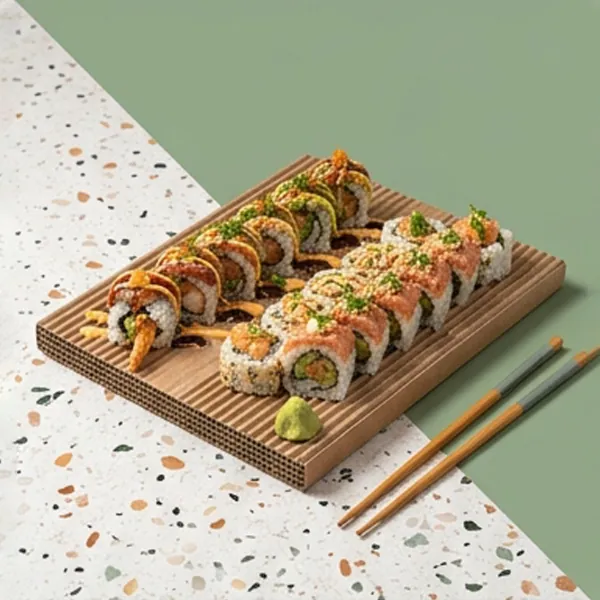
Corrugated Sushi Platter
A sushi platter is a flat presentation surface that has to stay flat.
View tray & get pricing →Custom food packaging · US · UK · Canada · Australia
Sushi & Seafood Trays
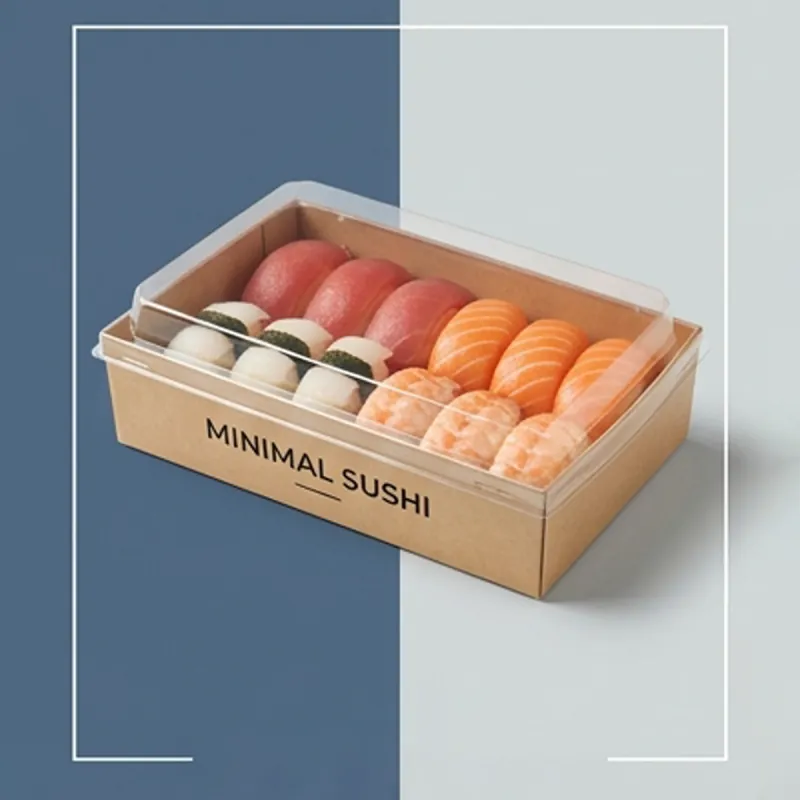
This is the retail sushi pack: a kraft base sized to a specific piece count, with a clear lid so the customer can see exactly what they are buying. It is the format that turns sushi from a restaurant item into a grab-and-go product, and the whole category depends on the lid.
The base has to survive a full day in a chilled cabinet with wet rice against it, which is the part most people underestimate.
Pricing starts from $0.30 per tray
The unit price depends on the size, board, printing, finishing, quantity and delivery country, so every quote is worked out for your specification rather than taken from a list.
Send the size and the run length. We reply with pricing, material options and a production date — usually within one working day.
01 — Specification
Every element below is set when we quote. Nothing here is a fixed catalogue entry — if a line does not match what you need, say so and we will change it.
02 — Build the spec
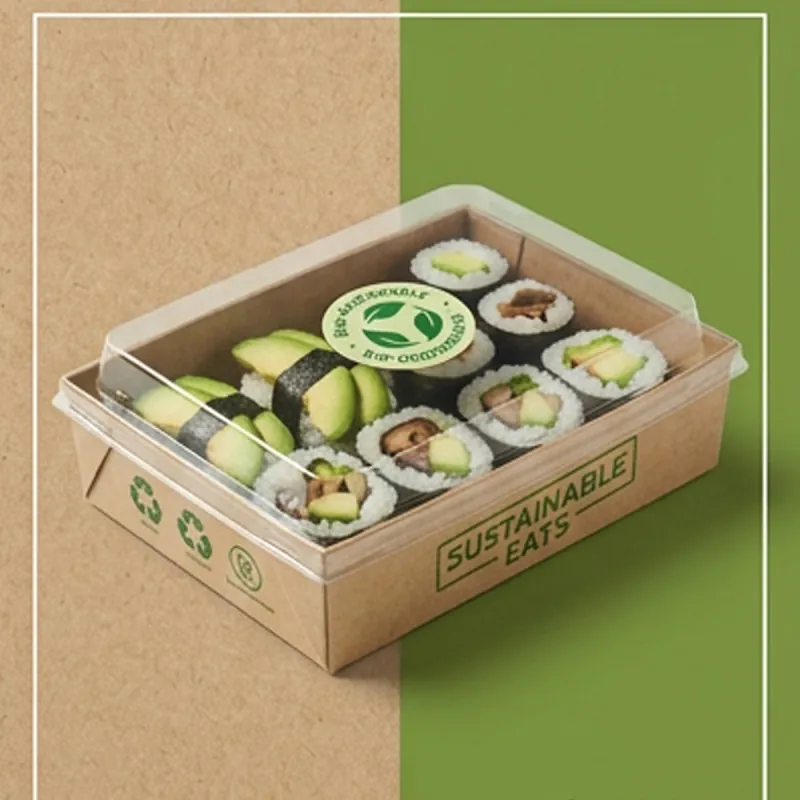
The same five questions we would ask on a phone call, with the kraft sushi tray with lid already selected. You get a properly detailed brief at the end, which is what makes a first quote accurate rather than approximate.
Prefer the full builder with a live sketch? Open the tray designer.
03 — In detail
Retail sushi is bought almost entirely on appearance. A lid that is too tall, too small or misted hides the product and the pack does not sell. The lid is not a closure on this format — it is the shop window.
Rice is wet and sits against the base for the whole shelf life, in a cabinet where the air is cold and damp. Untreated board softens at the corners within a working day. A moisture-resistant face is baseline, not an option.
Soy, ginger and wasabi have to go somewhere that is not on top of the sushi. Either formed compartments or a defined space for a sachet and a pot. Deciding this after the die is cut is not possible.
Piece counts vary by market and by operator. These are common retail formats rather than fixed standards.
| Pack | Typical contents | Layout note |
|---|---|---|
| Small snack pack | 6–8 pieces of a single roll type | Single row; compact footprint |
| Standard retail pack | 10–12 pieces, one or two roll types | Two rows; needs a soy compartment |
| Large or sharing pack | 16–24 pieces, mixed | Multiple rows; benefits from dividers |
| Nigiri and sashimi pack | Individual pieces laid flat | Wider, shallower; needs more base area per piece |
Listing sushi in a retail chiller? Pre-packed chilled fish is one of the more heavily regulated food categories, and the allergen, storage and date-marking requirements differ between the US, UK, Canada and Australia. Design a dedicated flat panel for the label before the artwork stage — retro-fitting one into a finished layout never works well.
04 — Nearby
Chosen because operators who buy the kraft sushi tray with lid usually need one of these in the same order, not because they happen to sit in the same category.
A sushi platter is a flat presentation surface that has to stay flat.
View tray & get pricing →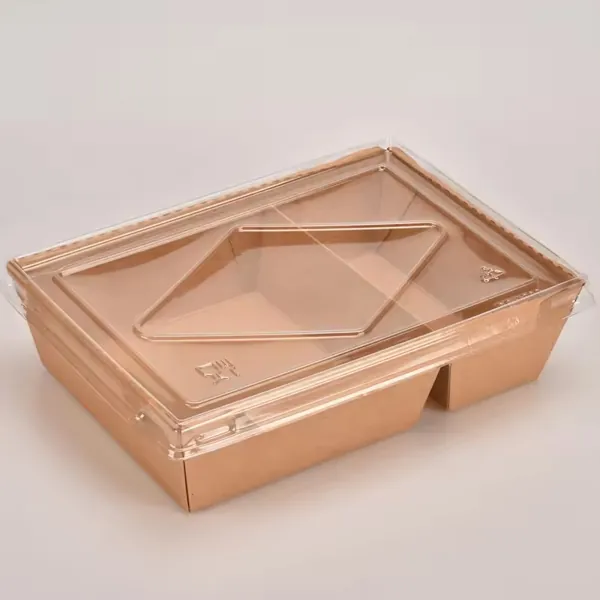
The lidded compartment tray is the format that meal-prep businesses, bento services and premium takeaway have converged on.
View tray & get pricing →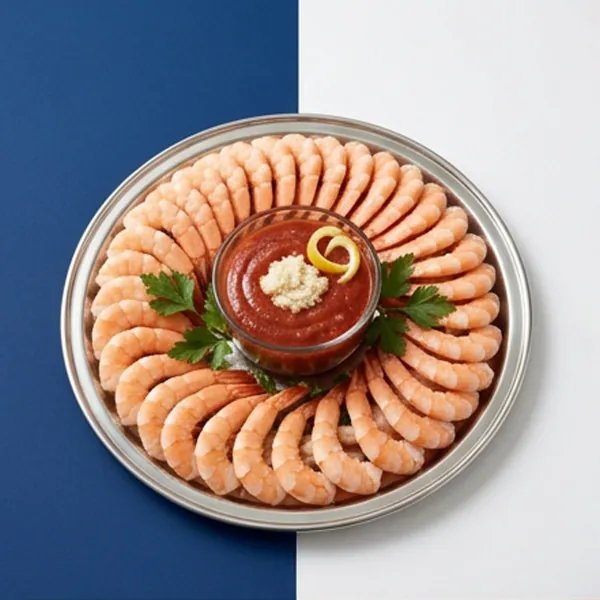
The shrimp platter is one of the most instantly recognisable formats in food retail: a ring of prawns arranged tail-inward around a central pot of cockt…
View tray & get pricing →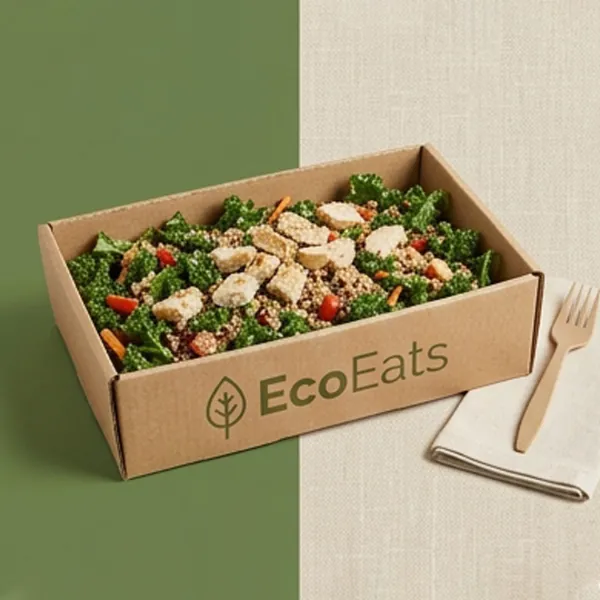
The lunch tray sits between a takeaway container and a proper meal tray.
View tray & get pricing →05 — Questions
Sized by piece count and cut size rather than a nominal figure. Photograph a packed tray next to a ruler and send it — we size from your actual product, since roll diameters and cut lengths vary between kitchens.
With a moisture-resistant food-contact face, yes. Without one, it will not — wet rice against untreated board softens the corners within a working day, and it shows in a display cabinet.
Usually because product was packed before it had fully cooled, which traps warm moist air inside. Pack fully chilled. Where misting persists on a retail line, anti-fog lid material is available at extra cost.
In formed compartments or a defined space for a sachet and a pot. Decide before the die is cut — there is no way to add a compartment afterwards, and putting a soy sachet on top of the sushi looks careless.
A fitted lid sits on rather than sealing. If you need a genuine seal for shelf life, that is film sealing and requires a compatible rim profile designed in from the start. Tell us your sealing equipment.
Where specified for that application, yes, and we confirm the food-contact specification in writing. Raw chilled fish is a demanding application and we would not give a general assurance without stating the specification.
With a fitted lid, yes, though stacked sushi packs press on the arrangement below unless the lid is designed to carry the load. Tell us your display stack height.
The kraft base prints well on the rim and the sides. Most retail sushi branding is carried on an applied label, because the label also has to hold the barcode and legal information and it is easier to change.
Yes — see the corrugated sushi platter for the flat sharing format used in catering and larger retail packs.
Send the dimensions, the quantity and the country you want it delivered to. We come back with a full quote — material, print, finishing, freight and a production date.