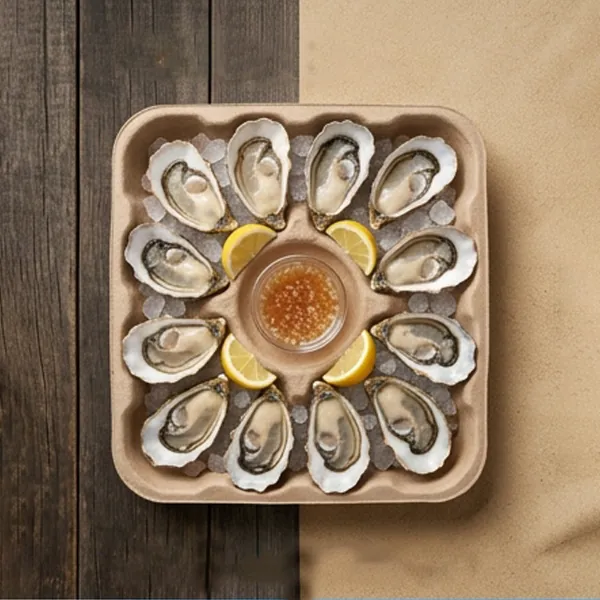
Oyster Serving Tray
Oysters on the half shell have one packaging requirement above all others: they must stay level.
View tray & get pricing →Custom food packaging · US · UK · Canada · Australia
Sushi & Seafood Trays
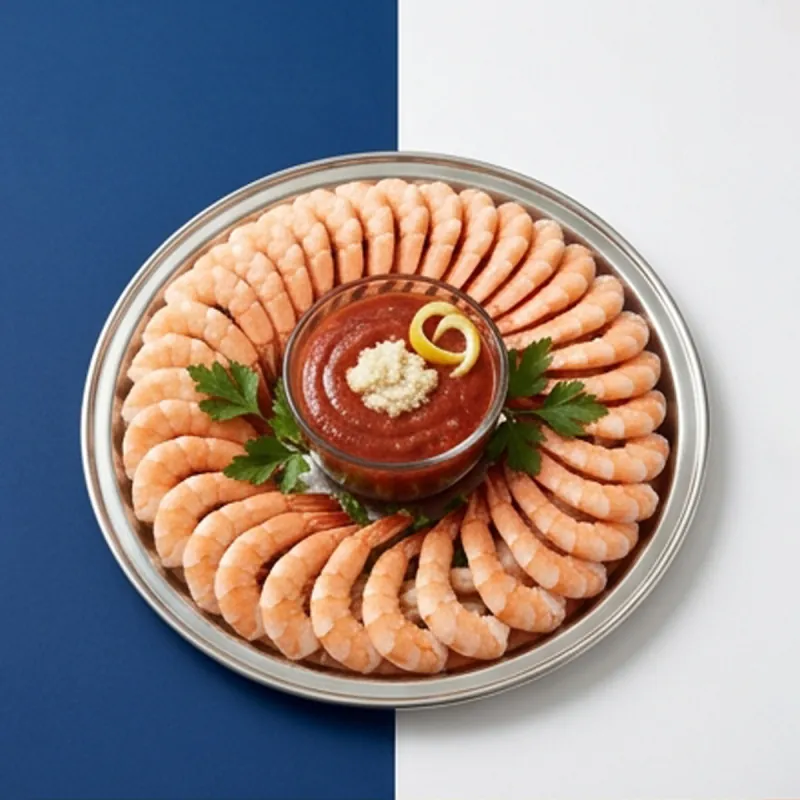
The shrimp platter is one of the most instantly recognisable formats in food retail: a ring of prawns arranged tail-inward around a central pot of cocktail sauce, under a clear lid. It has barely changed in decades because the geometry works — every piece is equally accessible, the sauce is central, and the whole thing reads as abundant.
What varies is the size, the sauce arrangement and how well the platter copes with a chilled cabinet.
Pricing starts from $0.30 per tray
The unit price depends on the size, board, printing, finishing, quantity and delivery country, so every quote is worked out for your specification rather than taken from a list.
Send the size and the run length. We reply with pricing, material options and a production date — usually within one working day.
01 — Specification
Every element below is set when we quote. Nothing here is a fixed catalogue entry — if a line does not match what you need, say so and we will change it.
02 — Build the spec
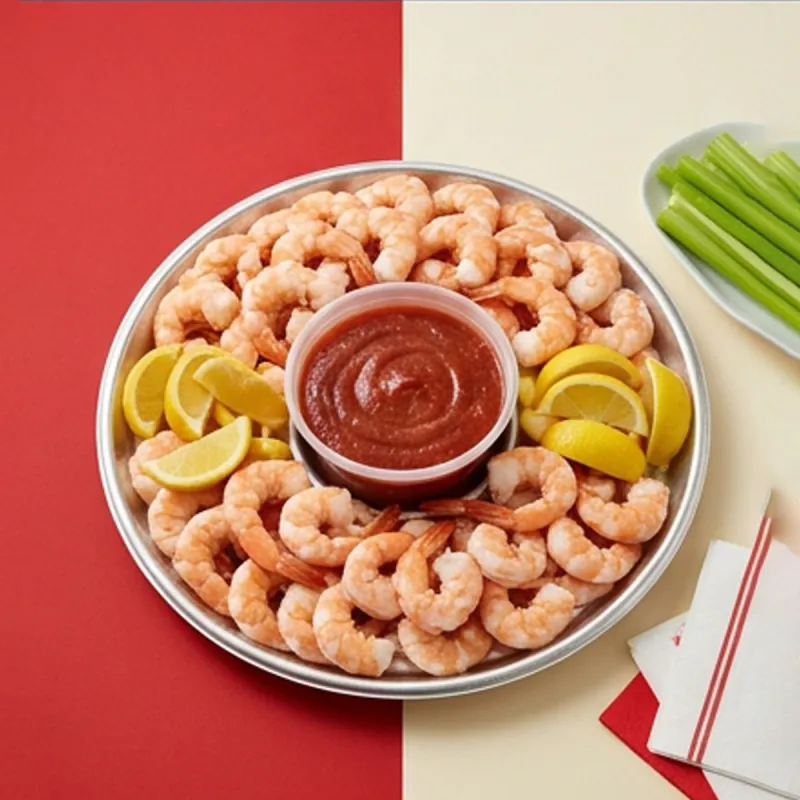
The same five questions we would ask on a phone call, with the shrimp cocktail tray already selected. You get a properly detailed brief at the end, which is what makes a first quote accurate rather than approximate.
Prefer the full builder with a live sketch? Open the tray designer.
03 — In detail
It is not nostalgia. A ring gives every prawn an equal position, presents the tails outward so they can be picked up without touching the others, and puts the sauce where everyone can reach it. Nothing that has been tried since arranges a shared cold seafood course better.
It also, usefully, makes the portion look larger than the same number of prawns piled in a bowl, which is why the format survives in retail where perceived value drives the sale.
Prawn grading varies enormously, and a platter designed for a 16/20 count looks sparse with a smaller grade. Lay out the actual count you sell in a ring and measure the diameter it forms.
The centre well is measured from your pot, at its rim and base. A well that is a fraction too wide lets the pot tip when the platter is carried, which spills sauce across the prawns.
A clear border outside the ring gives staff somewhere to hold the platter, and it makes the arrangement look deliberate rather than crammed. A finger width is the minimum.
Every surface in a chiller collects condensation, and on a clear lid that hides the product. Pack fully chilled and consider anti-fog lid material for retail lines.
Thawed and cooked prawns release liquid. A construction that absorbs or channels it keeps the platter looking fresh rather than wet.
Retail cabinets stack platters. The lid has to carry that load without pressing on the arrangement below.
Chilled seafood is a regulated category. Plan a flat panel for the barcode and legal information before finalising the shape.
04 — Nearby
Chosen because operators who buy the shrimp cocktail tray usually need one of these in the same order, not because they happen to sit in the same category.
Oysters on the half shell have one packaging requirement above all others: they must stay level.
View tray & get pricing →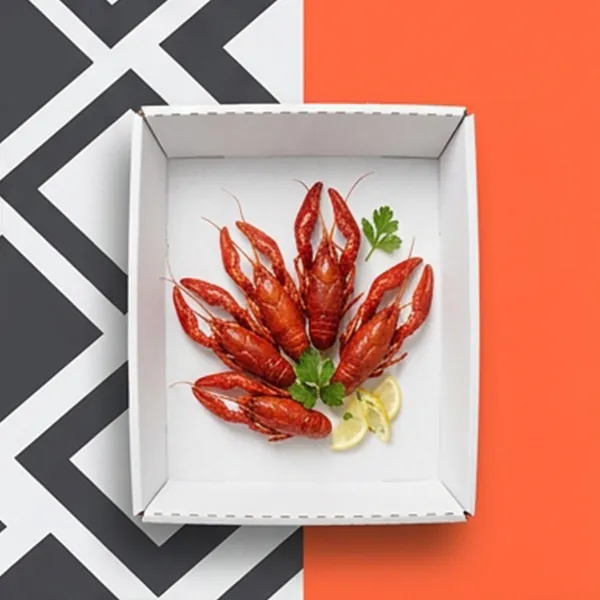
A crawfish tray carries several pounds of hot, wet, seasoned shellfish, often with corn and potatoes, straight out of a boil.
View tray & get pricing →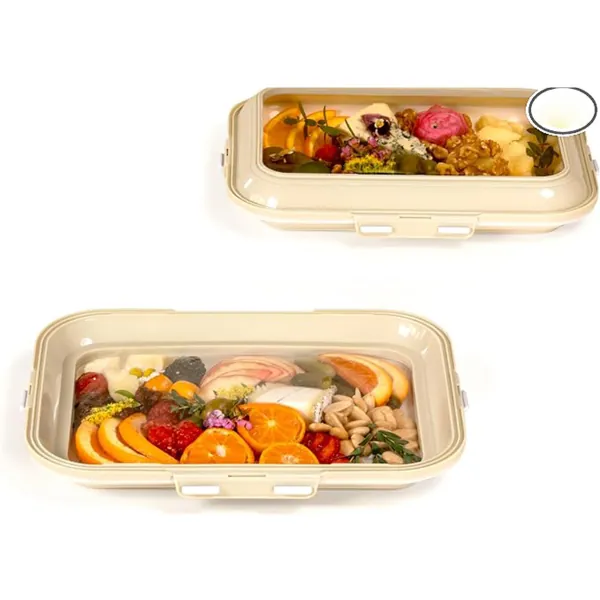
A crudité platter has a problem that other platters do not: the food is meant to stand up.
View tray & get pricing →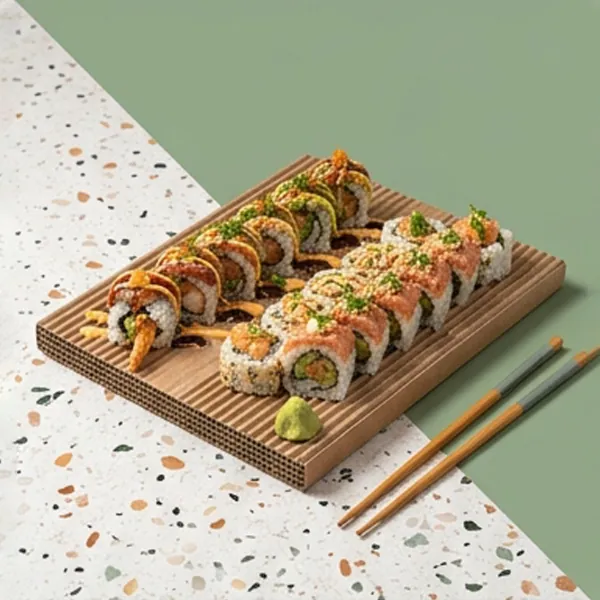
A sushi platter is a flat presentation surface that has to stay flat.
View tray & get pricing →05 — Questions
Lay out the actual count you sell in a ring and measure the diameter, then add the sauce well and a clear border. Prawn grading varies enormously, so a platter sized to a nominal weight will look sparse with a smaller grade.
A pot for retail, because it gives you a seal and a shelf life. A formed well for catering and event service, where the platter is eaten the same day and one fewer component is worth having.
Not if the well is cut to the pot at both its rim and base diameters. A well that is a fraction too wide lets the pot rock, and sauce across the prawns is the result. Send us the pot.
Product packed before it is fully chilled, or a platter moving between temperatures. Pack cold. On a retail line where fogging persists, anti-fog lid material is available and does work.
Yes, if the lid is specified to carry the load. Tell us how many platters are stacked in your display, or the lid will press the arrangement in the platter below.
Round for the classic ring arrangement and for maximum shelf impact. Rectangular where cabinet space is tight and the platters have to tessellate. Round wastes more material per sheet, so it carries a small premium.
Cooked and thawed prawns release some liquid. A construction that absorbs or channels it keeps the platter looking fresh. Tell us the shelf life you are working to and we will specify accordingly.
The border and the rim can carry print. Most retail seafood platters use an applied label instead, because it also has to carry the barcode, weight and legal information, and a label is easier to change.
Send the dimensions, the quantity and the country you want it delivered to. We come back with a full quote — material, print, finishing, freight and a production date.