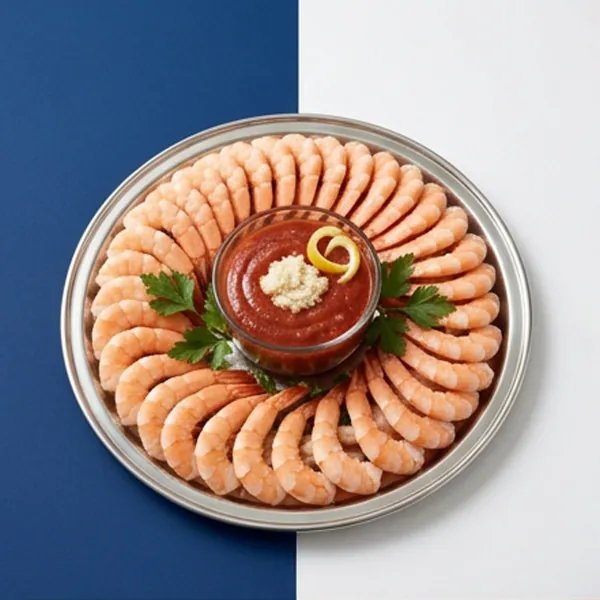
Shrimp Cocktail Tray
The shrimp platter is one of the most instantly recognisable formats in food retail: a ring of prawns arranged tail-inward around a central pot of cockt…
View tray & get pricing →Custom food packaging · US · UK · Canada · Australia
Sushi & Seafood Trays
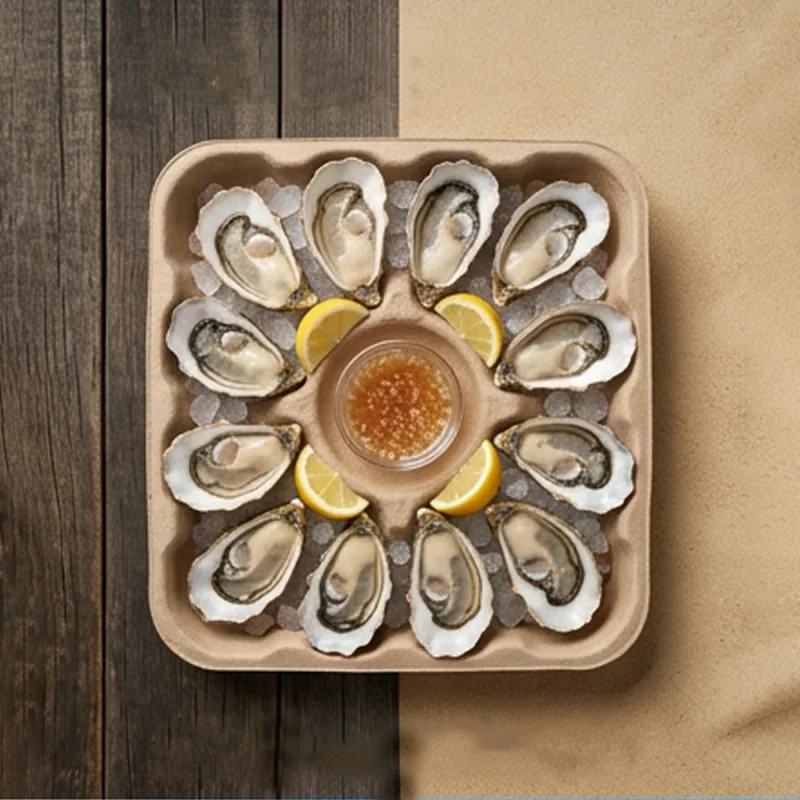
Oysters on the half shell have one packaging requirement above all others: they must stay level. A shell that tips loses its liquor, and the liquor is a substantial part of what the customer is paying for.
A formed tray with individual recesses holds each shell flat, keeps them separated, and gives the arrangement the radial geometry that makes an oyster platter look like an occasion.
Pricing starts from $0.30 per tray
The unit price depends on the size, board, printing, finishing, quantity and delivery country, so every quote is worked out for your specification rather than taken from a list.
Send the size and the run length. We reply with pricing, material options and a production date — usually within one working day.
01 — Specification
Every element below is set when we quote. Nothing here is a fixed catalogue entry — if a line does not match what you need, say so and we will change it.
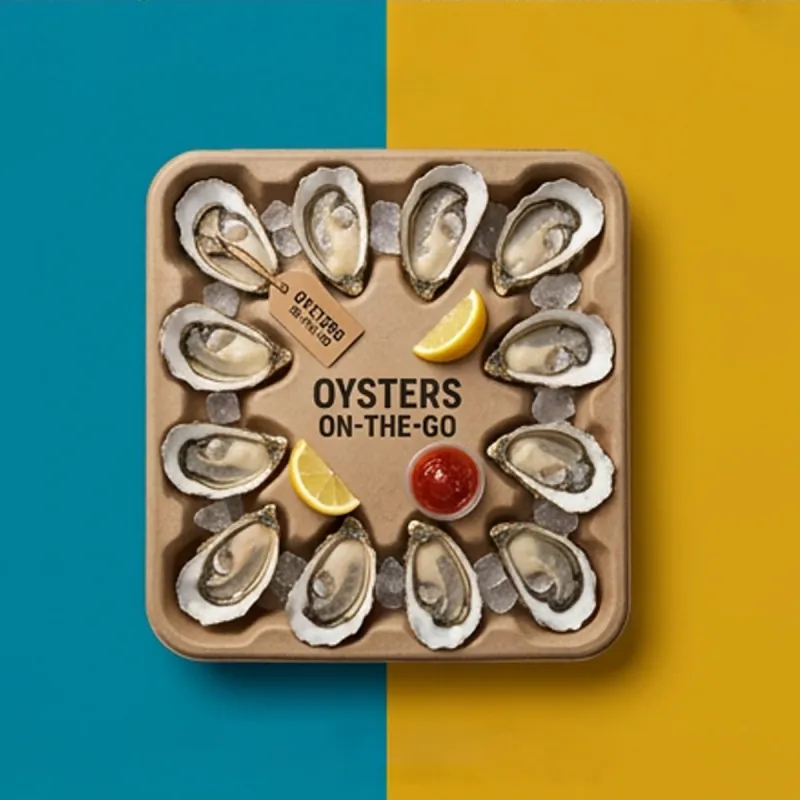
02 — Build the spec
The same five questions we would ask on a phone call, with the oyster serving tray already selected. You get a properly detailed brief at the end, which is what makes a first quote accurate rather than approximate.
Prefer the full builder with a live sketch? Open the tray designer.
03 — In detail
Oysters vary enormously by species, growing method and grade, and a recess cut for one will not hold another. A Pacific oyster and a native are different shapes as well as different sizes, and even within a grade the spread is wide.
Send us a dozen shells across your normal range. We size the recess to hold the smallest securely and accept the largest, which is a genuinely different exercise from taking an average. On this product, an oyster that will not sit flat is a failed pack rather than a slightly imperfect one.
| Count | Setting | Note |
|---|---|---|
| 6 | Bar service, individual order | Small footprint; often served on a separate ice bed |
| 12 | The standard dozen | Radial arrangement around a centre sauce well |
| 24 | Sharing platter, events | Needs real rigidity; two dozen shells is a substantial weight |
| Custom | Retail packs and speciality grades | Sized to the specific shell and the retail case |
04 — Nearby
Chosen because operators who buy the oyster serving tray usually need one of these in the same order, not because they happen to sit in the same category.
The shrimp platter is one of the most instantly recognisable formats in food retail: a ring of prawns arranged tail-inward around a central pot of cockt…
View tray & get pricing →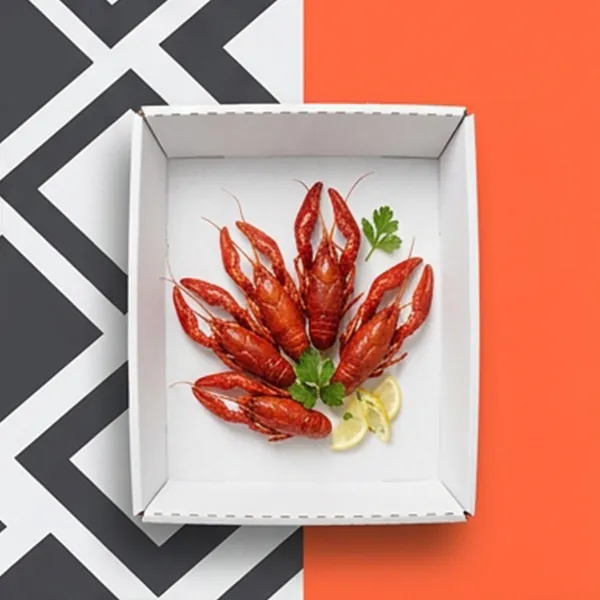
A crawfish tray carries several pounds of hot, wet, seasoned shellfish, often with corn and potatoes, straight out of a boil.
View tray & get pricing →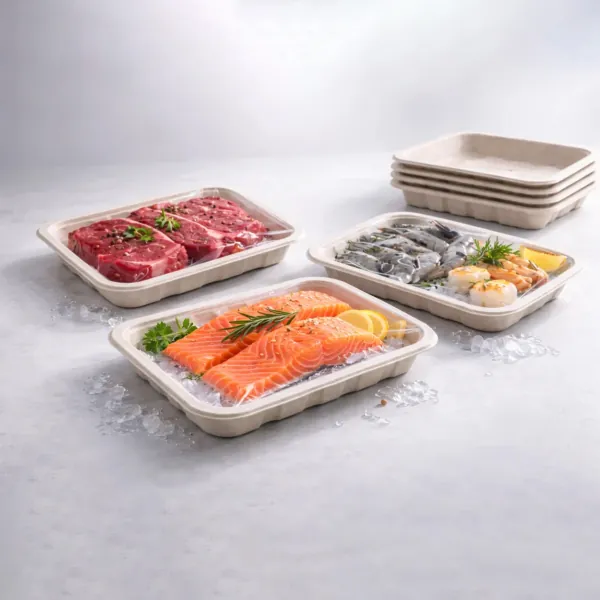
The whole argument for a fibre meat tray is what happens to the liquid.
View tray & get pricing →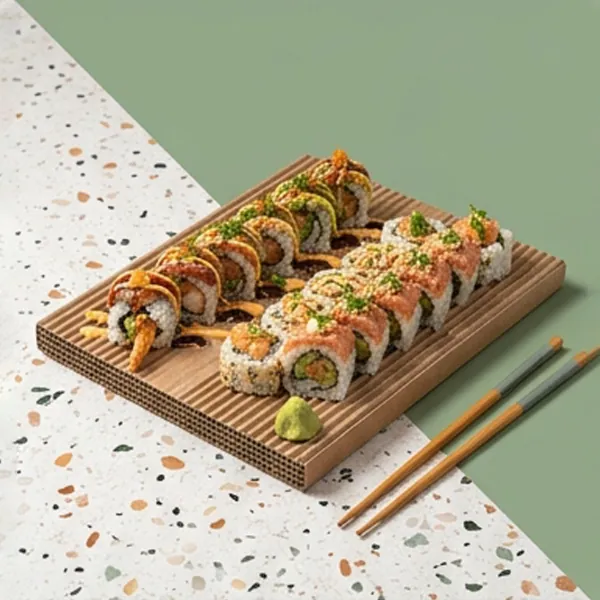
A sushi platter is a flat presentation surface that has to stay flat.
View tray & get pricing →05 — Questions
Send us a dozen shells across your normal size range. We size so the smallest sits securely and the largest still fits — which is a different exercise from taking an average, and it matters because a shell that tips loses its liquor.
Fibre absorbs melt water rather than pooling it, which helps for a service period. For prolonged ice display, tell us how long — standing water is the hardest condition for any fibre or board product.
For a dozen served as a platter, it is close to standard — mignonette and hot sauce need somewhere to sit that is not among the shells. It can be formed for direct filling or cut to hold a pot.
Yes. A clear fitted lid is necessary for a retail chilled pack, and the rim has to be matched to it. For bar service a lid is usually unnecessary and gets in the way.
Fibre handles shell edges well — it is more resilient to point loads than a thin board would be. If your shells are particularly rough, mention it and we will specify a slightly heavier grade.
Six, twelve and twenty-four are the common formats. Twelve with a centre well is the classic platter. Custom counts are possible with dedicated tooling if you have a specific retail or service format.
Only simply — fibre is textured and absorbent. Most oyster trays are plain, with any branding on an applied label or a band. For a retail pack, the label also carries the legal information.
Yes, and fibre performs well there because it manages condensation rather than beading it. A retail pack will need a lid and a defined area for the label and barcode.
Send the dimensions, the quantity and the country you want it delivered to. We come back with a full quote — material, print, finishing, freight and a production date.