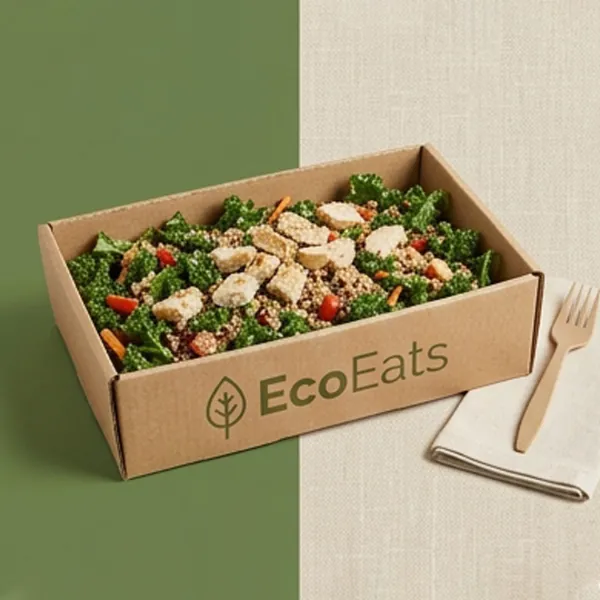
Corrugated Lunch Tray
The lunch tray sits between a takeaway container and a proper meal tray.
View tray & get pricing →Custom food packaging · US · UK · Canada · Australia
Country · Canada
Canadian food packaging sits between American and British conventions, which sounds convenient and is actually the source of most of the confusion. Portion sizes and menu formats lean American; labelling requirements, including bilingual packaging in much of the market, are their own thing entirely; and units are used inconsistently across the industry.
We work in whichever units your existing specifications use, and we design label panels with bilingual requirements in mind from the start rather than trying to fit French copy into a finished layout.
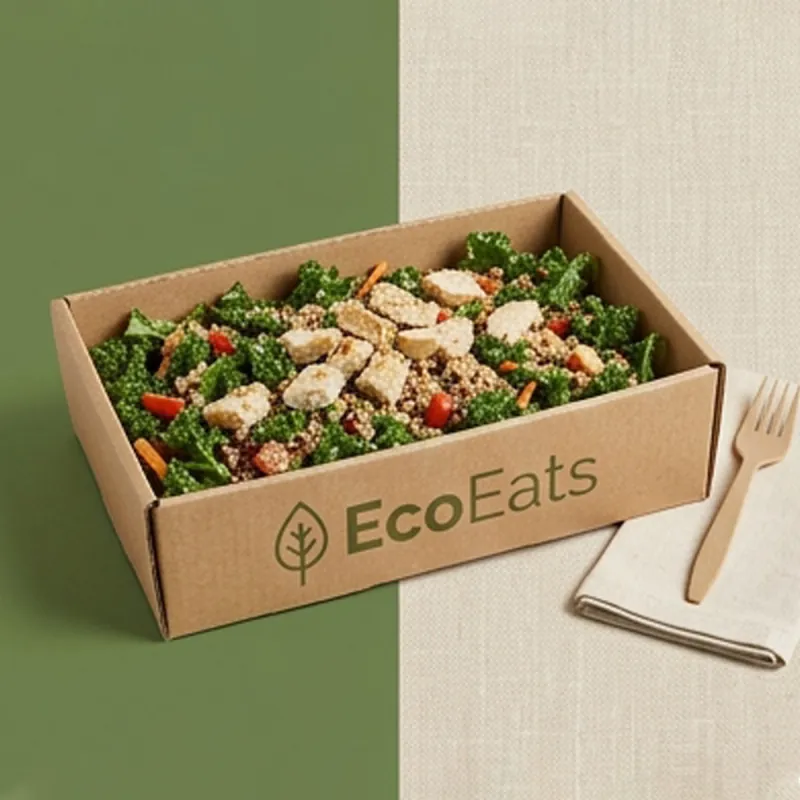
Tell us the tray, the quantity and where it is going. Freight is quoted to your address rather than added later.
French and English labelling requirements apply to a wide range of pre-packed food sold in Canada, and the practical consequence for packaging design is that you need roughly twice the panel area you would for a single-language market. Retrofitting a second language into a layout designed for one is the most common packaging problem we see on Canadian retail projects.
The fix is straightforward if it is done first: design the panel for both languages at legible sizes, then lay out the rest of the pack around it. What that panel has to say is a regulatory matter for you to confirm; how much room it needs is a design decision we can help with.
Packaging that travels between a heated interior and a genuinely cold exterior deals with condensation more often than it does in milder markets. Moisture-resistant constructions matter for a wider range of products here.
Domestic freight distances are substantial, particularly between the eastern and western provinces. Flat-packing is worth more here than in a compact market.
Patio and festival trading is compressed into a short, intense season in much of the country, which affects how packaging should be ordered and stored.
Some Canadian operations work in imperial, some in metric, some in both. We work to whichever your existing specifications use rather than imposing one.
We quote to your postal code so the landed cost is visible rather than a surprise at the end. Canadian domestic distances mean the format choice has a real effect on freight: flat-packed board ships well, domed and assembled products do not.
For businesses operating in more than one province, consolidating an order and splitting delivery is usually cheaper than separate orders, because setup and tooling are shared across the whole run.
Chosen against the requirements described above, not as a general catalogue listing.
The lunch tray sits between a takeaway container and a proper meal tray.
View tray & get pricing →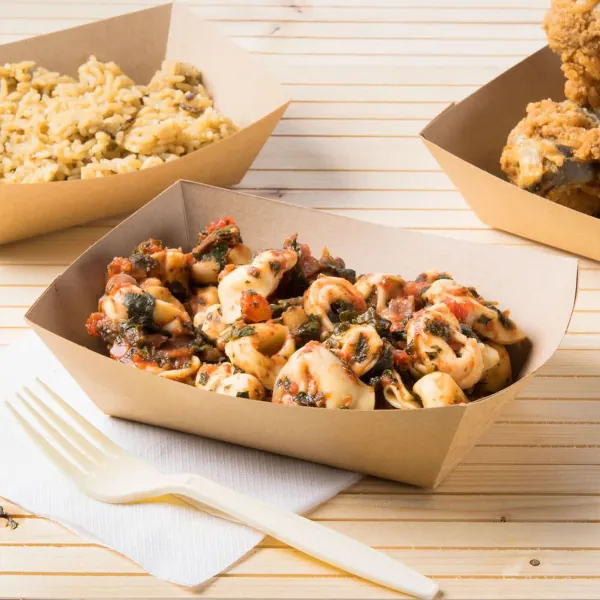
The kraft paper food tray is the one shape that every counter ends up buying.
View tray & get pricing →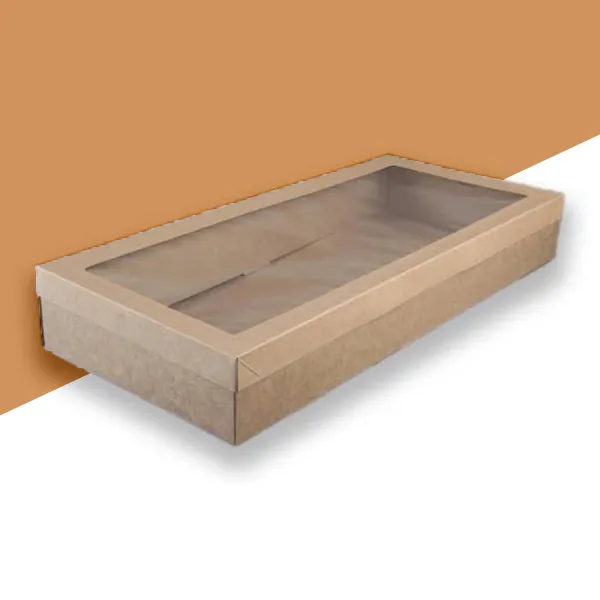
The lidded catering tray is the format that most drop-off caterers standardise on, because it is the only one that solves the whole journey.
View tray & get pricing →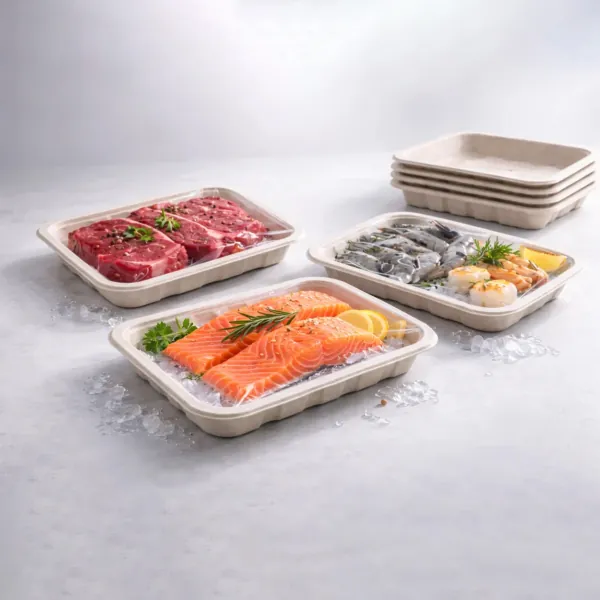
The whole argument for a fibre meat tray is what happens to the liquid.
View tray & get pricing →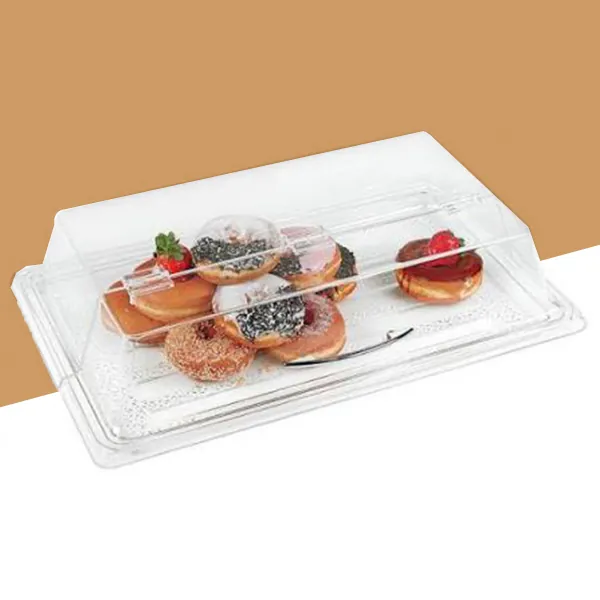
A bakery display tray has to do two jobs that pull in opposite directions.
View tray & get pricing →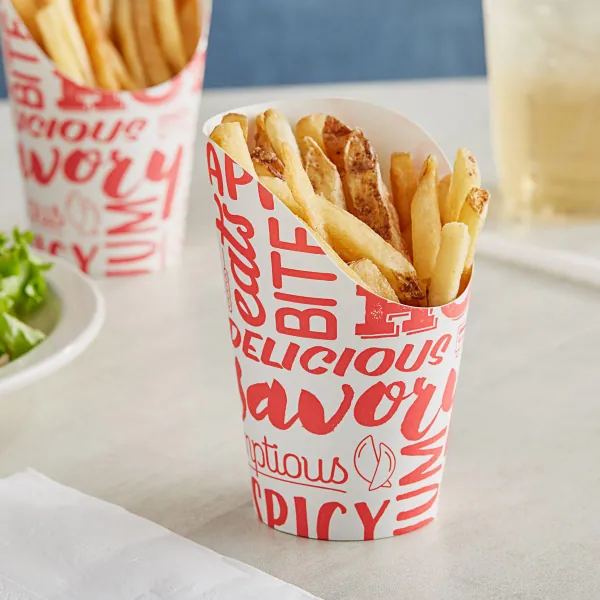
The fry scoop exists because of a specific piece of ergonomics: a member of staff should be able to fill it from a fryer basket with one hand, in one mo…
View tray & get pricing →We print what you supply, and we will design the panel with bilingual requirements in mind from the start. Plan for roughly twice the panel area you would need for one language — fitting French copy into a finished single-language layout rarely works well.
Either. Canadian food service uses both, sometimes within the same business. We work to whichever your existing specifications use; just be consistent within a single brief.
Generally closer to the US for menu formats and portion scale. That said, we size from your actual product rather than from a regional assumption, which removes the question entirely.
Movement between heated interiors and cold exteriors produces condensation, so moisture-resistant construction is relevant for a wider range of products here than in milder markets. Tell us how the product travels and we will specify accordingly.
Yes, and it is usually cheaper than separate orders because setup and tooling are shared. Give us the addresses and the split quantities and we will quote the consolidated position.
Production times are the same as elsewhere; freight is the variable. We give a real production date plus a realistic transit estimate for your postal code rather than a single generic number.
Yes. Bear in mind the French-language requirements that apply there when planning your label panel, and design for them from the start rather than adapting an English layout.
In almost every case. Post us a sample or send photographs beside a ruler, and we will match the internal dimensions so nothing else in your operation has to change.
Send the specification, the quantity and the delivery address. We come back with unit price, tooling if any, freight and a real production date.