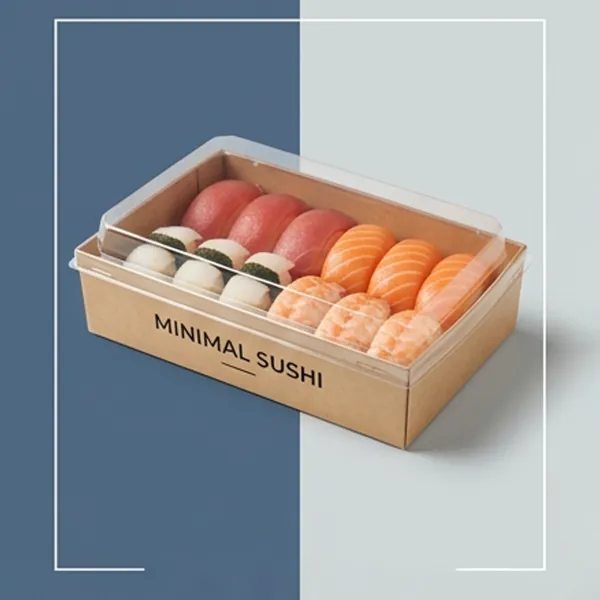
Kraft Sushi Tray with Lid
This is the retail sushi pack: a kraft base sized to a specific piece count, with a clear lid so the customer can see exactly what they are buying.
View tray & get pricing →Custom food packaging · US · UK · Canada · Australia
City · Canada
Vancouver produces more sushi and seafood packaging enquiries than any other Canadian city we supply, and both categories share a single dominant requirement: managing moisture.
The climate reinforces it. Ambient damp affects stored board before any food touches it, which means moisture-resistant construction comes up here more often than almost anywhere.
Starting from $0.30 per tray, with a minimum order of 100 and free shipping. Tell us the tray and the quantity and we reply within one working day.
Rice is wet and it sits directly on the base for the whole life of the pack, in a chiller where the air is cold and damp. Untreated board softens at the corners within a working day, and it shows in a display cabinet.
A moisture-resistant food-contact face is the baseline specification rather than an upgrade. The other requirement is flatness: sushi is arranged in straight rows, and any bow in the base makes every row read as crooked in a way other food hides.
A ribbed base lifts the fillet clear of released liquid and the material absorbs it, so the product looks drier on the counter.
Usually caused by packing before the product has fully cooled. Pack chilled; anti-fog film is a last resort rather than a first fix.
Board in an unheated or damp store loses stiffness before it is used. Keep it in cartons in the driest space available.
A moisture-tolerant board rather than a standard one, because a wet tray fails with a full load.
Chosen against the requirements described above, not as a general catalogue listing.
This is the retail sushi pack: a kraft base sized to a specific piece count, with a clear lid so the customer can see exactly what they are buying.
View tray & get pricing →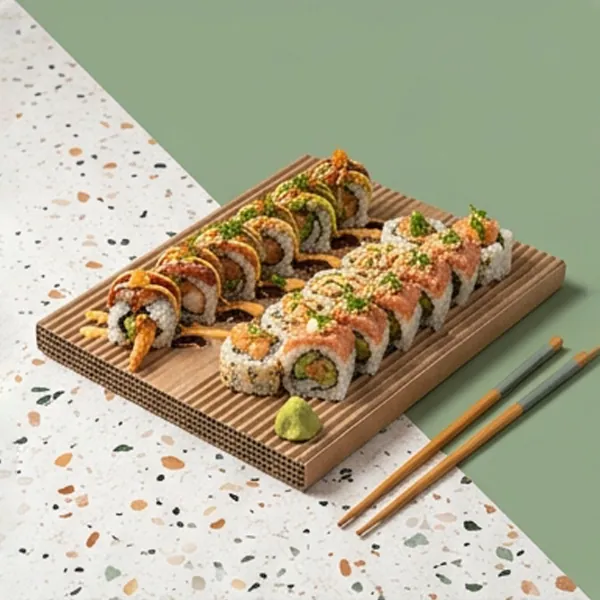
A sushi platter is a flat presentation surface that has to stay flat.
View tray & get pricing →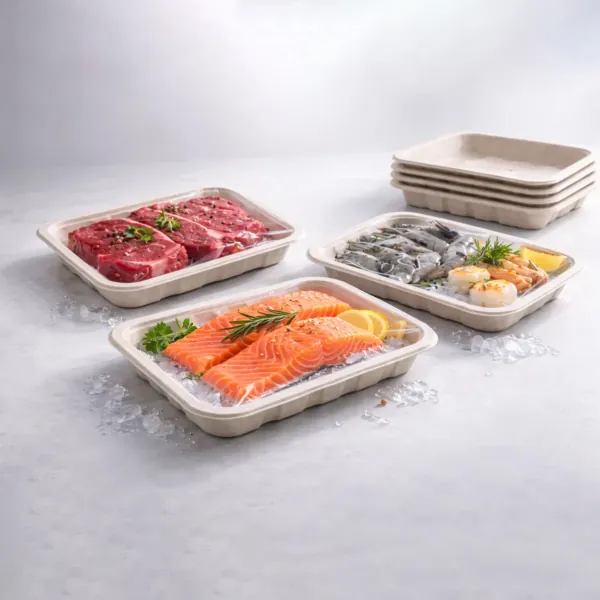
The whole argument for a fibre meat tray is what happens to the liquid.
View tray & get pricing →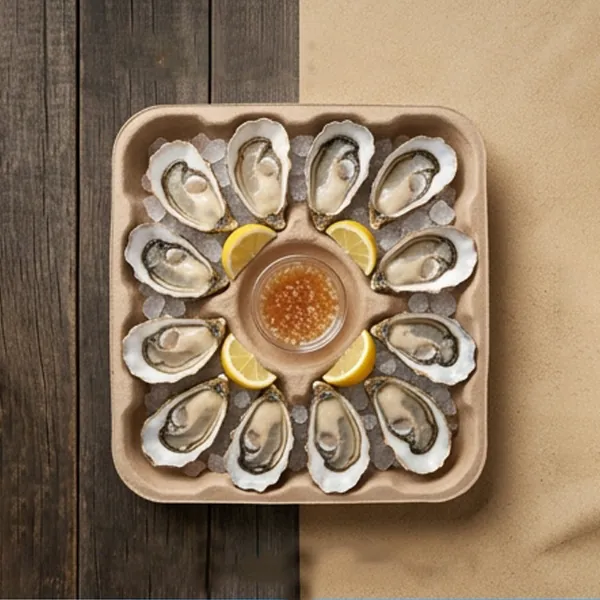
Oysters on the half shell have one packaging requirement above all others: they must stay level.
View tray & get pricing →
A drink carrier is a mechanical problem before it is a packaging one.
View tray & get pricing →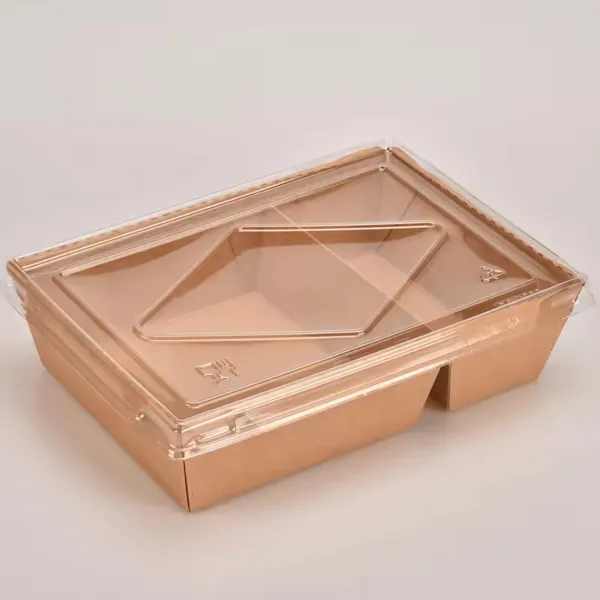
The lidded compartment tray is the format that meal-prep businesses, bento services and premium takeaway have converged on.
View tray & get pricing →A moisture-resistant food-contact face, a flat base that will not bow, a clear lid matched to the rim, and a defined space for soy and ginger. All four are decided before tooling.
Almost always because product was packed before it fully cooled, trapping warm moist air. Pack fully chilled first; anti-fog lid material is available but it treats a symptom.
A ribbed fibre base lifts the product clear of released liquid and the material absorbs it, so the customer sees a drier product even though the volume of liquid is unchanged.
Yes. Board is hygroscopic and stock in a damp or unheated store loses stiffness before it is ever used. Keep it in shipping cartons and rotate it.
Yes. Retail needs absorbent trays with a flat label panel; restaurant service needs grease resistance and venting. Different specifications, and they can sit on one order.
Sushi is arranged in straight rows, and any bow in the base makes every row read as crooked in a way other food hides. We specify a stiffer, moisture-resistant board so the platter stays flat under rice through a full service.
Oysters on the half shell must stay level above all else, so the tray needs positions that hold each shell steady and a base stiff enough not to flex. Our oyster serving tray is sized to your shell grade to keep the liquor in the shell.
They suit menus with rice, fish and dressings that should stay apart, and the lid lets orders stack in a delivery bag. We size each compartment from your plated portions and add vents where tempura or other crisp items share the tray.
On folding board and corrugated, yes, with one to four spot colors or full process on light board. Molded fiber prints poorly because the surface is textured, so seafood counters usually add a printed band or applied label and keep the tray plain.
Yes. Rice is wet and sits on the base for the whole life of the pack, in a cold, damp chiller, so untreated board softens at the corners within a working day. A moisture-resistant food-contact face is the baseline specification, not an upgrade.
Starting from $0.30 per tray, with a minimum order of 100 and free shipping. Production takes 7 to 10 business days after proof approval and payment, then 3 to 7 business days in transit.