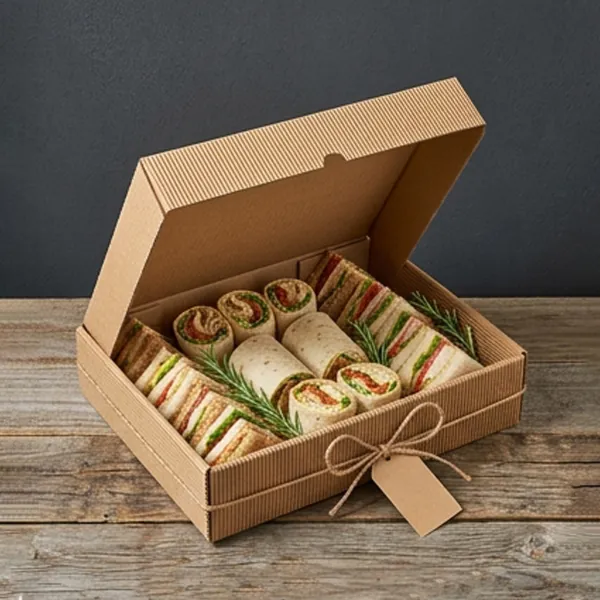
Corrugated Sandwich Platter
The corporate sandwich platter is one of the highest-volume formats in catering, and the specification is almost entirely determined by how you cut your…
View tray & get pricing →Custom food packaging · US · UK · Canada · Australia
Industry guide
Catering packaging has a harder job than restaurant packaging because of the journey. Food is plated in your kitchen and eaten somewhere you do not control, after being carried, driven, carried again and left on a table. Most packaging complaints in catering are really about one of those five stages.
The other thing catering packaging does — which nothing else in food service does as reliably — is generate new business. A tray opened in front of twelve people in an office is twelve impressions, and if your name is not on it, the people who liked the food have no way to find you.
Describe the operation and roughly how many trays you get through. We come back with the formats that fit, with pricing — usually within one working day.
Most caterers accumulate packaging rather than specifying it. Working through this order produces a coherent range instead of a cupboard of mismatched boxes.
Not your most impressive ones. The sandwich lunch, the breakfast round and the buffet drop-off are where your packaging spend actually goes.
Two or three footprints that stack together in a van beat six that do not. This one decision saves more time and van space than anything else on the list.
Fitted lid for transport, window lid where the client sees it first, film seal where liquid is involved.
Buffet drop-offs benefit enormously; boardroom deliveries do not need it.
One colour on kraft, everywhere, beats full colour on your flagship item and plain boxes for everything else.
| Order type | Format | Why |
|---|---|---|
| Corporate sandwich lunch | Sandwich platter | Sized to your cut; the lid is a meeting-room-facing surface |
| Hot buffet drop-off | Corrugated catering tray | Holds foil pans; header board brands the buffet line |
| Grazing and canapé orders | Party tray with lid | Divided sections keep a mixed selection composed |
| Breakfast and pastry rounds | Bakery display tray | Shallow, grease-resistant, quick to fill |
| Premium and gifting | Rigid catering platter | The packaging carries part of the price |
| Individual boxed lunches | Lunch tray | Prints in full colour; stacks in a delivery bag |
Almost every caterer who changes supplier does so because of one of these five things.
We supply caterers in the United States, United Kingdom, Canada and Australia, and the format conventions genuinely differ. UK sandwich rounds and cuts are not the same as US ones; Australian buffet portions and event conventions differ again; Canadian corporate catering sits somewhere between the US and UK patterns.
That matters because sizing a tray from an American standard for a UK operation produces a platter that does not suit the food. We size from your product rather than from a regional norm, which is one of the reasons we ask for photographs of a packed platter rather than a nominal dimension.
Picked for the specific demands described above rather than as a general list.
The corporate sandwich platter is one of the highest-volume formats in catering, and the specification is almost entirely determined by how you cut your…
View tray & get pricing →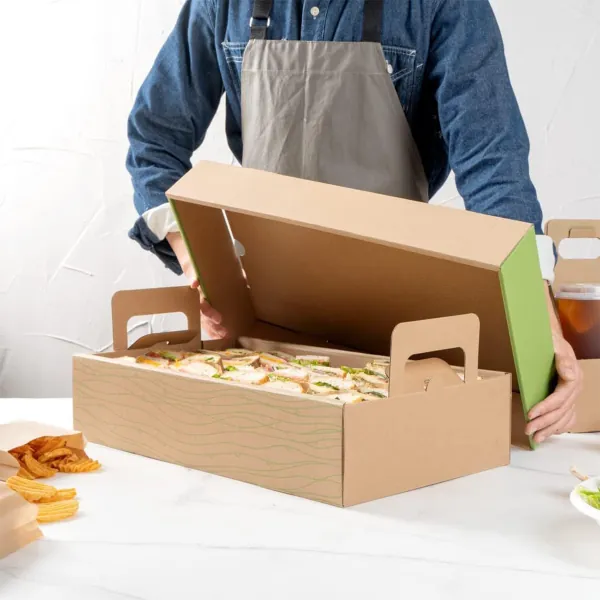
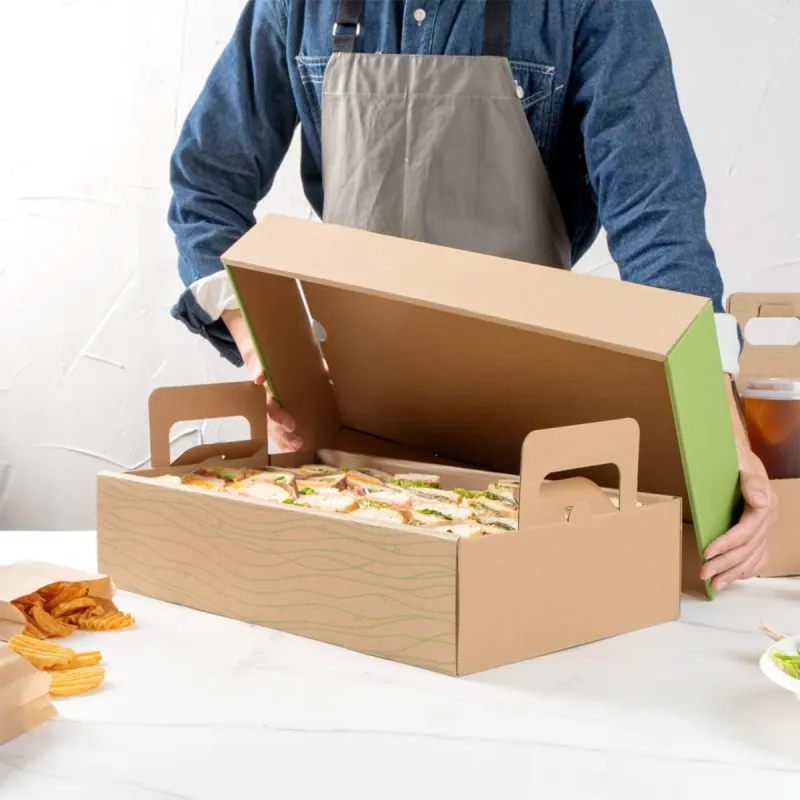
This is the working catering tray: fluted, deep, strong enough to hold several full foil pans, and usually built with a raised header board that turns t…
View tray & get pricing →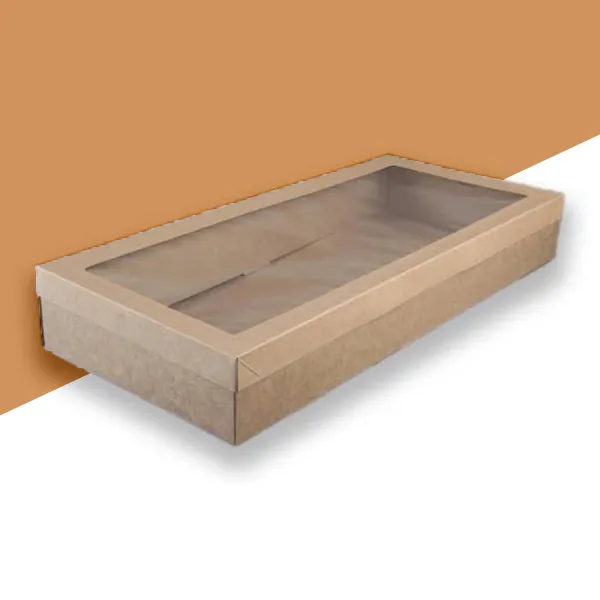
The lidded catering tray is the format that most drop-off caterers standardise on, because it is the only one that solves the whole journey.
View tray & get pricing →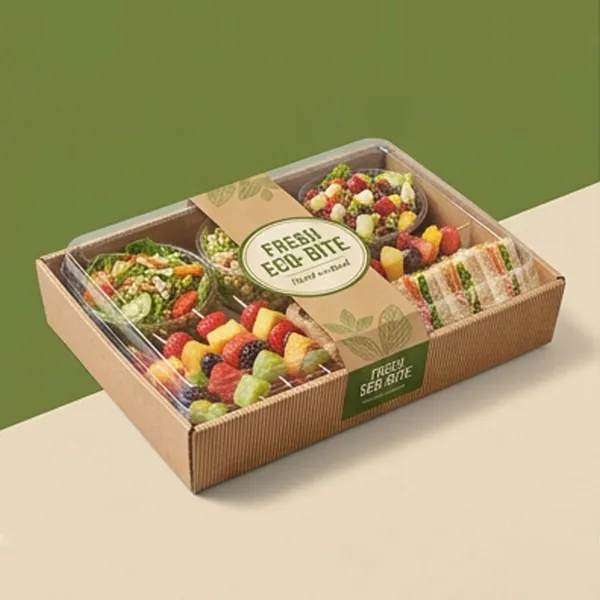
A party tray is a divided platter under a clear lid.
View tray & get pricing →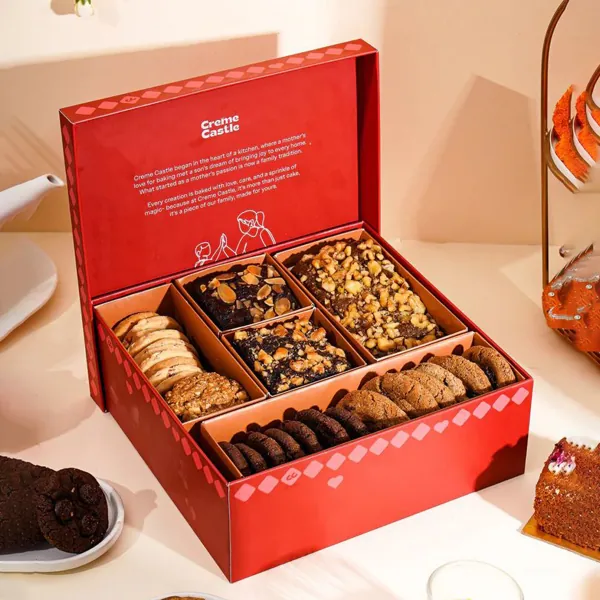
Rigid platters are what you use when the packaging is part of the price.
View tray & get pricing →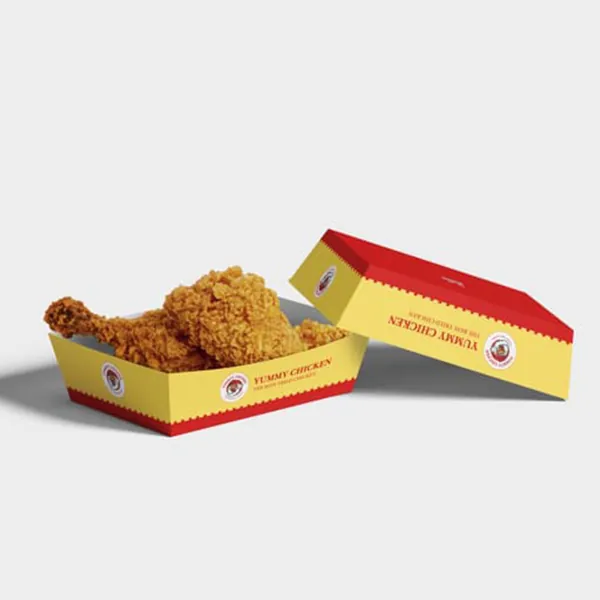
Catering is the one part of food service where packaging routinely converts new business.
View tray & get pricing →Two or three that stack together, rather than six that do not. A coherent footprint family saves more van space and loading time than any other single decision, and it makes stock control considerably simpler.
It is one of the few places in food service where packaging demonstrably generates business, because a tray is opened in front of a room of potential customers. One colour on kraft across every tray you use beats full colour on one flagship item.
Only if specified for it. Stack strength comes from corner posts rather than the base. Tell us the stack height and the loaded weight and we will build in margin rather than working to a theoretical limit.
Yes. Send a base and a lid and we will match the footprint, depth and overlap, so your racks, van shelving and portioning all stay unchanged while the branding improves.
Board catering trays are designed for ambient and chilled service. Hot food generates steam that softens board and spoils presentation. For hot buffet work, use foil pans inside a corrugated carrier rather than filling the board tray directly.
For a first custom run, allow time for a dieline round, artwork approval and production — and note that artwork approval on the client side is usually the longest stage. Repeat orders are considerably faster because the die exists.
We print what you supply on a clearly defined panel, and the inside of a lid is the best place for it. What the panel must say is a regulatory question that differs between the US, UK, Canada and Australia, and that content has to come from you.
Yes, and it is cheaper than most caterers expect. The cutting die is shared across designs, so an additional client-branded version carries plate cost only.
Send the food, the volumes and the country you take delivery in. We reply with formats, material options and a full quote including freight.