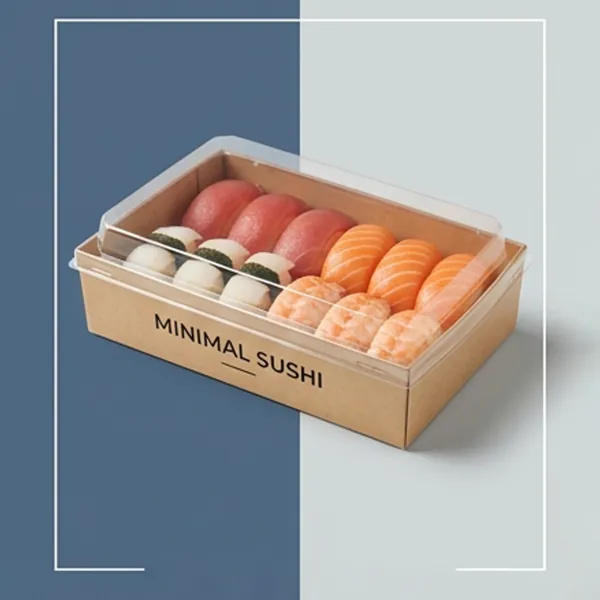
Kraft Sushi Tray with Lid
This is the retail sushi pack: a kraft base sized to a specific piece count, with a clear lid so the customer can see exactly what they are buying.
View tray & get pricing →Custom food packaging · US · UK · Canada · Australia
Industry guide
Sushi packaging has two requirements that almost nothing else shares. The base has to stay perfectly flat, because the arrangement is geometric and any curvature makes every row look crooked. And the surface has to survive wet rice sitting directly on it for the whole life of the pack.
Get those two right and the rest is presentation. Get either wrong and the pack undermines the food it contains.
Describe the operation and roughly how many trays you get through. We come back with the formats that fit, with pricing — usually within one working day.
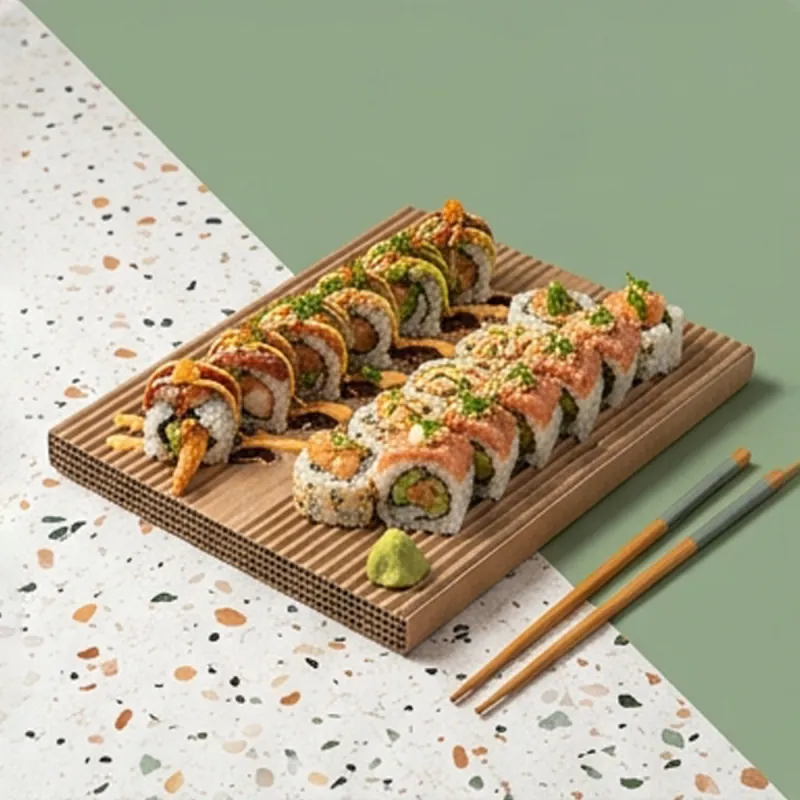
Flat boards for a table selection, usually open, sometimes with a low rim. Presentation is everything and the platter is seen at close range, so edge finish and flatness matter. See the corrugated sushi platter.
Lidded, sized to a piece count, with somewhere for soy and ginger. The lid has to protect the arrangement through a bag journey without touching it.
Everything the takeaway pack needs, plus a full day in a cold damp cabinet, a barcode, a legal panel and a shelf life. The most demanding of the three by a wide margin.
Fogged lids are the most common complaint about retail sushi packaging, and they are usually a process problem rather than a packaging one. Product packed before it has fully cooled traps warm moist air inside the pack, and that condenses on the lid as it chills.
Packing fully chilled solves most of it. Where a line has been optimised and misting still occurs, anti-fog lid material is available and does work, at extra cost. It is worth fixing the process first, because the film is treating a symptom.
| Pack | Typical contents | Note |
|---|---|---|
| Snack pack | 6–8 pieces, one roll type | Single row; compact footprint |
| Standard retail pack | 10–12 pieces | Two rows; needs a soy compartment |
| Sharing pack | 16–24 pieces, mixed | Benefits from dividers between types |
| Sashimi and nigiri | Individual pieces laid flat | Wider and shallower; more base area per piece |
| Restaurant platter | Chef’s selection | Sized from the arrangement, not a piece count |
Picked for the specific demands described above rather than as a general list.
This is the retail sushi pack: a kraft base sized to a specific piece count, with a clear lid so the customer can see exactly what they are buying.
View tray & get pricing →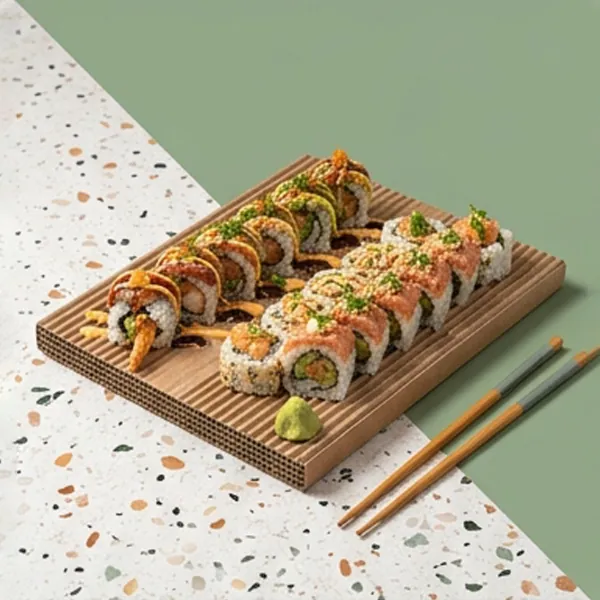
A sushi platter is a flat presentation surface that has to stay flat.
View tray & get pricing →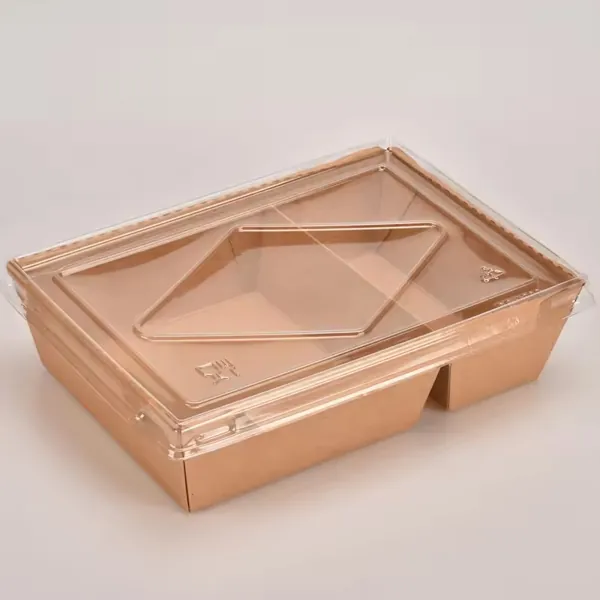
The lidded compartment tray is the format that meal-prep businesses, bento services and premium takeaway have converged on.
View tray & get pricing →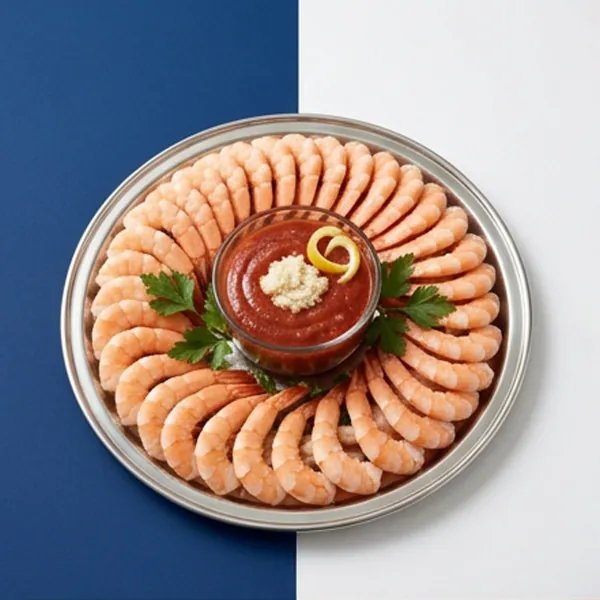
The shrimp platter is one of the most instantly recognisable formats in food retail: a ring of prawns arranged tail-inward around a central pot of cockt…
View tray & get pricing →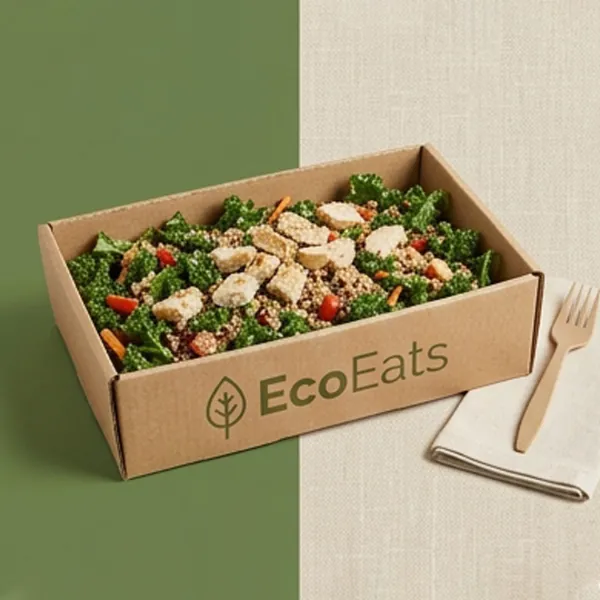
The lunch tray sits between a takeaway container and a proper meal tray.
View tray & get pricing →Because sushi is arranged in straight rows. Any bow in the base makes every row read as crooked, in a way that other food hides. A platter that would be fine under a buffet selection looks defective under sushi.
Untreated board will darken and soften where the rice sits, within a working day in a chiller. A moisture-resistant food-contact face is baseline specification for any sushi pack rather than an upgrade.
From your actual product — piece count and cut size. Roll diameters and cut lengths vary between kitchens, so photograph a packed tray beside a ruler rather than working from a nominal figure.
In a defined compartment or a space sized to a sachet and pot. Decide before the die is cut; there is no way to add a compartment afterwards, and a soy sachet resting on the sushi looks careless.
Almost always because product was packed before it fully cooled. Pack chilled first. If misting persists after that, anti-fog lid material is available and works, but fix the process before buying the film.
Many premium brands choose it deliberately. The visible flute reads as texture rather than as packaging, and it provides contrast against the geometric precision of the food. It is also the stiffest board per unit weight.
Yes, with a rim profile matched to your sealing equipment. That has to be designed in from the start rather than added, so tell us the machine and tooling at quote stage.
A flat panel for the barcode and legal information, a lid that supports the shelf life, and a footprint that fits the cabinet. Requirements for allergen and date marking differ between the US, UK, Canada and Australia.
Send the food, the volumes and the country you take delivery in. We reply with formats, material options and a full quote including freight.