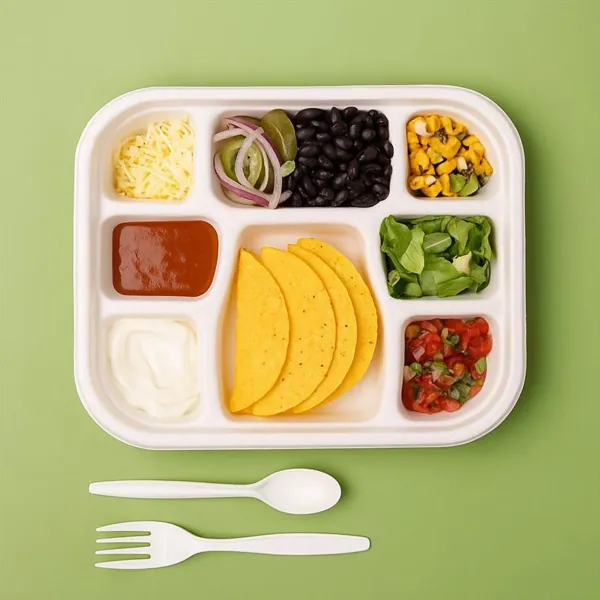
Bagasse School Meal Tray
School meal trays have a specification nobody else has to meet.
View tray & get pricing →Custom food packaging · US · UK · Canada · Australia
Compostable & Molded Fiber Trays
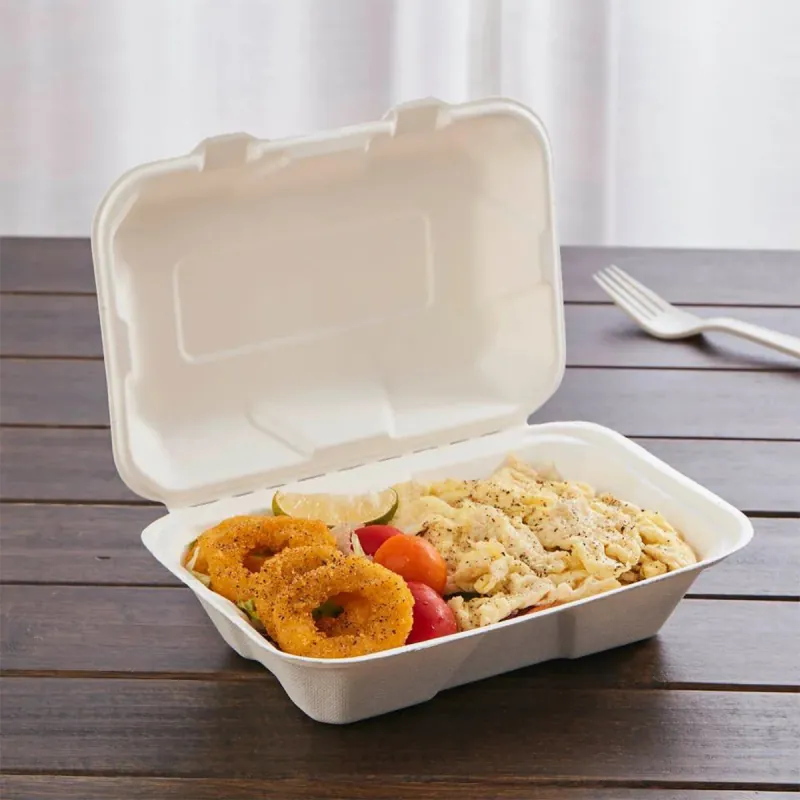
Moulded fibre trays are formed by pressing wet pulp against a heated tool. That produces something folded board cannot: deep, curved, seamless wells in a material that tolerates hot food, absorbs a little moisture rather than repelling it, and holds its shape when warm.
They are also the format most surrounded by loose environmental claims, so this page is deliberately careful about what we will and will not tell you.
Pricing starts from $0.30 per tray
The unit price depends on the size, board, printing, finishing, quantity and delivery country, so every quote is worked out for your specification rather than taken from a list.
Send the size and the run length. We reply with pricing, material options and a production date — usually within one working day.
01 — Specification
Every element below is set when we quote. Nothing here is a fixed catalogue entry — if a line does not match what you need, say so and we will change it.
02 — Build the spec
The same five questions we would ask on a phone call, with the compostable food tray already selected. You get a properly detailed brief at the end, which is what makes a first quote accurate rather than approximate.
Prefer the full builder with a live sketch? Open the tray designer.
03 — In detail
Three things, and they are the reasons to choose it over board. It holds hot food without softening at the corners, which is why school and canteen meal trays are made from it. It absorbs a small amount of free liquid rather than letting it pool, which is why meat and produce packaging uses it. And it can be formed into deep, curved wells that a single folded blank cannot produce.
If none of those three apply to your product, a folded or fluted board tray will usually be cheaper, print better and tool faster. We will say so rather than sell you fibre because the word sounds better.
What we will tell you about compostability: the feedstock, the manufacturing process, any barrier treatment applied, and any certification the specific material carries. What we will not do is describe a tray as home compostable, industrially compostable or biodegradable unless the material you order holds that certification in the market where you sell it. Those terms are legally defined and the definitions differ between the United States, United Kingdom, Canada and Australia.
The surface is textured and absorbent. Fine detail, small type and photographic work do not hold. A printed band, a sleeve or an applied label gives a far better result and is what almost every fibre product on a shelf actually uses.
Formed shapes need draft angles and radii to release from the tool. You cannot get a crisp square corner or a perfectly vertical wall. Designers used to folded board find this constraint surprising.
A moulded tool takes considerably longer to make than a cutting die. Plan launches around that. Where the timeline is tight we can sometimes run a trial on an existing tool with a similar footprint.
Forming runs at scale, and the tooling investment is larger. Fibre suits repeat, higher-volume lines. For a one-off event or a short seasonal run, board is usually the better economics.
| Application | Better choice | Why |
|---|---|---|
| Hot plated meal, sits 20+ minutes | Moulded fibre | Does not soften at the corners under hot food |
| Cold sandwich or snack | Folded board | Cheaper, prints better, faster to tool |
| Raw meat or fish in a chiller | Moulded fibre | Absorbs free liquid instead of pooling it |
| Branded takeaway with full-colour design | Folded or fluted board | Fibre cannot carry the print |
| Deep wells with a formed radius | Moulded fibre | Impossible from a single folded blank |
| Short seasonal run | Folded board | Fibre tooling and minimums do not suit short runs |
04 — Nearby
Chosen because operators who buy the compostable food tray usually need one of these in the same order, not because they happen to sit in the same category.
School meal trays have a specification nobody else has to meet.
View tray & get pricing →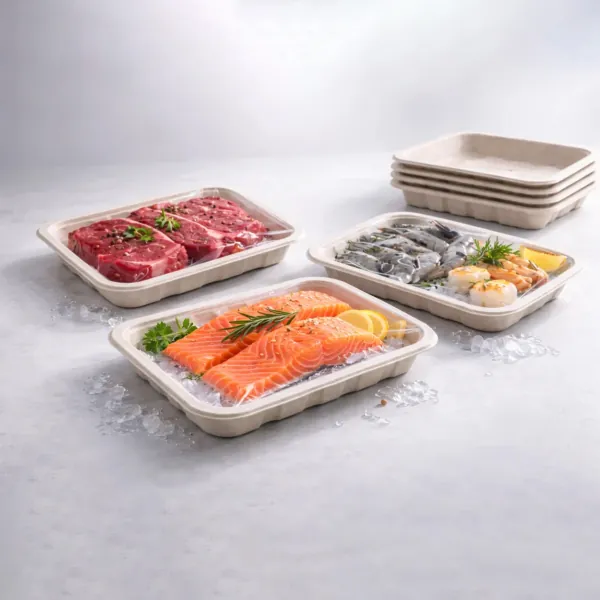
The whole argument for a fibre meat tray is what happens to the liquid.
View tray & get pricing →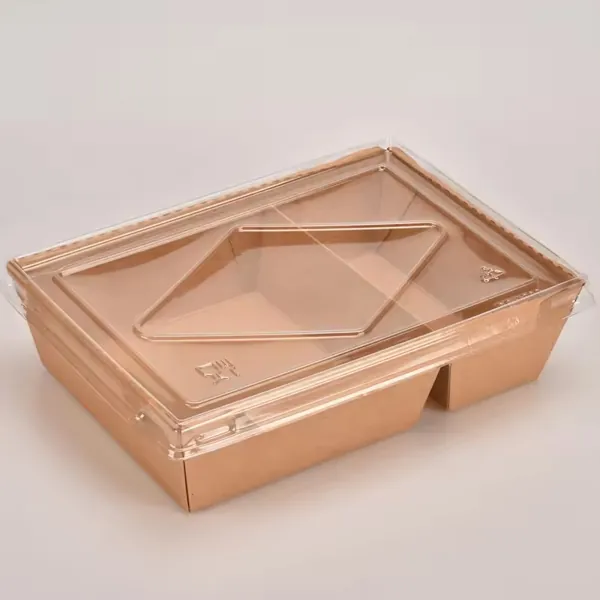
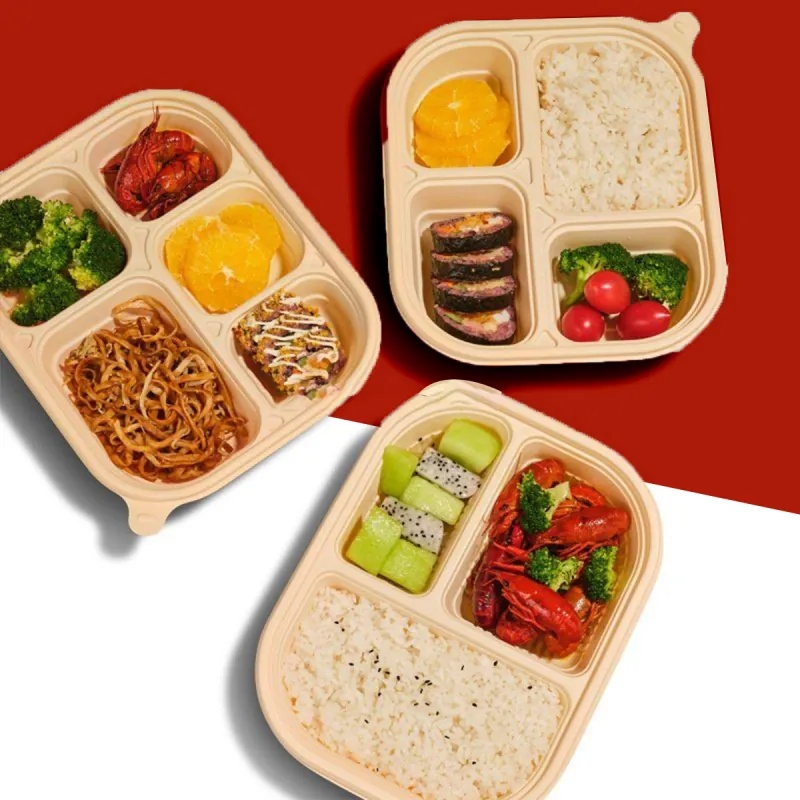
The lidded compartment tray is the format that meal-prep businesses, bento services and premium takeaway have converged on.
View tray & get pricing →
A cafeteria tray carries an entire meal — main, sides, dessert, cutlery, sometimes a drink — from a servery to a table, held by one person who is also c…
View tray & get pricing →05 — Questions
Only if the specific material you order carries certification for the scheme you are claiming, in the country you sell in. We supply the material specification and any certification in writing. What you claim on the strength of that document is your decision, and it should be made with the document in hand.
The fibrous material left after sugarcane is pressed for juice. It is one of the common feedstocks for moulded fibre food packaging. Other fibre trays are made from recovered paper pulp. We tell you which feedstock your order uses.
Better than uncoated board, which is the main reason it is used for canteen and takeaway meals. We confirm the tested temperature range for the specific grade supplied rather than giving a blanket figure.
Untreated fibre absorbs liquid rather than repelling it, so a very wet product over a long period will darken and eventually soften the tray. For wet foods we specify a barrier treatment. Tell us the food and the hold time.
Many tolerate microwave reheating, and some tolerate oven temperatures, but it depends entirely on the grade and any barrier applied. We state the tested range for what you order so you can verify it in your own equipment.
Only simply. The surface is textured and absorbent, so fine detail does not hold. A printed sleeve, band or applied label gives a much better result, costs less to change, and is what most fibre products on a shelf actually use.
Longer than a cutting die, because it is a formed metal mould rather than a set of blades. Build that into your launch plan. Where timing is tight, we can sometimes run a trial on an existing tool with a close footprint.
Higher than folded board, because of the tooling and because forming runs at scale. If your volumes are modest, ask us to quote both fibre and a lined board alternative — we will tell you honestly when board is the better total cost.
In most cases, though the wall angles will differ because fibre needs draft to release from the tool. Tell us which dimension is critical — internal volume or external footprint — and we will design around that one.
Yes, and it is one of the strongest applications. Fibre manages condensation rather than beading it, which is why meat, produce and egg packaging has used it for so long.
Send the dimensions, the quantity and the country you want it delivered to. We come back with a full quote — material, print, finishing, freight and a production date.