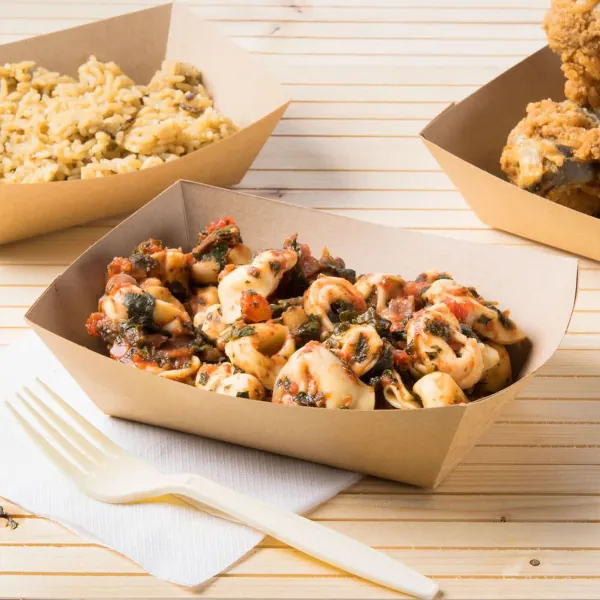
Kraft Paper Food Tray
The kraft paper food tray is the one shape that every counter ends up buying.
View tray & get pricing →Custom food packaging · US · UK · Canada · Australia
Country · United States
The United States is the largest single market we supply, and it is also the one with the most format variety. Portion conventions, tray sizing language and the whole "1lb to 5lb" system originate here, and menus differ enough between regions that a tray designed for a Northeastern deli often does not suit a Gulf Coast seafood operation.
We work in imperial units by default for US customers, size from your actual portions rather than a national average, and quote freight to your state and zip code so the number on the quote is the number you pay.
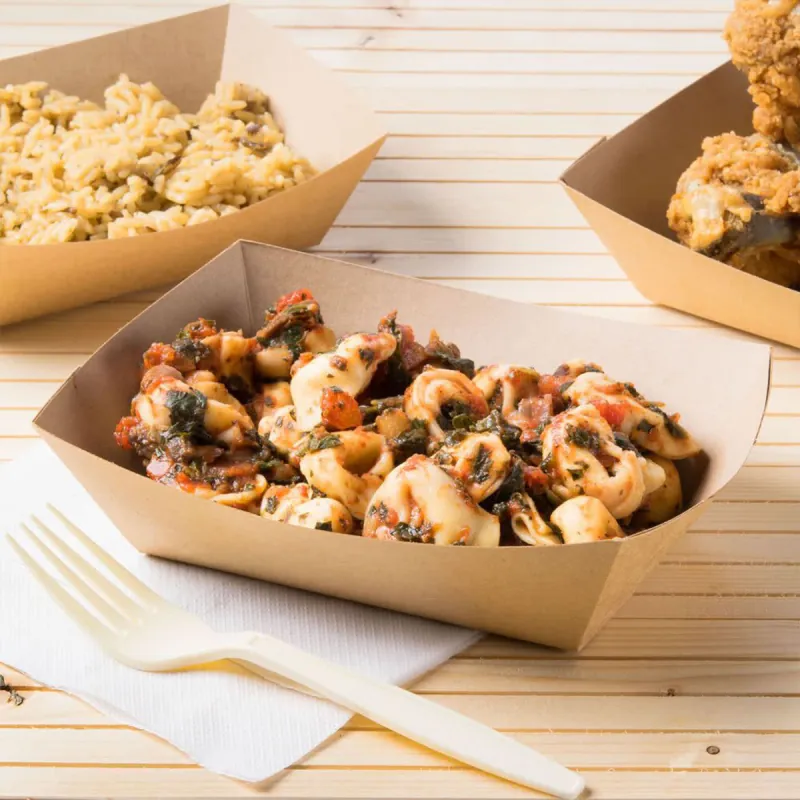
Tell us the tray, the quantity and where it is going. Freight is quoted to your address rather than added later.
US portions run larger than the equivalents in the UK and Australia, and packaging sized to a European standard consistently comes up short. This is the single most common problem when a business imports a format designed elsewhere.
A Louisiana crawfish operation, a New York deli, a Texas barbecue counter and a California produce packer need genuinely different specifications. We size from the product rather than from a catalogue, which matters more here than in smaller markets.
Domestic US freight distances are substantial and they show up in landed cost. Flat-packed trays ship efficiently; assembled and domed products do not. We quote to your zip code so you can see the real number.
Federal and state requirements for pre-packed food differ from those in the UK, Canada and Australia. We print what you supply on a defined panel; the content is yours to confirm against the rules that apply to your product.
For US customers we quote in inches by default and use the familiar portion-weight shorthand — 1lb, 2lb, 3lb, 5lb — as a starting point in conversation. But we never tool from it, because it is not a standard: two suppliers can produce very different shapes that both nominally hold two pounds.
What we tool from is your internal dimensions, or a physical sample. If you post us the tray you buy now, we reverse-engineer the flat blank and match it, so your racks, carriers, sleeves and portioning all stay exactly where they are.
Internal dimensions, board, treatment, print and quantity — or post us a tray and we will work from that.
Unit price, tooling if any, and freight to your delivery address, itemised rather than buried.
We supply a flat template before your designer starts, so nothing lands across a crease.
Digital proof as standard; a physical proof on the actual board where colour accuracy matters.
With a real date rather than a generic lead-time range.
Chosen against the requirements described above, not as a general catalogue listing.
The kraft paper food tray is the one shape that every counter ends up buying.
View tray & get pricing →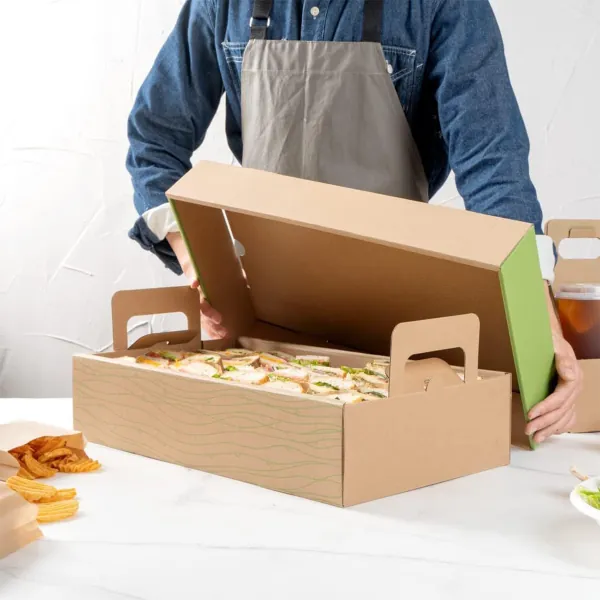
This is the working catering tray: fluted, deep, strong enough to hold several full foil pans, and usually built with a raised header board that turns t…
View tray & get pricing →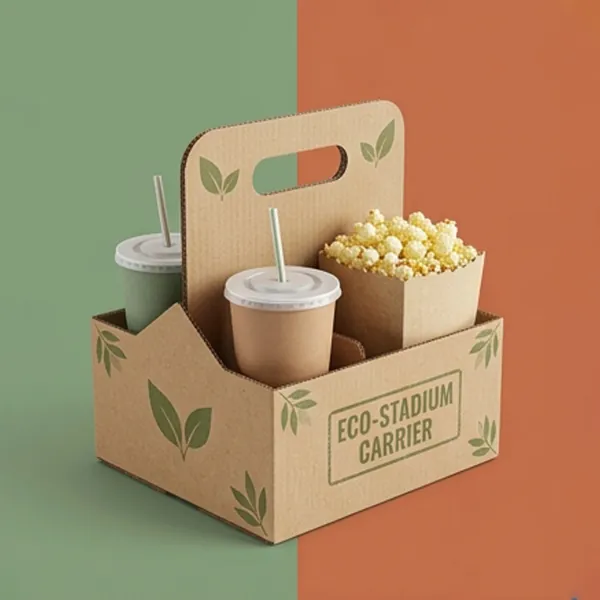
A stadium carrier has to be usable by somebody walking up concrete steps in a crowd, holding a phone, wearing a coat, in the dark.
View tray & get pricing →
A crawfish tray carries several pounds of hot, wet, seasoned shellfish, often with corn and potatoes, straight out of a boil.
View tray & get pricing →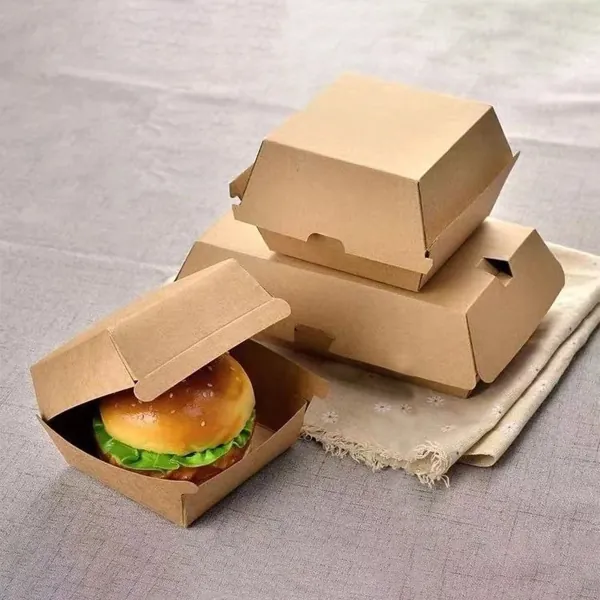
A burger clamshell is a hinged box that closes around a burger, and its whole purpose is to stop the build collapsing between the pass and the customer.
View tray & get pricing →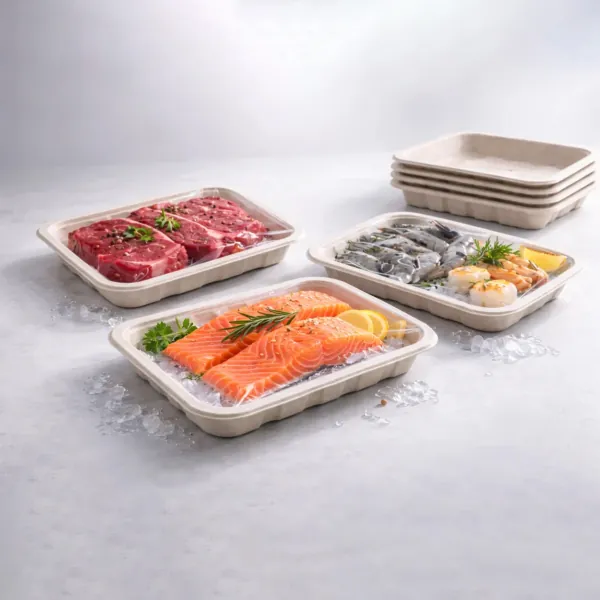
The whole argument for a fibre meat tray is what happens to the liquid.
View tray & get pricing →Yes. Freight is quoted to your zip code so the landed cost is visible rather than added later. Flat-packed trays ship efficiently even over long domestic distances; assembled and domed products cost more to move.
Inches by default for US customers, though we work in either. Just be consistent within a single specification and tell us which you have used.
In almost every case. Post us the tray, or send photographs beside a ruler. Matching the internal dimensions means nothing else in your operation has to change.
Materially, yes — US portions run larger than the UK and Australian equivalents. A tray designed to a European standard consistently comes up short here, which is why we size from your actual portions.
We print what you supply on a clearly defined panel. The content requirements are federal and state matters that depend on your product, so that copy has to come from you or your regulatory advisor.
Yes, and it is usually cheaper than separate orders because setup and tooling are shared. Tell us the delivery addresses and split quantities and we will quote the consolidated position.
It depends on the format, the print and whether new tooling is needed. Folding board is quickest, moulded fibre slowest. We give a real production date on the quote rather than a generic range.
Yes. A great many US customers run plain stock for a first order while artwork is developed, then move to printed on the repeat — the die is reusable, so the second order only carries plate cost.
Send the specification, the quantity and the delivery address. We come back with unit price, tooling if any, freight and a real production date.