
Corrugated Deli Tray
A deli tray takes more punishment than most food packaging.
View tray & get pricing →Custom food packaging · US · UK · Canada · Australia
State · United States
Georgia enquiries divide cleanly into two groups, and they have almost nothing in common. One is food service — a fried-food-heavy restaurant sector where grease resistance is the dominant specification. The other is protein processing, where absorbent fibre trays for poultry and meat are the requirement.
They are different products with different failure modes, and this page covers both because customers in the state regularly need one or the other.
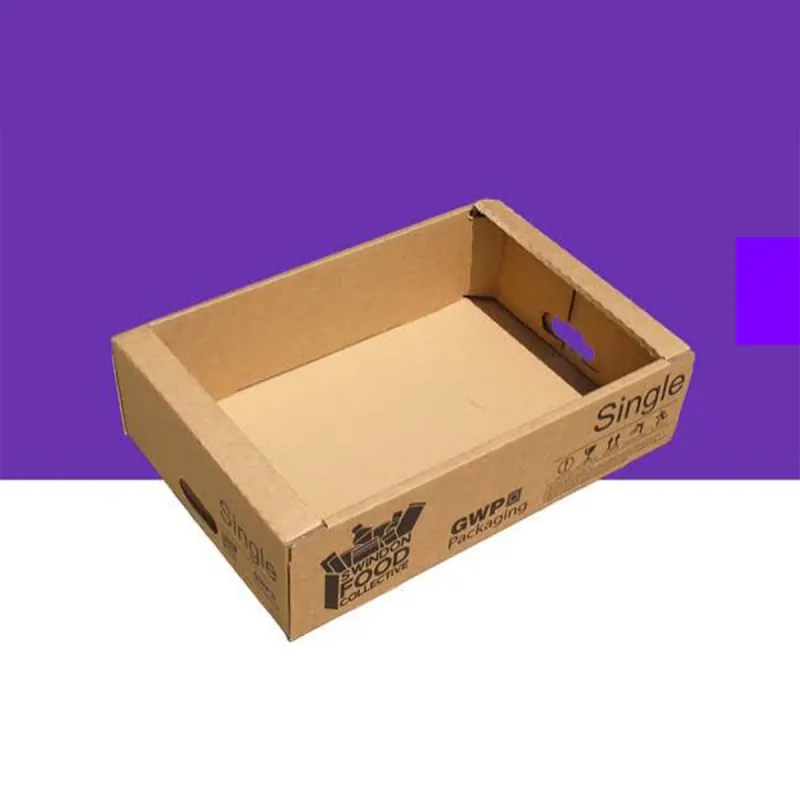
Starting from $0.30 per tray, with a minimum order of 100 and free shipping. Tell us the tray and the quantity and we reply within one working day.
Fried chicken, fried sides and hot counter food put more oil into a board tray, faster, than almost anything else. A grease-resistant food-contact face is the baseline rather than an upgrade, and where trays leave the premises closed, venting is what keeps the coating crisp.
The two together — treated board and a vented container — are inexpensive and they eliminate the two most common complaints in fried food service.
Absorbent moulded fibre trays with a ribbed base, sized to the cut and to the retail case, with a rim profile matched to existing film sealing equipment. The design brief here is entirely about where released liquid goes.
The equipment constraint is usually the binding one: a rim profile that does not match your sealer turns a packaging change into a capital project. Send the machine details early.
The metropolitan market generates a steady flow of corporate catering and event enquiries, and the formats are the same as anywhere: lidded trays sized to covers per tray, sandwich platters sized to your cut, and header-board catering trays for buffet service.
The one thing worth emphasising for a competitive catering market is branding. A tray opened in front of a dozen people is the cheapest advertising a caterer can buy, and one colour on kraft across every tray beats four colours on a flagship item.
Chosen against the requirements described above, not as a general catalogue listing.
A deli tray takes more punishment than most food packaging.
View tray & get pricing →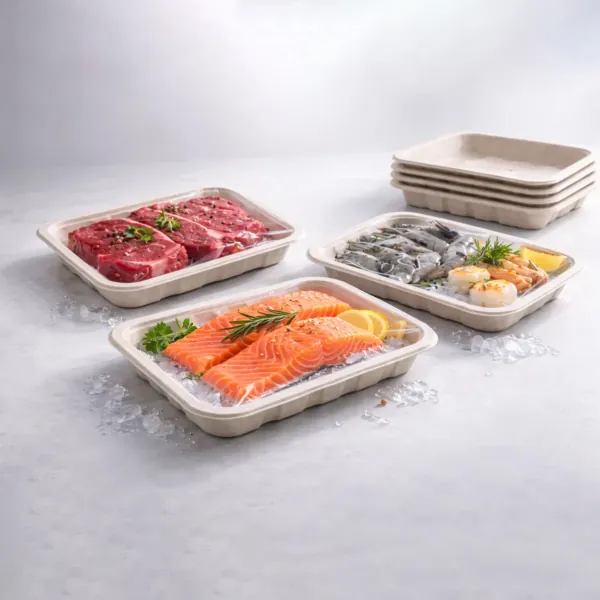
The whole argument for a fibre meat tray is what happens to the liquid.
View tray & get pricing →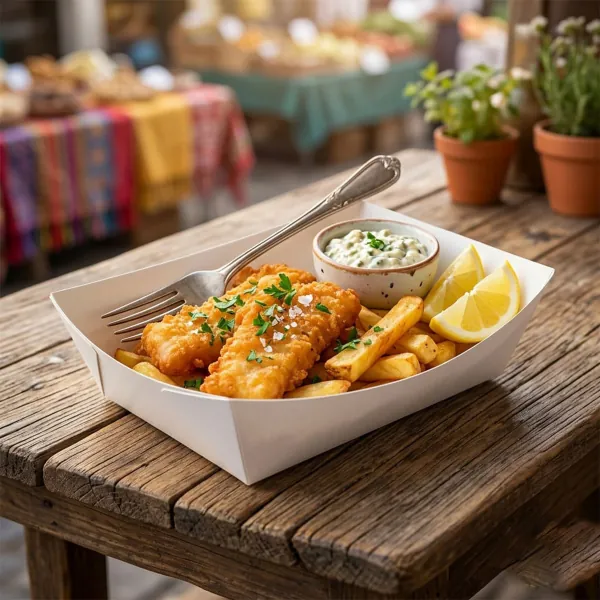
The white paper food tray is the same shape as the kraft version with a different surface underneath.
View tray & get pricing →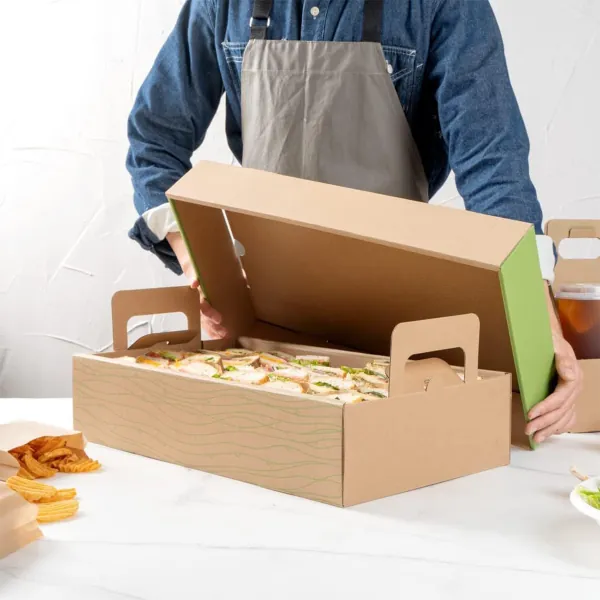
This is the working catering tray: fluted, deep, strong enough to hold several full foil pans, and usually built with a raised header board that turns t…
View tray & get pricing →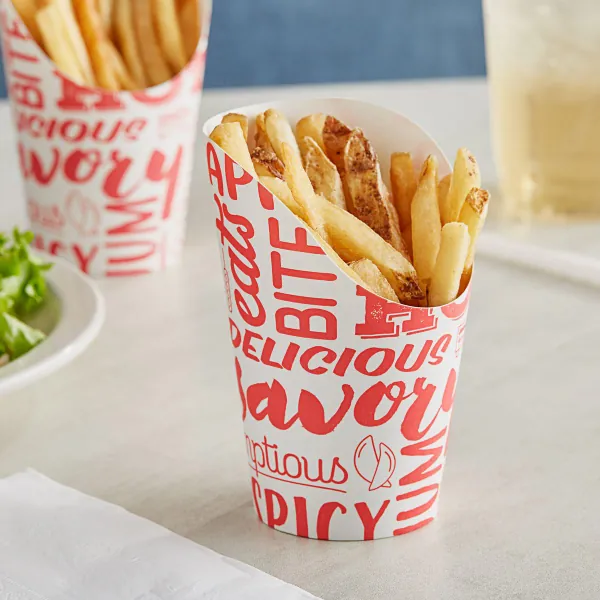
The fry scoop exists because of a specific piece of ergonomics: a member of staff should be able to fill it from a fryer basket with one hand, in one mo…
View tray & get pricing →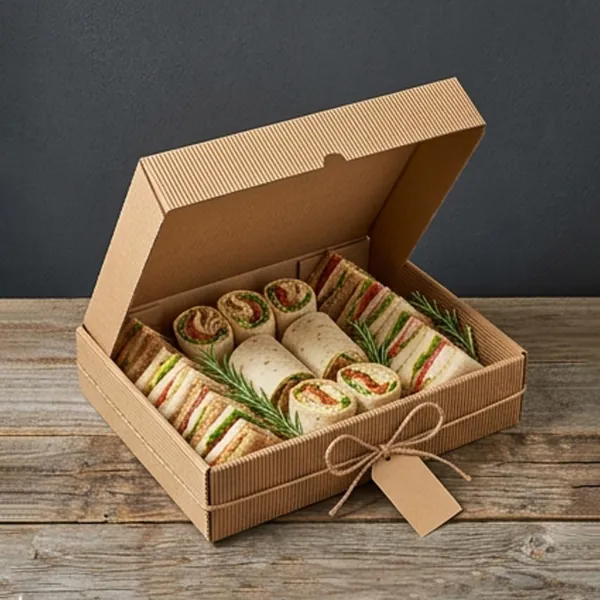
The corporate sandwich platter is one of the highest-volume formats in catering, and the specification is almost entirely determined by how you cut your…
View tray & get pricing →A fluted tray with a grease-resistant food-contact face, deep enough for the portion, and vented if it leaves the premises closed. Untreated board darkens within minutes under fried food and the customer sees it immediately.
Yes — absorbent moulded fibre trays with a ribbed base, sized to your cuts and your retail case. The rim profile has to match your sealing equipment, so send the machine details early.
They let steam escape. Steam is what softens a coating, and a sealed container traps all of it. Vents are built into the cutting die and change what the customer actually eats.
Yes. The formats are standard — lidded trays sized to covers, sandwich platters sized to your cut — but branding matters more in a competitive market. One colour on every tray beats four colours on one.
It will if we design the rim profile to match your tooling. That is designed in rather than adapted afterwards, which is why we ask for machine details when you order.
The price is starting from $0.30 per tray. It is applied to the food-contact face only and it eliminates the most visible packaging failure in fried food service.
Yes. We size absorbent molded fiber meat trays to the cut and to the retail case, with a ribbed base so released liquid stays away from the product. Send the case dimensions and sealer details early, because the rim profile has to match your equipment.
A stadium carrier with apertures cut to your actual cups and a handle rated for the full load. It has to work for someone climbing steps in a crowd, so a compact footprint with a defined grip matters more than a large flat tray.
Once the plate carries a full portion with sides, folding board flexes when lifted from the middle. Fluted board with a grease-resistant face holds the weight, and depth taken from bone-in pieces stops a lid crushing the coating.
For most caterers, yes. A tray opened in front of a dozen guests is cheap advertising, and one color on kraft across every tray usually does more than four colors on a single flagship item. Later artwork changes only need a new proof.
Starting from $0.30 per tray, with a minimum order of 100 and free shipping. Production takes 7 to 10 business days after proof approval and payment, then 3 to 7 business days in transit.