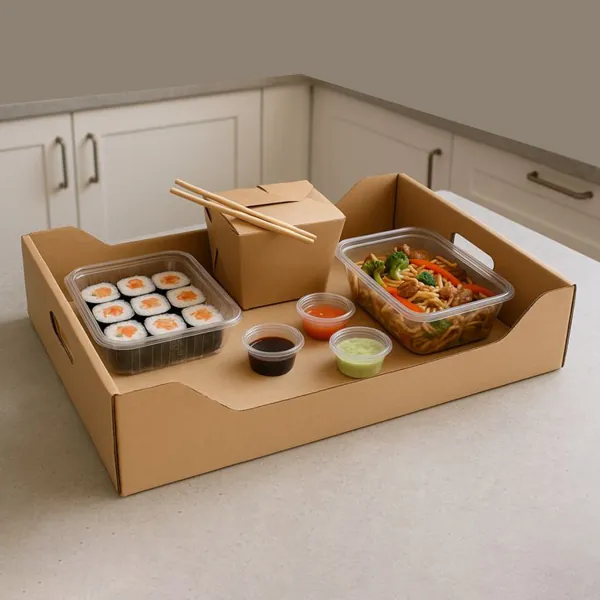
Corrugated Food Tray
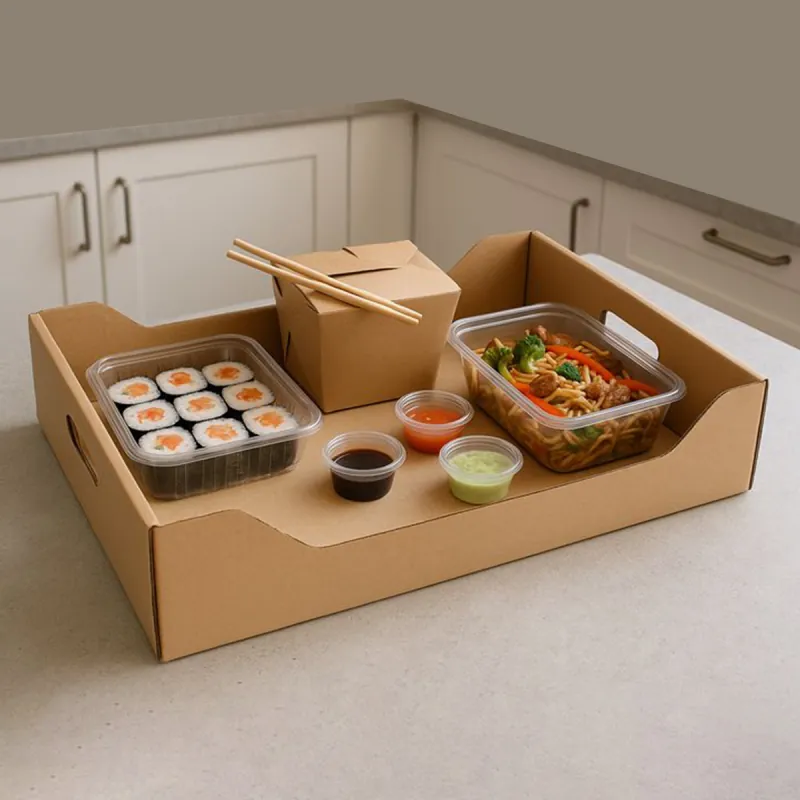
Corrugated trays exist for one reason: a loaded tray that has to be picked up from the middle without folding in half.
View tray & get pricing →Custom food packaging · US · UK · Canada · Australia
State · United States
Ohio sits at the centre of a large regional distribution network and has a substantial multi-site restaurant sector, which changes the shape of packaging enquiries from the state. More often than elsewhere, we are quoting for a group rather than a single site.
Multi-site packaging is a different exercise. Consistency, consolidated ordering and staged delivery matter more than the specification of any individual tray, and the biggest savings come from standardisation rather than from unit price negotiation.
Tell us the tray, the quantity and where it is going. Freight is quoted to your address rather than added later.
Groups routinely discover that sites are buying six variants of the same tray from three suppliers. Consolidating that is usually the single biggest saving available.
Two or three sizes that stack together, used across every site. It simplifies stock, delivery and staff training simultaneously.
Production in one run, delivery split across sites and across the year. You get volume pricing without every site needing storage for a full run.
One approved design, applied across the group. Site-specific variants are possible and cost plates only, but they should be a decision rather than an accident.
A group with settled formats should be reviewing the specification once a year, not renegotiating every purchase.
A group buying six variants of a tray is paying setup costs six times, running six shorter production runs, holding six sets of stock and training staff on six formats. Consolidating to two typically produces a larger saving than any unit price a buyer could negotiate on the original six.
It also makes the group look like one brand rather than several similar businesses, which is worth something in itself if the sites share a name.
Chosen against the requirements described above, not as a general catalogue listing.
Corrugated trays exist for one reason: a loaded tray that has to be picked up from the middle without folding in half.
View tray & get pricing →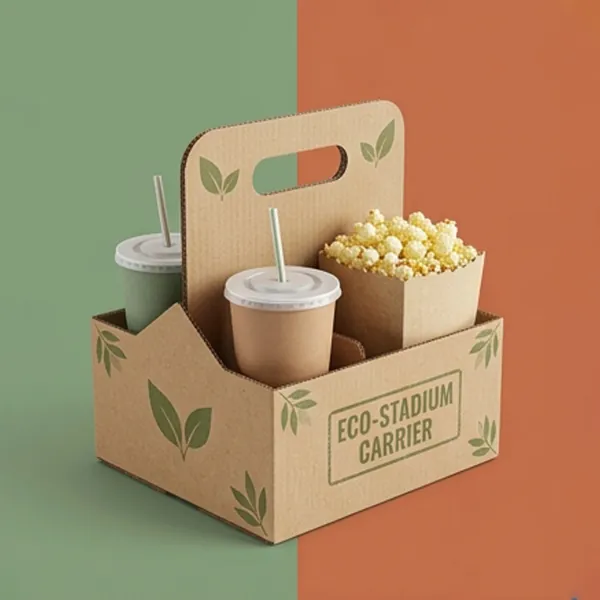
A stadium carrier has to be usable by somebody walking up concrete steps in a crowd, holding a phone, wearing a coat, in the dark.
View tray & get pricing →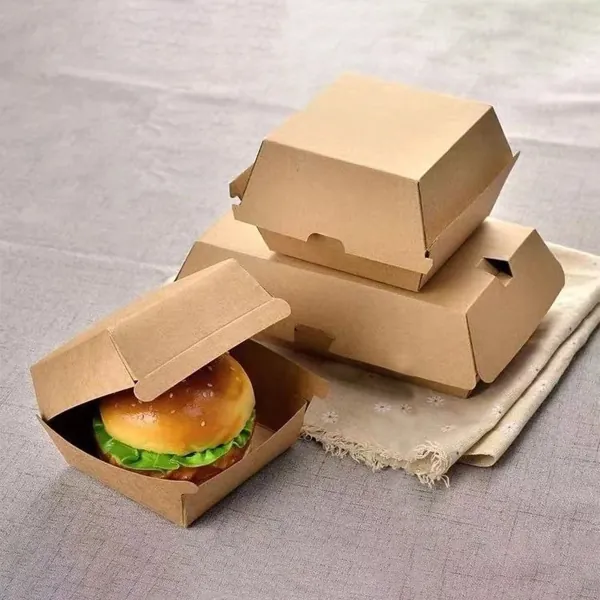
A burger clamshell is a hinged box that closes around a burger, and its whole purpose is to stop the build collapsing between the pass and the customer.
View tray & get pricing →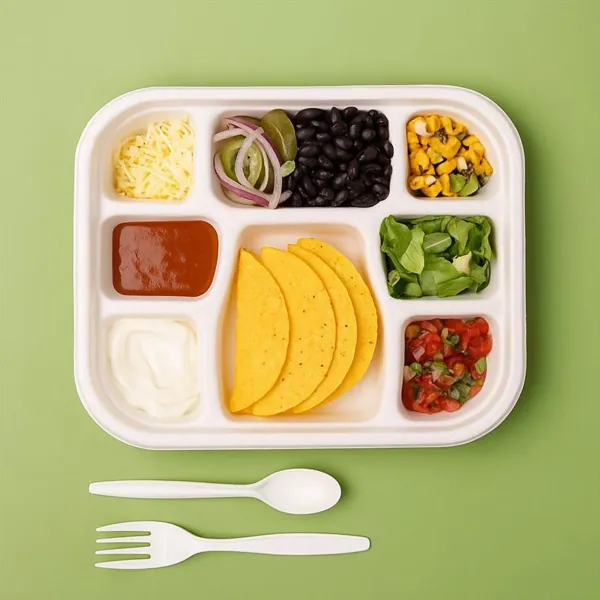
School meal trays have a specification nobody else has to meet.
View tray & get pricing →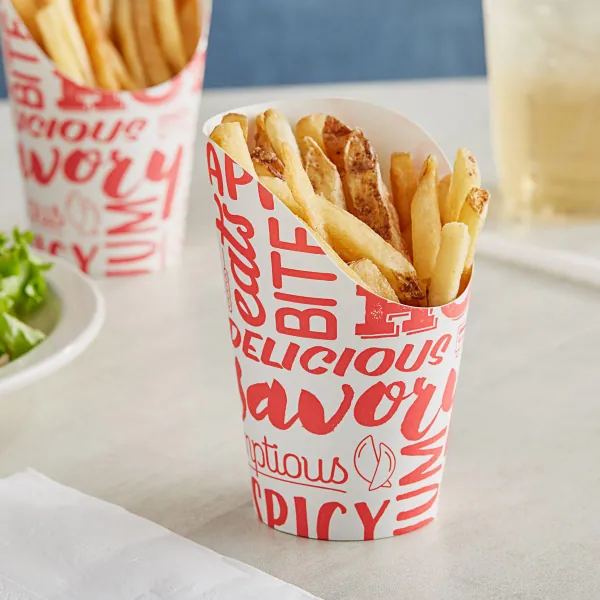
The fry scoop exists because of a specific piece of ergonomics: a member of staff should be able to fill it from a fryer basket with one hand, in one mo…
View tray & get pricing →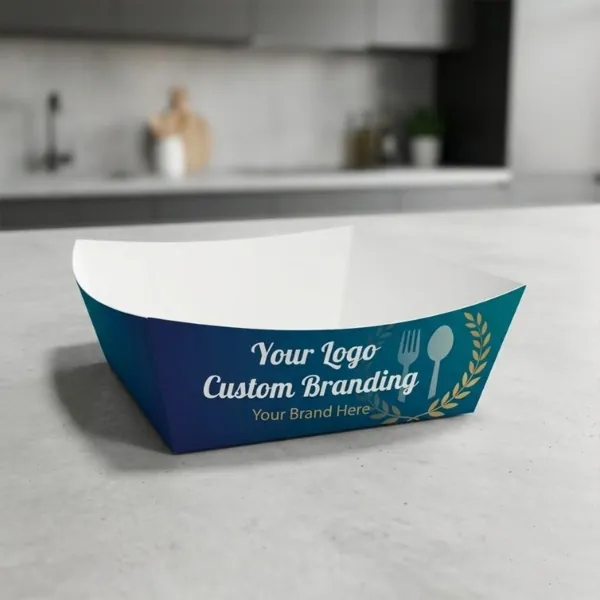
This is the general-purpose printed tray: any of our shapes, in your board, carrying your artwork.
View tray & get pricing →Yes, and consolidating is usually where the savings are. Production in one run with delivery split across sites gives you volume pricing without every site needing storage for the full quantity.
Frequently more than negotiating unit price on the existing range. Six variants means six setups, six shorter runs and six sets of stock. Consolidating to two changes all of that at once.
Yes. The cutting die is shared, so a site-specific design carries plate cost only. It should be a deliberate decision rather than something that happens by accident across a group.
It is worth asking for on a large order. Producing the full run and taking delivery in instalments gives you the volume price without needing storage for all of it at once.
Collect one of every packaging item from every site and lay them out on a table. Groups are routinely surprised by how many near-identical variants appear, and the exercise makes the case for consolidation on its own.
Yes. Those specifications start from the servery fixtures rather than the food — rail spacing, trolley shelves and tray return dimensions determine the footprint before anything else.
Send the specification, the quantity and the delivery address. We come back with unit price, tooling if any, freight and a real production date.