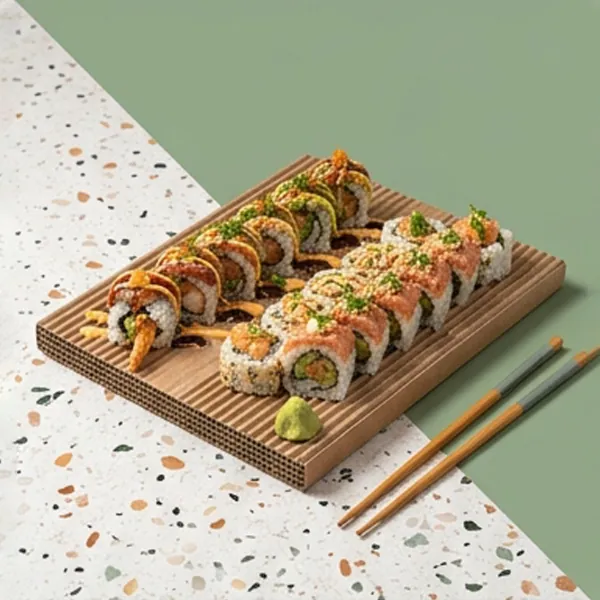
Corrugated Sushi Platter
A sushi platter is a flat presentation surface that has to stay flat.
View tray & get pricing →Custom food packaging · US · UK · Canada · Australia
Food tray category — 5 trays
Seafood packaging has to deal with two things at once: a product that is wet and cold, and a customer who buys almost entirely on how it looks through the lid. Getting one right at the expense of the other is the usual failure.
The trays in this range are built for chilled display and short-hop transport. Sushi trays sized to standard roll counts, oyster and shrimp platters with the depth to hold ice or a liner, and crawfish trays built to take a genuinely heavy wet load.
Tell us which of the sushi & seafood trays you need, the size and roughly how many. We reply with a full quote, usually within one working day.
01 — The range
Chilled-display packaging for sushi, shellfish and seafood counters. Every one is made to order, so treat the descriptions as starting points rather than fixed specifications.
A sushi platter is a flat presentation surface that has to stay flat.
View tray & get pricing →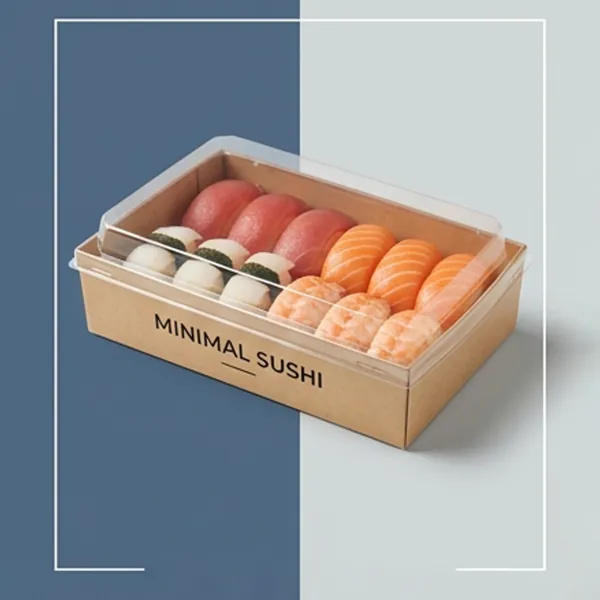
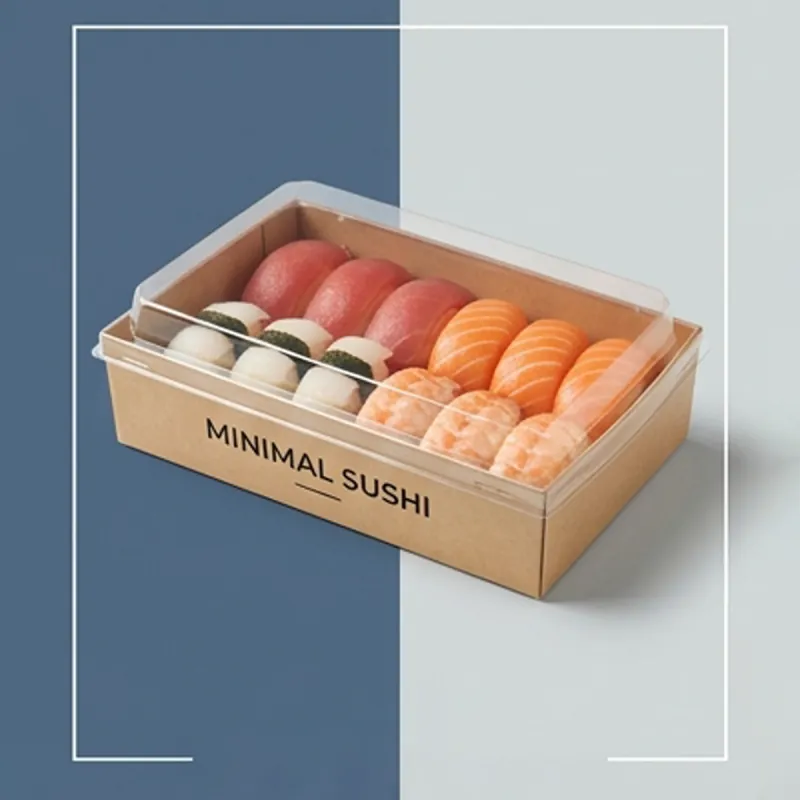
This is the retail sushi pack: a kraft base sized to a specific piece count, with a clear lid so the customer can see exactly what they are buying.
View tray & get pricing →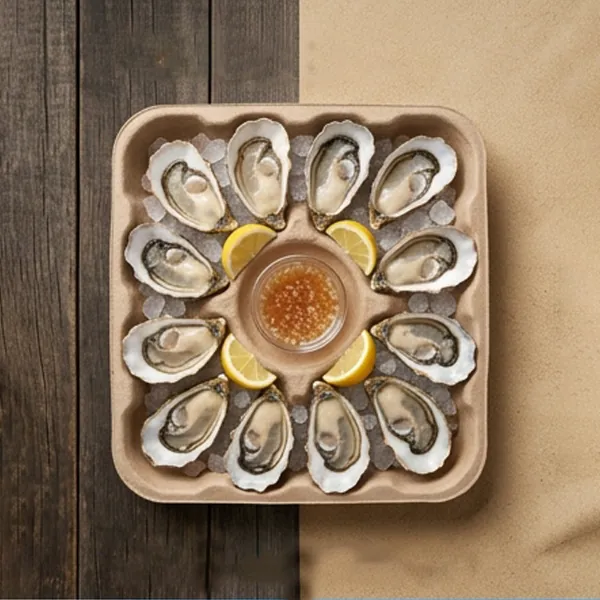
Oysters on the half shell have one packaging requirement above all others: they must stay level.
View tray & get pricing →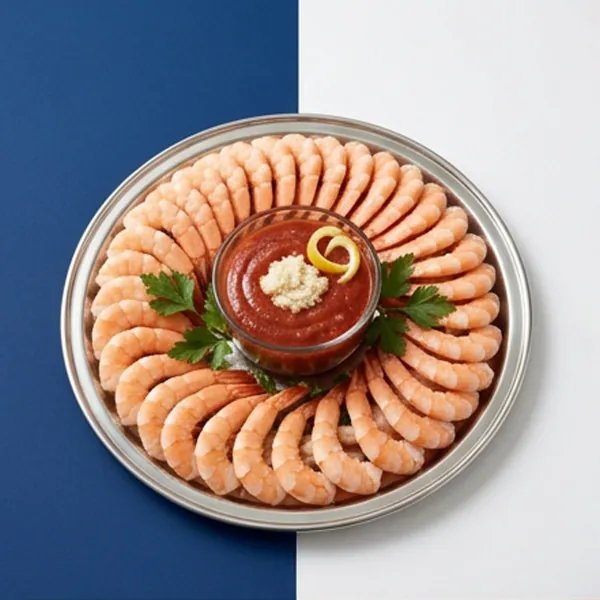
The shrimp platter is one of the most instantly recognisable formats in food retail: a ring of prawns arranged tail-inward around a central pot of cockt…
View tray & get pricing →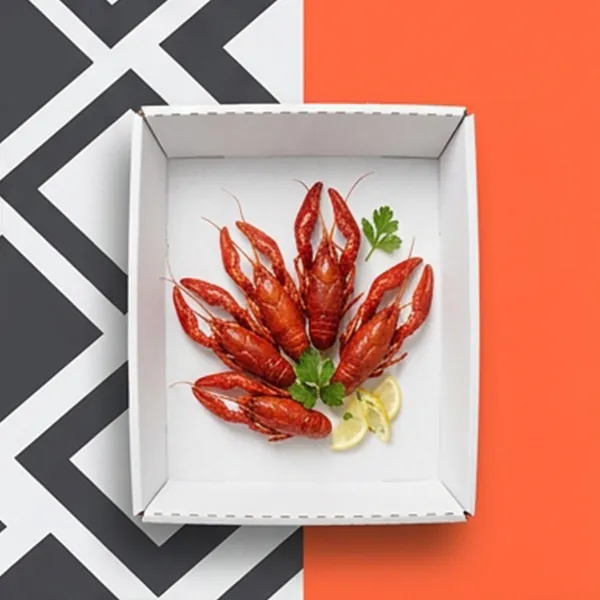
A crawfish tray carries several pounds of hot, wet, seasoned shellfish, often with corn and potatoes, straight out of a boil.
View tray & get pricing →02 — In detail
A sushi tray sits in a chiller where the air is cold and damp. Condensation forms on every surface, including the inside of the lid, and it runs down into the board. An untreated tray will soften at the corners within a working day.
The standard answer is a moisture-resistant liner on the food-contact face and a lid that is either vented or made from a material that does not shed condensation onto the food. For heavier wet loads — a crawfish tray holding several pounds of boil — the specification moves up to a properly barriered construction, because the tray is carrying weight while it is wet.
| Product | Format | Critical specification |
|---|---|---|
| Sushi rolls and nigiri | Lidded sushi tray | Internal length matched to roll count; clear lid |
| Sushi platters for sharing | Sushi platter | Flat base that will not bow under a full arrangement |
| Oysters on the half shell | Oyster tray | Wells or a recess that stops shells sliding |
| Shrimp cocktail | Shrimp cocktail tray | Centre recess for sauce, cold-tolerant construction |
| Crawfish and boil | Crawfish tray | Wall strength for weight plus moisture barrier |
Every format here is really a decision about where liquid goes and how long the pack has to hold its shape.
03 — Questions
With a moisture-resistant food-contact face, yes — that is what the treatment is for. Plain uncoated board will not; it will soften where the rice touches it and the corners will lose definition. Always specify the barrier for chilled sushi.
Work from roll count outward. Measure one cut piece, decide how many pieces per row and how many rows, and add a small margin. Send us a photograph of a packed tray next to a ruler and we will size to your actual product rather than a nominal standard.
Yes. Clear lids are effectively mandatory for retail sushi because the customer buys on appearance. We will make sure the lid profile and the tray rim are dimensionally matched so lids do not pop off in a stacked display.
Where the tray is specified with a food-contact surface appropriate for raw chilled product, yes. Raw seafood is one of the more demanding food-contact applications, so we confirm the exact specification in writing rather than relying on a general statement.
A properly barriered tray can hold ice for a service period, but melting ice becomes standing water, which is the hardest condition for any board product. If you need to hold ice for hours rather than a service, tell us and we will specify accordingly or recommend a different material.
Formed wells are achievable in moulded fibre; in board, the usual approach is a recessed or ridged base that stops shells sliding rather than an individual well per oyster. Tell us the shell size range and we will show you both options.
Vented lids and correct fill temperature both help. The most common cause of heavy condensation is packing product that has not fully cooled, which puts warm moist air inside a sealed tray. If you are seeing it consistently, it is usually a process issue as much as a packaging one.
Yes. Retail barcode panels need a light, matt background and a clear quiet zone around the code. We will position it on the dieline so it stays flat and scannable rather than sitting across a fold.
Describe the food, the portion and the setting. We will tell you which tray in this range fits, and say so plainly if the answer is a format from somewhere else on the site.