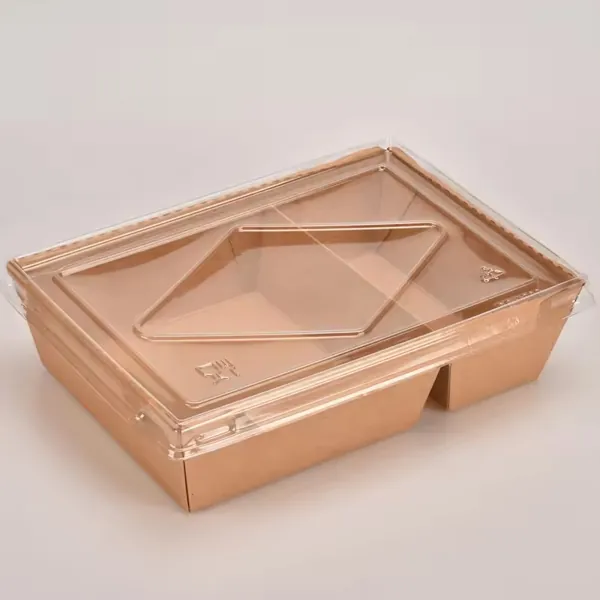
Compartment Tray with Lid
The lidded compartment tray is the format that meal-prep businesses, bento services and premium takeaway have converged on.
View tray & get pricing →Custom food packaging · US · UK · Canada · Australia
Industry guide
Delivery packaging has to solve a problem the kitchen cannot: twenty minutes between the pass and the table, during which the food continues to cook itself in its own steam, moves around a bag, and cools unevenly.
The kitchen can do nothing about any of that. The packaging can do a great deal, and most operations under-specify it because the failures happen where nobody in the business is watching.
Describe the operation and roughly how many trays you get through. We come back with the formats that fit, with pricing — usually within one working day.
Three forces act on delivered food, and each has a packaging answer. Steam softens anything crisp, and the answer is venting. Movement rearranges anything loose and spills anything liquid, and the answer is compartments, inserts and sealed pots. Time cools food unevenly, and the answer is packing density and insulation rather than the container itself.
The most common mistake is to seal everything tightly in the belief that a tight seal means quality. For fried food it means the opposite: a sealed container guarantees soggy batter, every time.
Fries, batter, pastry and toasted bread all need somewhere for steam to go. Die-cut vents cost almost nothing.
Sauces and dressings go in sealed pots, not poured over the food and not in an open compartment.
A compartment between a wet element and a dry one prevents the single most common delivery complaint.
A container with a lot of headroom lets food move. Size to the portion, and the food arrives arranged as it left.
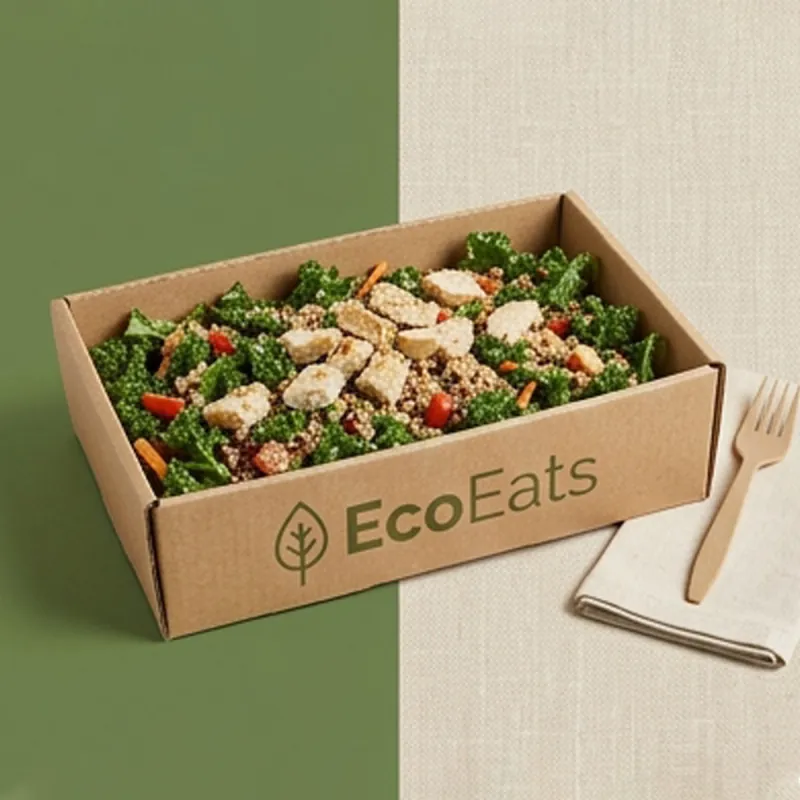
On a third-party platform, the platform owns the customer, the app, the receipt and the notification. Your packaging is very often the only thing in the transaction that is yours.
Bag fit is a packaging specification, not an afterthought.
| Consideration | What to do |
|---|---|
| Footprint | Size containers so a whole number fits the bag base, with no wasted strip |
| Height | Keep stacked heights below the bag opening so it closes properly |
| Stacking | Specify lids that carry load, so the bottom container is not crushed |
| Stability | Flat-bottomed containers rather than tapered ones, so they do not tip in transit |
| Separation | Cold items and hot items in separate containers, ideally separate bags |
Picked for the specific demands described above rather than as a general list.
The lidded compartment tray is the format that meal-prep businesses, bento services and premium takeaway have converged on.
View tray & get pricing →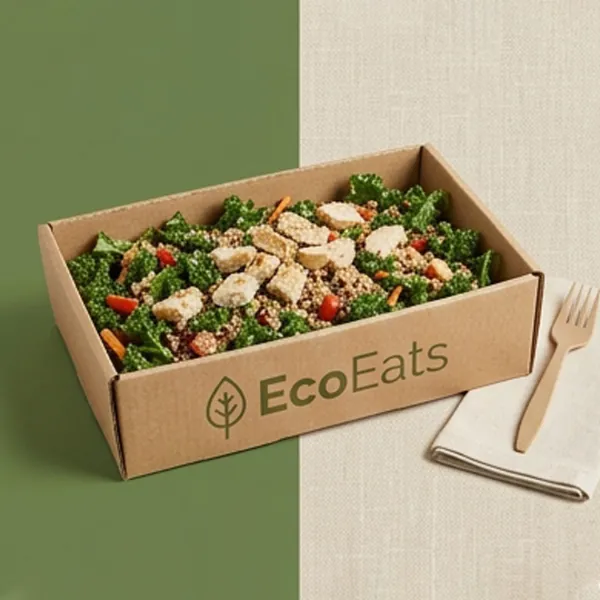
The lunch tray sits between a takeaway container and a proper meal tray.
View tray & get pricing →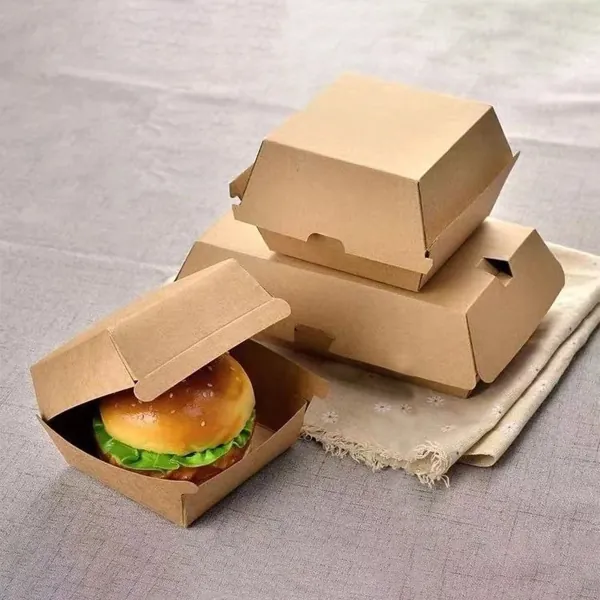
A burger clamshell is a hinged box that closes around a burger, and its whole purpose is to stop the build collapsing between the pass and the customer.
View tray & get pricing →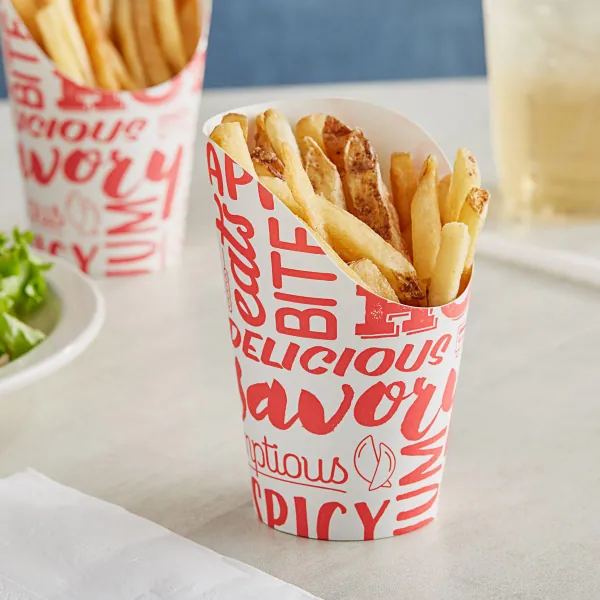
The fry scoop exists because of a specific piece of ergonomics: a member of staff should be able to fill it from a fryer basket with one hand, in one mo…
View tray & get pricing →
A deli tray takes more punishment than most food packaging.
View tray & get pricing →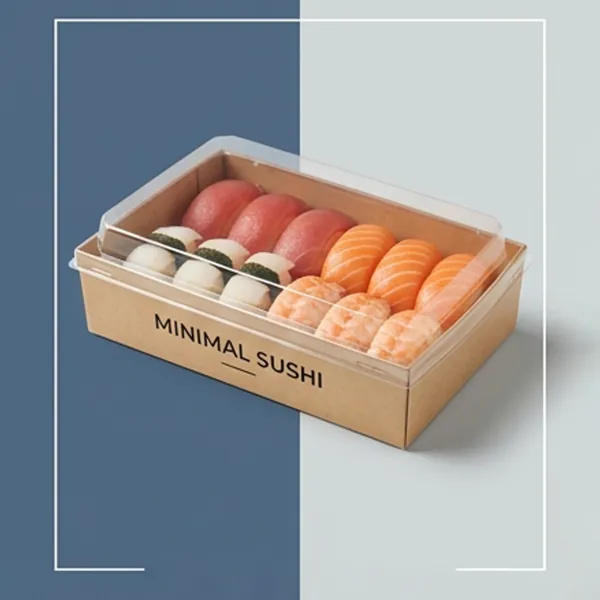
This is the retail sushi pack: a kraft base sized to a specific piece count, with a clear lid so the customer can see exactly what they are buying.
View tray & get pricing →Vent the container. Steam is the entire cause, and a sealed box guarantees it. Die-cut vents cost almost nothing and are the single most effective change most delivery operations can make.
No — and this is a common and expensive misunderstanding. Seal the wet things, vent the crisp things. A tight seal on fried food produces exactly the failure you are trying to avoid.
Sealed pots. A fitted lid, clear or board, will not hold liquid if the bag tips. If sauce must be in the main container, that means film sealing with a compatible rim, designed in from the start.
One sized to the portion, not one with generous headroom. Space is what lets food move and rearrange itself. A snug container arrives looking the way it left.
Yes, and it is a real specification. Measure the internal dimensions of the bags your couriers use and tell us how many containers per bag. Sizing to it is free at design stage and impossible later.
On a platform order it is often the only thing in the transaction that is yours. Against a commission measured in tens of per cent, a few cents per order for a surface that invites a direct order next time is an easy calculation.
Different containers, and ideally different bags. A salad packed against a hot main wilts within ten minutes. This is a packing process decision as much as a packaging one.
It depends on the material and coating. We state the exact construction so you can test it in a domestic microwave before printing reheating instructions on the pack.
Send the food, the volumes and the country you take delivery in. We reply with formats, material options and a full quote including freight.