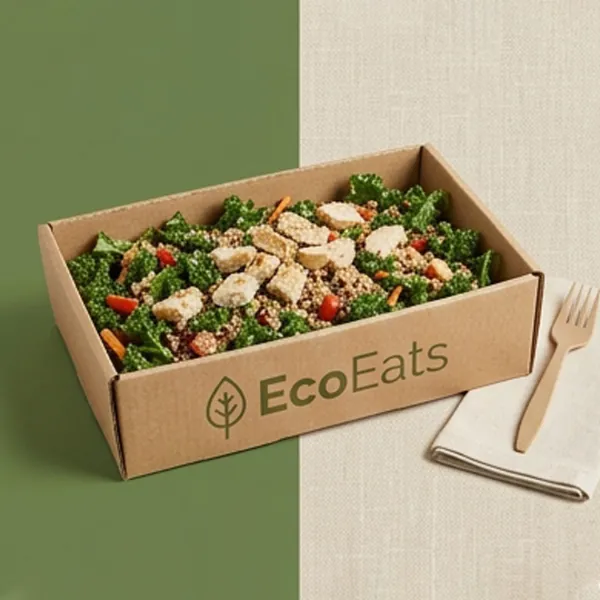
Corrugated Lunch Tray
The lunch tray sits between a takeaway container and a proper meal tray.
View tray & get pricing →Custom food packaging · US · UK · Canada · Australia
Compartment & Meal Trays
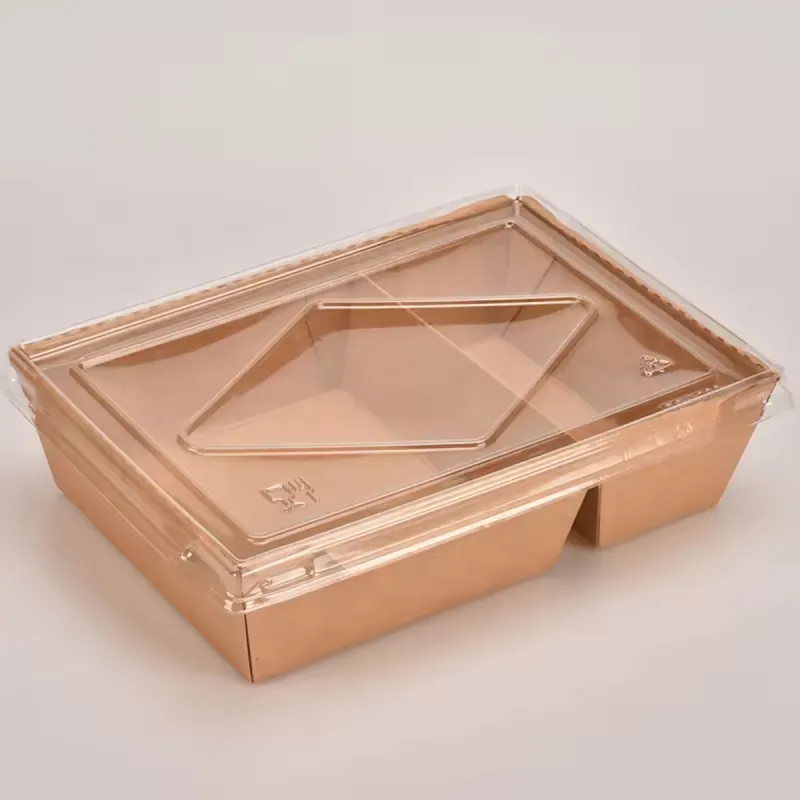
The lidded compartment tray is the format that meal-prep businesses, bento services and premium takeaway have converged on. It keeps a wet element away from a dry one, it seals well enough to travel, and it shows the food through the lid — which for a customer choosing from a chiller is most of the sale.
Everything about specifying it comes down to portion volumes and how thoroughly the lid needs to seal.
Pricing starts from $0.30 per tray
The unit price depends on the size, board, printing, finishing, quantity and delivery country, so every quote is worked out for your specification rather than taken from a list.
Send the size and the run length. We reply with pricing, material options and a production date — usually within one working day.
01 — Specification
Every element below is set when we quote. Nothing here is a fixed catalogue entry — if a line does not match what you need, say so and we will change it.
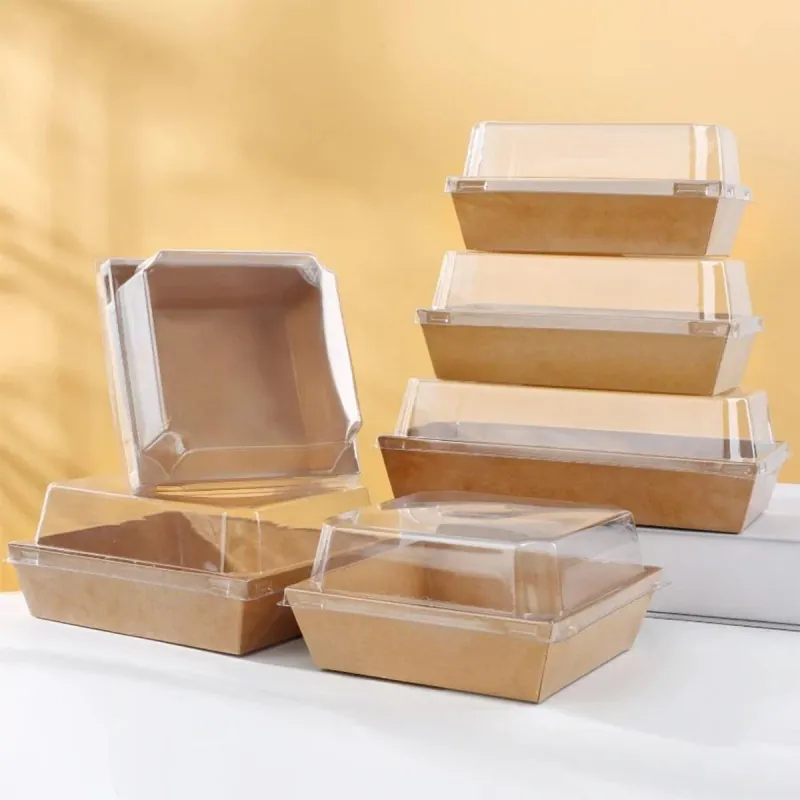
02 — Build the spec
The same five questions we would ask on a phone call, with the compartment tray with lid already selected. You get a properly detailed brief at the end, which is what makes a first quote accurate rather than approximate.
Prefer the full builder with a live sketch? Open the tray designer.
03 — In detail
Not the ingredients — the plated portion. Convert to volume in millilitres. This is the number the whole tray is built from.
Sauces, dressings and anything with free liquid need full-height walls and, usually, a sealed lid. Dry sides do not.
It has to fit your delivery bag, your chiller shelf and a domestic fridge if customers store it. Give us all three and we work inward.
Clear for retail, board for catering, film for anything that must not leak in a bag.
Tell us how many trays are stacked, loaded, so the lid carries the load rather than the food.
Shows the food, which is the main reason customers buy from a chiller. It sits on rather than seals, so it will not contain liquid if the tray is tipped. Good for retail display, adequate for careful transport.
Cheapest, strongest, stacks best, and gives you a large print surface. It hides the food entirely, which means a label or a window is doing all the merchandising work.
The only option that genuinely contains liquid and the only one that supports a stated shelf life in most retail settings. Needs matching sealing equipment and a compatible rim, so it has to be designed in from the start.
Starting points only. Measure your own portions before committing to a tool.
| Layout | Typical use | Rough volume split |
|---|---|---|
| Two equal | Main and salad, or a paired bento | Roughly half and half |
| Two unequal | Large main with one side | About two-thirds and one-third |
| Three | Plated hot meal: main plus two sides | About half, quarter, quarter |
| Four | Main, two sides and a sauce or dessert well | Half, two eighths, one eighth |
04 — Nearby
Chosen because operators who buy the compartment tray with lid usually need one of these in the same order, not because they happen to sit in the same category.
The lunch tray sits between a takeaway container and a proper meal tray.
View tray & get pricing →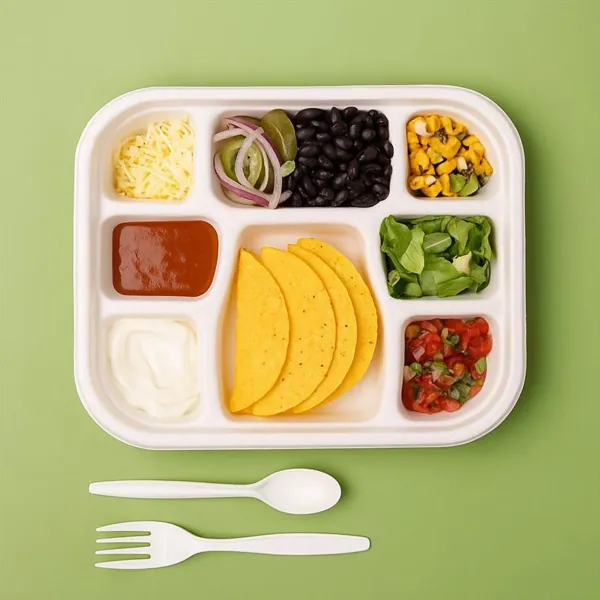
School meal trays have a specification nobody else has to meet.
View tray & get pricing →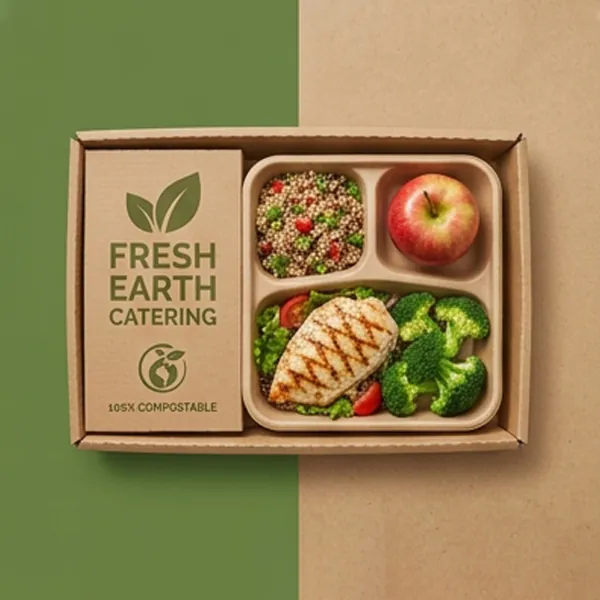
A cafeteria tray carries an entire meal — main, sides, dessert, cutlery, sometimes a drink — from a servery to a table, held by one person who is also c…
View tray & get pricing →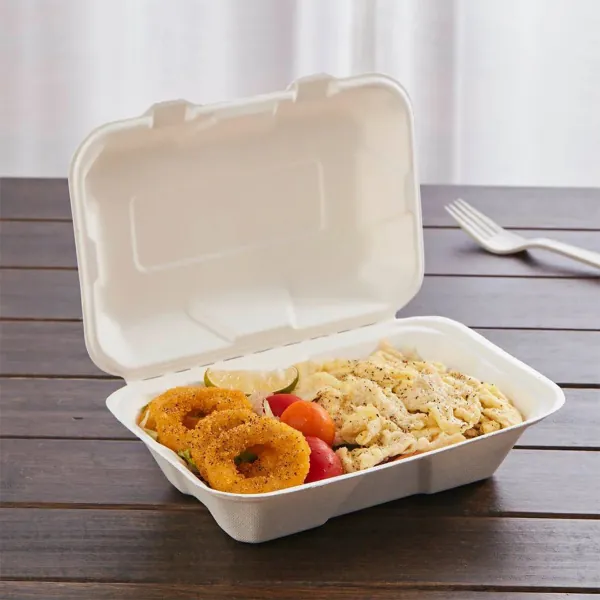
Moulded fibre trays are formed by pressing wet pulp against a heated tool.
View tray & get pricing →05 — Questions
By volume in millilitres, measured from your actual plated portions rather than from ingredient weights. A compartment that is wide enough but too shallow overflows, and volume is the number that captures both.
Not if the dividers are full internal height and the tray is carried flat. Migration almost always means either an overfilled compartment or dividers that stop short of the lid. Tell us the portion volumes and we will size the walls with headroom.
Only a film seal. A fitted lid, clear or board, contains and protects but will not hold liquid if the tray is tipped in a delivery bag. If leak-proof matters, plan for film sealing from the start because the rim has to match your equipment.
It depends on the material and coating. Moulded fibre generally tolerates reheating; coated board varies; metallic inks do not. We state the exact construction so you can test it in your own equipment before making a claim to customers.
Yes, and it matters for meal-prep customers storing several days of food. Tell us the stack height and we will make sure the lid takes the load rather than pressing on the contents below.
One that fits your delivery bag, your chiller shelf and a domestic fridge shelf if customers store it. Give us all three constraints and we design inward from the tightest.
In moulded fibre, yes — that is a real advantage of the material. In folded or coated board the depths are constrained by the blank. If you need a deep well next to shallow sides, fibre is usually the right route.
On a flat panel — the lid or the long side. Decide before artwork, because a label across a fold will not sit flat and will peel. We mark the label area on the dieline.
Functionally, yes. Bento is a layout convention rather than a distinct product. If you are building a bento range, tell us the compartment grid you want and we will tool to it.
Send the dimensions, the quantity and the country you want it delivered to. We come back with a full quote — material, print, finishing, freight and a production date.