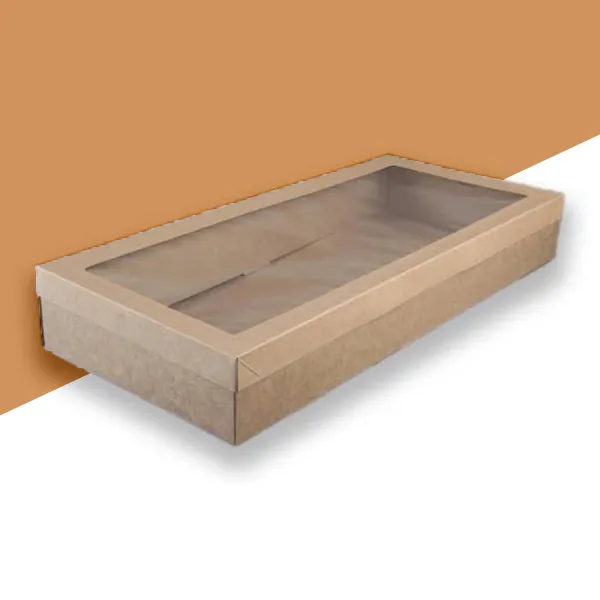
Catering Tray with Lid
The lidded catering tray is the format that most drop-off caterers standardise on, because it is the only one that solves the whole journey.
View tray & get pricing →Custom food packaging · US · UK · Canada · Australia
State · United States
Virginia enquiries cluster around two very different requirements: a large corporate and institutional catering market in the north of the state, and a coastal seafood trade on the eastern side.
Corporate catering is judged on presentation and transit performance; seafood is judged on how it manages liquid. Almost nothing about the two specifications overlaps.
Tell us the tray, the quantity and where it is going. Freight is quoted to your address rather than added later.
A corporate catering tray is built in a kitchen, driven, carried through a building and opened in front of a client. Everything that goes wrong happens in the middle three stages, and none of it is visible to the kitchen that packed it.
The specifications that prevent it are unglamorous: enough lid overlap that nothing lifts in a van, a base rigid enough that the arrangement does not slide when the tray is lifted from the middle, depth sized to the tallest garnish, and corner posts if trays are stacked in transit.
Absorbent fibre with a ribbed base lifts the product clear of released liquid. It is why fibre has taken so much of the retail seafood shelf.
Oysters and half shells need formed recesses that hold each shell level, because a shell that tips loses its liquor.
Condensation on every surface, plus a full day in a cold cabinet. Moisture-resistant construction is baseline.
A flat panel for barcode and legal information, planned before the artwork rather than fitted in afterwards.
Chosen against the requirements described above, not as a general catalogue listing.
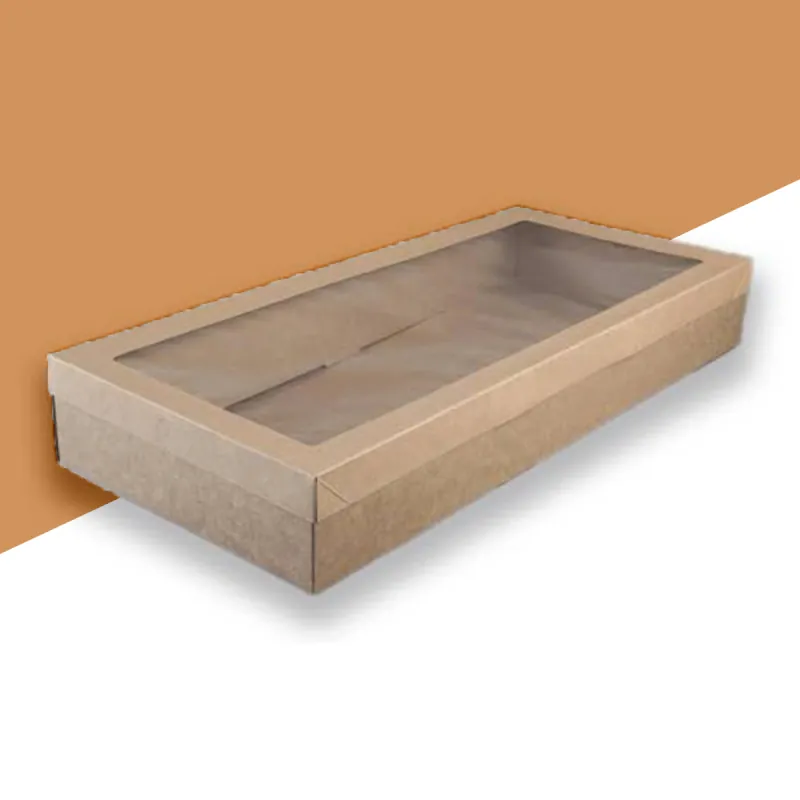
The lidded catering tray is the format that most drop-off caterers standardise on, because it is the only one that solves the whole journey.
View tray & get pricing →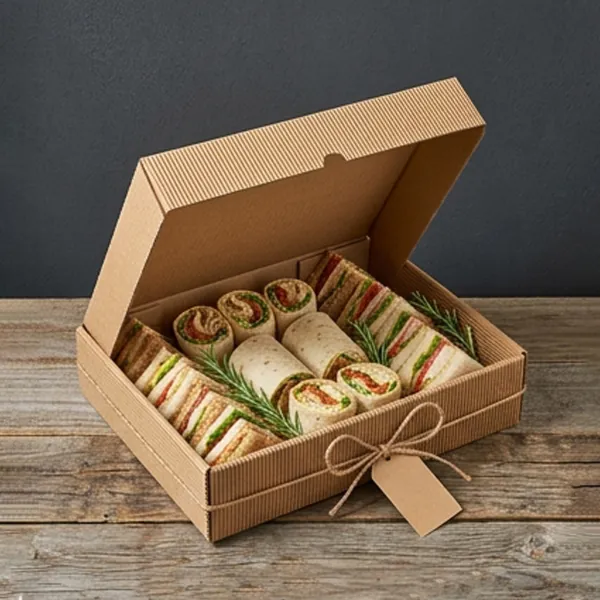
The corporate sandwich platter is one of the highest-volume formats in catering, and the specification is almost entirely determined by how you cut your…
View tray & get pricing →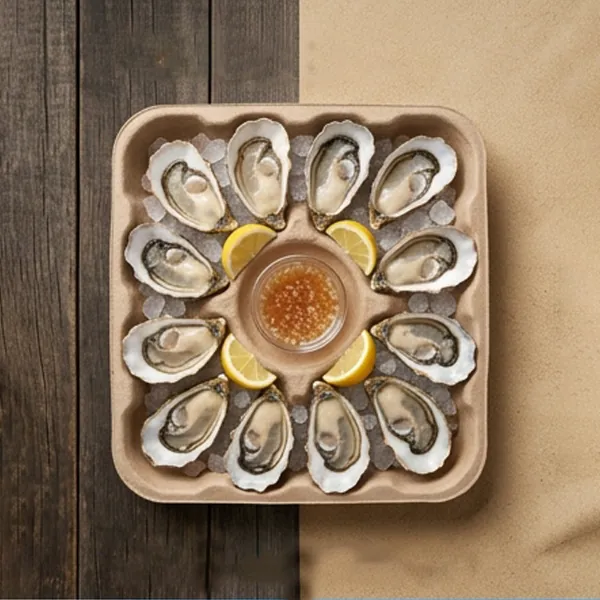
Oysters on the half shell have one packaging requirement above all others: they must stay level.
View tray & get pricing →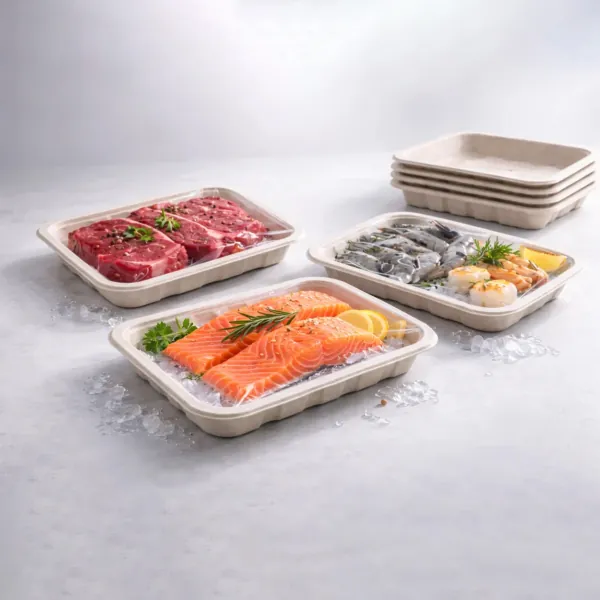
The whole argument for a fibre meat tray is what happens to the liquid.
View tray & get pricing →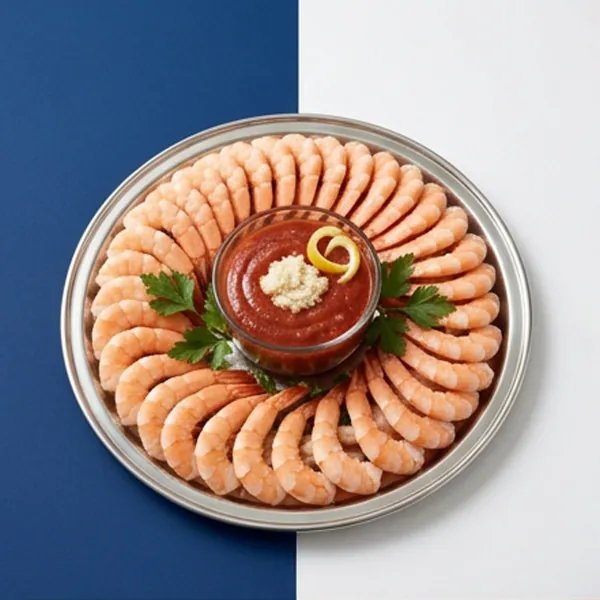
The shrimp platter is one of the most instantly recognisable formats in food retail: a ring of prawns arranged tail-inward around a central pot of cockt…
View tray & get pricing →
The lidded compartment tray is the format that meal-prep businesses, bento services and premium takeaway have converged on.
View tray & get pricing →Sufficient overlap for the tray depth, and a base rigid enough not to flex under load. Those two account for nearly every case. Send us the tray you use now and it is usually obvious which one caused it.
Because of where the liquid goes. A ribbed fibre base lifts the fillet clear of released purge and absorbs it, so the customer sees a drier product. The volume of liquid is unchanged; its visibility is not.
Formed recesses sized to your shell range. Send a dozen shells across your grades — we size so the smallest sits securely and the largest still fits, which is different from taking an average.
Tallest garnish plus clearance, not the average item. A lid resting on a filled roll flattens the presentation on every tray, and it cannot be fixed after tooling.
Yes. Those specifications start from the servery fixtures — rail spacing, trolley shelves, tray return — rather than from the food, because the fixtures are fixed and the tray is not.
Yes, and consolidating the order shares setup even though the products are quite different. Tell us the full list and we will quote it as one project.
Send the specification, the quantity and the delivery address. We come back with unit price, tooling if any, freight and a real production date.