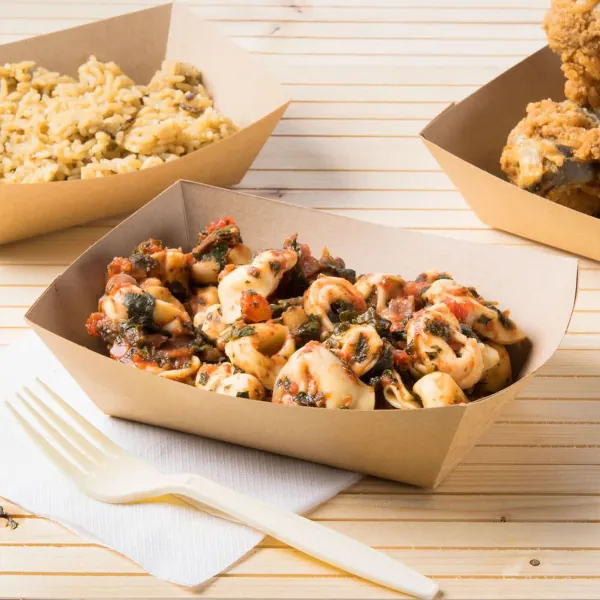
Kraft Paper Food Tray
The kraft paper food tray is the one shape that every counter ends up buying.
View tray & get pricing →Custom food packaging · US · UK · Canada · Australia
Kraft Food Trays
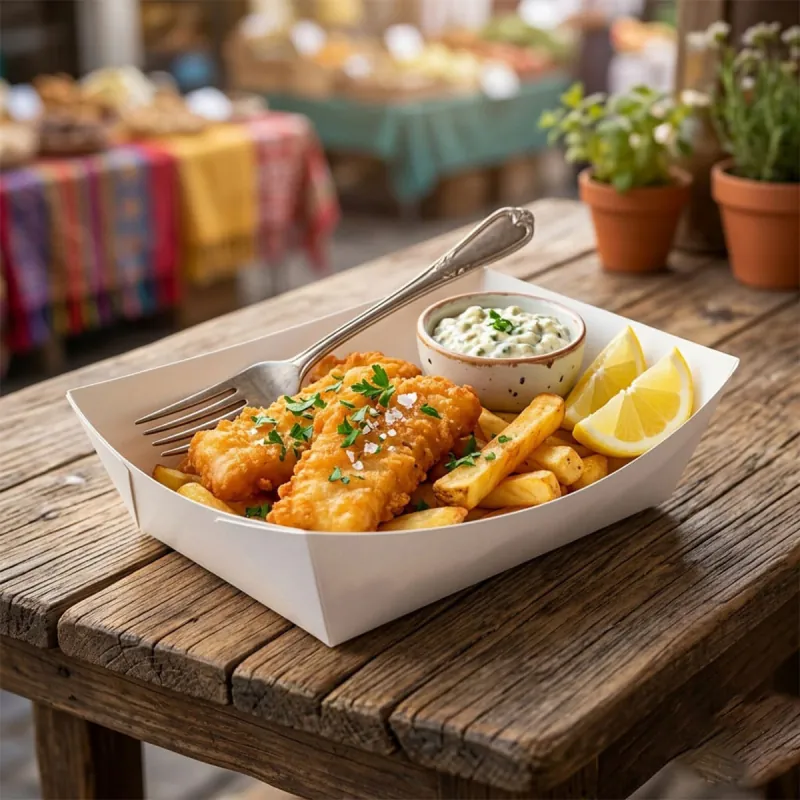
The white paper food tray is the same shape as the kraft version with a different surface underneath. That surface changes two things: your artwork lands accurately instead of shifting warm, and the food looks brighter against the tray.
It is the default choice for seafood, fried chicken, pale fried foods and any menu where the brand palette includes colours that will not survive being printed on brown board.
Pricing starts from $0.30 per tray
The unit price depends on the size, board, printing, finishing, quantity and delivery country, so every quote is worked out for your specification rather than taken from a list.
Send the size and the run length. We reply with pricing, material options and a production date — usually within one working day.
01 — Specification
Every element below is set when we quote. Nothing here is a fixed catalogue entry — if a line does not match what you need, say so and we will change it.
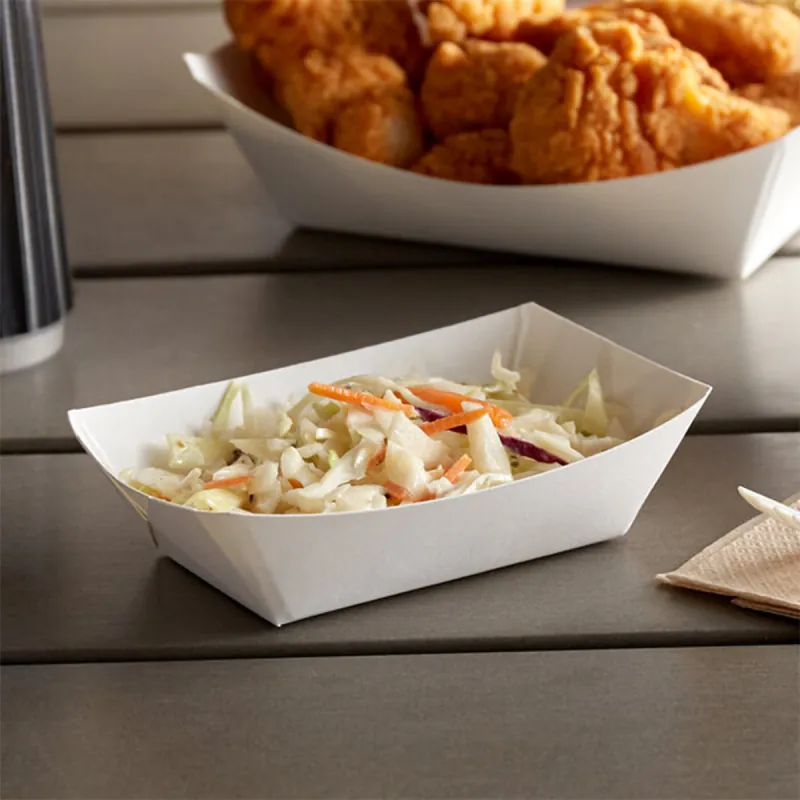
02 — Build the spec
The same five questions we would ask on a phone call, with the white paper food tray already selected. You get a properly detailed brief at the end, which is what makes a first quote accurate rather than approximate.
Prefer the full builder with a live sketch? Open the tray designer.
03 — In detail
White board costs more than natural kraft because of the bleaching stage, so it needs a reason. There are three good ones. The first is colour accuracy: a brand colour printed on white lands where you expect it, while the same ink on brown shifts warm and drops in contrast. The second is photography — food shot on a white tray reads brighter and cleaner, which matters if your menu photography is doing sales work. The third is category expectation: fish counters, chicken counters and hospital or clinical settings all read white as correct.
If none of those apply, natural kraft will usually do the job for less.
A grease mark that is barely noticeable on brown kraft is obvious on white. This is the single most common complaint about white trays, and it is entirely preventable by specifying a grease-resistant food-contact face from the start.
Trays rub against each other in transit and in storage. On brown board the marks disappear; on white they show as grey streaks. Packing quantity per carton and how the trays are stored both make a real difference.
If your brand is built on a natural, unbleached, hand-made impression, white board actively works against it. That is not a defect, it is just the wrong tool — in that case use natural kraft and design for it.
| Natural kraft | Bleached white | |
|---|---|---|
| Unit cost | Lower | Higher |
| Spot colour accuracy | Shifts warm | Accurate |
| Four-colour process | Muted and dark | Full range |
| Grease staining | Less visible | Very visible without treatment |
| Brand impression | Natural, rustic, unfussy | Clean, bright, precise |
The full comparison across every board type we use is in food tray materials explained.
04 — Nearby
Chosen because operators who buy the white paper food tray usually need one of these in the same order, not because they happen to sit in the same category.
The kraft paper food tray is the one shape that every counter ends up buying.
View tray & get pricing →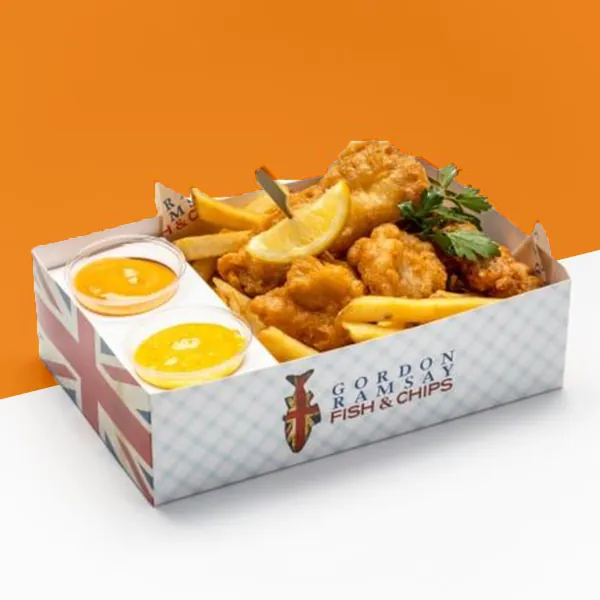
Fish and chips is the hardest test a board tray faces.
View tray & get pricing →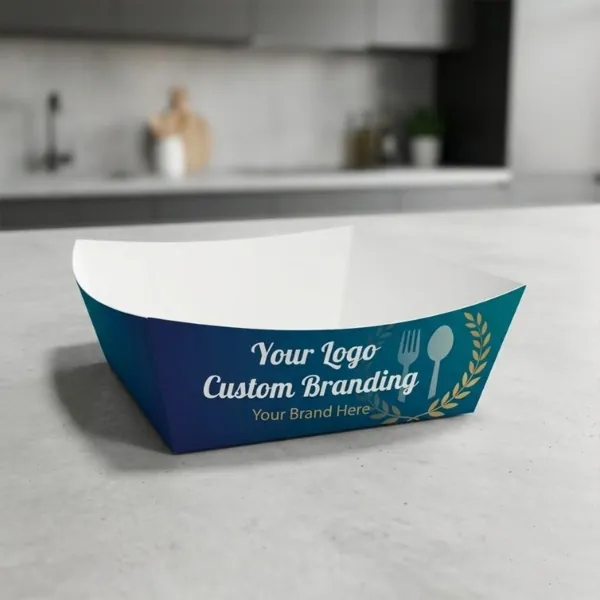
This is the general-purpose printed tray: any of our shapes, in your board, carrying your artwork.
View tray & get pricing →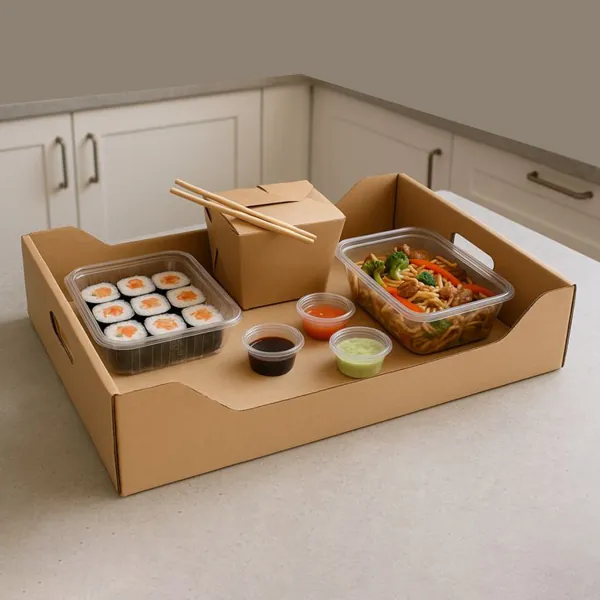
Corrugated trays exist for one reason: a loaded tray that has to be picked up from the middle without folding in half.
View tray & get pricing →05 — Questions
No — strength comes from the caliper and the grade, not the colour. A white tray and a brown tray of the same weight behave identically under load. Specify the board weight against your portion, not the surface.
On untreated white board, yes, and it is the main reason people are disappointed with white trays. A grease-resistant food-contact face solves it, adds very little to the unit cost, and should be treated as standard for any fried menu.
Yes. Bleached board is what you use when the design needs photography, gradients or a wide colour range. We will still recommend keeping type generous, because a tray is read at arm’s length rather than in the hand.
Yes, the shapes and footprints are the same — the difference is the board. That means you can move a line from kraft to white without changing racking, portioning or carrier fit.
Bleached board is paper and is widely accepted in paper streams where it is not saturated with food. As with any tray, a barrier treatment changes what a given facility will take, and rules differ by country. We state the exact construction so you can check locally.
Board white is not paper white and not screen white — it has a slight warmth. If a specific white is part of your identity, we can flood-print white ink over the board, though on a food tray that is rarely worth the cost.
White is the conventional choice and it suits the food, but it must be grease-resistant. See the fish and chips tray for the deeper format built specifically for that service.
Yes, if the artwork works on both — and often it will need adjusting, because a design tuned for brown board looks washed out on white. We will show you both proofs before you commit.
Send the dimensions, the quantity and the country you want it delivered to. We come back with a full quote — material, print, finishing, freight and a production date.