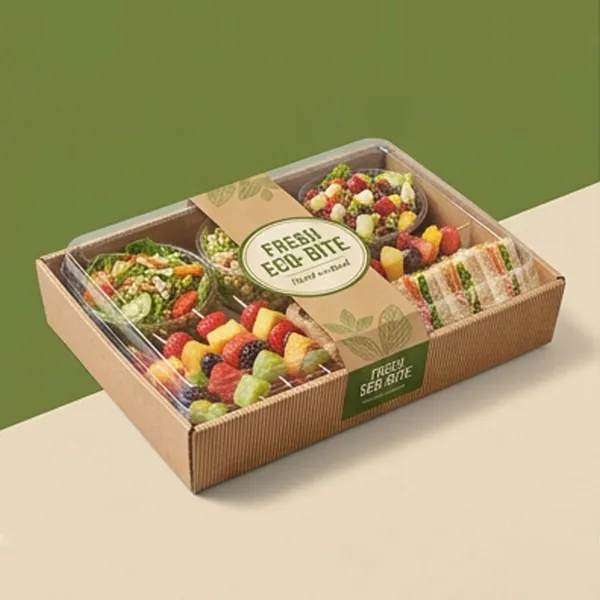
Corrugated Party Tray with Lid
A party tray is a divided platter under a clear lid.
View tray & get pricing →Custom food packaging · US · UK · Canada · Australia
Catering Trays
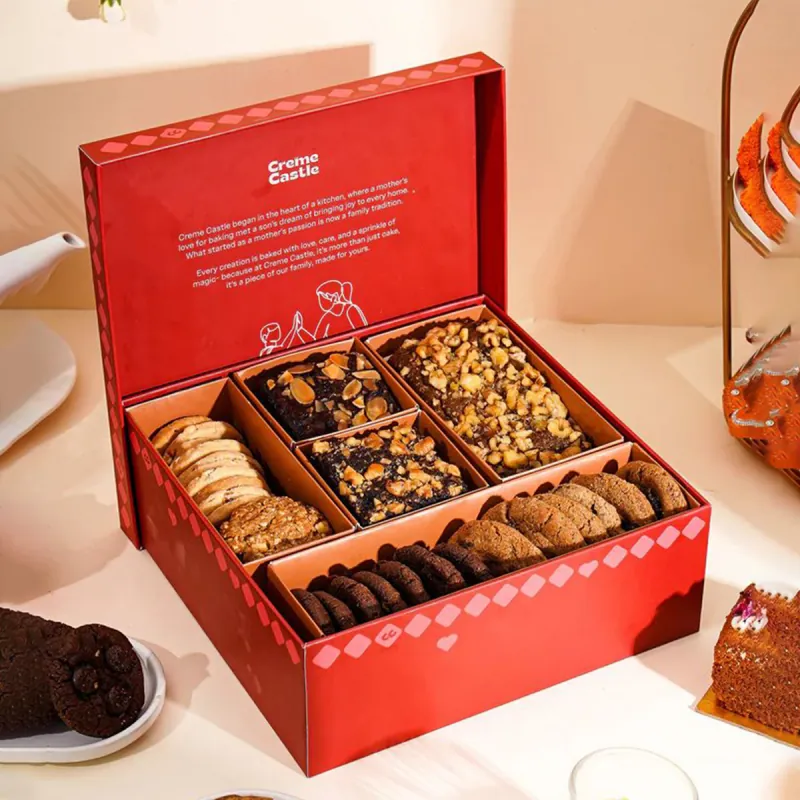
Rigid platters are what you use when the packaging is part of the price. The board is thicker, the edges are wrapped rather than cut, the lid lifts off rather than folding, and the whole thing has a weight in the hand that folding board cannot imitate.
It costs several times what a corrugated tray costs. That is only worth it in specific situations — corporate gifting, hotel and event service, premium retail — and this page is mostly about identifying whether yours is one of them.
Pricing starts from $0.30 per tray
The unit price depends on the size, board, printing, finishing, quantity and delivery country, so every quote is worked out for your specification rather than taken from a list.
Send the size and the run length. We reply with pricing, material options and a production date — usually within one working day.
01 — Specification
Every element below is set when we quote. Nothing here is a fixed catalogue entry — if a line does not match what you need, say so and we will change it.
02 — Build the spec
The same five questions we would ask on a phone call, with the rigid catering platter already selected. You get a properly detailed brief at the end, which is what makes a first quote accurate rather than approximate.
Prefer the full builder with a live sketch? Open the tray designer.
03 — In detail
Rigid packaging is justified when the recipient keeps it, photographs it, or judges the sender by it. Corporate gifting is the clearest case: the platter arrives at somebody’s desk with a company name on it, and a flimsy box actively damages the message. Hotel amenity and premium retail follow the same logic.
It is the wrong answer for volume catering, for anything that will be thrown away within the hour, and for any operation where the unit cost has to sit under a certain figure. If your platters go out fifty at a time to an office lunch, a printed corrugated tray does the same job for a fraction of the price. We will tell you that rather than sell you the expensive option.
A wrapped edge has no visible board core. It is the single detail that separates rigid packaging from a well-printed folding box, and it is the reason rigid feels different in the hand.
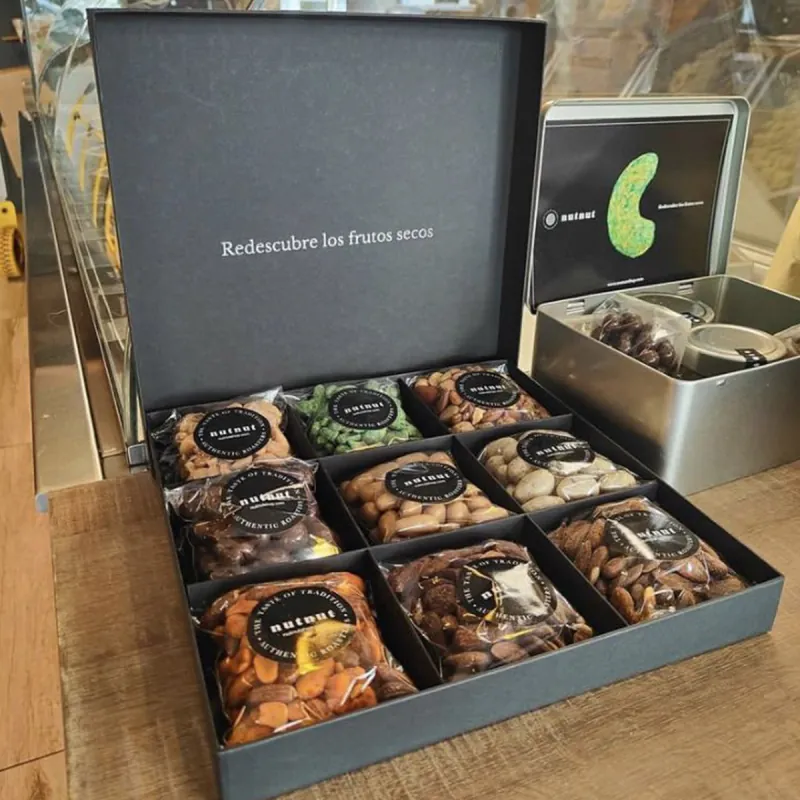
A fitted insert holds every item in its position through transit, so the platter opens looking exactly as it was packed. This is most of the perceived quality.
A lid that lifts with a slight resistance and settles back down feels considered. A lid that falls off or has to be forced undoes everything else.
Foiling, embossing and soft-touch lamination are available on rigid in a way they are not on fluted board. Used sparingly they are effective; used everywhere they look cluttered.
Start with one physical sample. On rigid packaging the difference between a good and a mediocre result is in details you cannot judge from a screen proof — the edge wrap, the lid resistance, the insert fit. Budget for a sample round before the production order; it is the cheapest insurance available on this format.
04 — Nearby
Chosen because operators who buy the rigid catering platter usually need one of these in the same order, not because they happen to sit in the same category.
A party tray is a divided platter under a clear lid.
View tray & get pricing →
Grazing is a business where the packaging is most of what gets photographed and much of what justifies the price.
View tray & get pricing →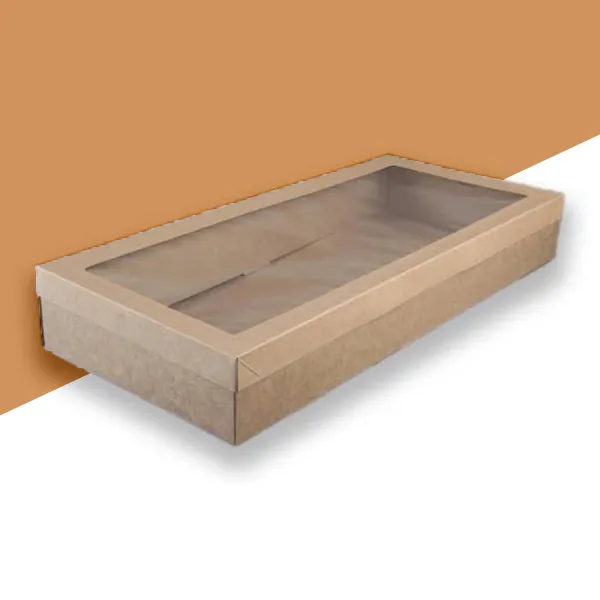
The lidded catering tray is the format that most drop-off caterers standardise on, because it is the only one that solves the whole journey.
View tray & get pricing →
05 — Questions
Several times more per unit, and with higher tooling and freight on top. That is only worth it when the packaging itself carries commercial value — gifting, premium retail, hotel service. For volume catering, corrugated does the same functional job for far less.
No, they ship assembled, which is a significant part of the cost difference. Factor storage space into your planning — assembled rigid takes several times the room that flat-packed board does.
Yes, and on a rigid platter the insert is where most of the perceived quality lives. Send us the actual items so we can cut the insert to them. Expect a sample round to get the fit right.
Lift-off lids, hinged lids, magnetic closures and ribbon pulls are all standard options. The choice affects how the platter is opened and how it feels, so it is worth handling samples before deciding.
Yes — foiling, embossing, debossing, spot varnish and soft-touch lamination all work on rigid in a way they do not on fluted board. Used on one element they are effective; used on everything they read as cluttered.
Longer than folding or fluted board, because assembly involves more steps. If a rigid platter is part of a seasonal campaign, start the conversation well before you would for a standard tray.
Rigid tooling and assembly mean the practical floor is higher than for corrugated. Ask for pricing at your realistic volume and at a smaller trial run — the gap between the two is usually informative.
Where specified for direct food contact, yes, and we confirm that specification in writing. Many rigid platters use a separate liner or insert between the board and the food, which is often the better route for oily or moist items.
With care. Rigid board is not designed for prolonged damp conditions, and condensation can affect the wrap. If the platter goes into a chiller, tell us and we will specify a finish that tolerates it or recommend a different construction.
Send the dimensions, the quantity and the country you want it delivered to. We come back with a full quote — material, print, finishing, freight and a production date.