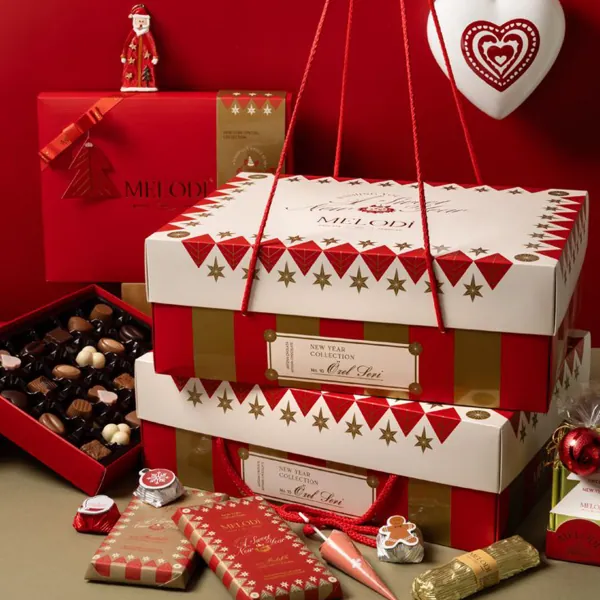
Bakery & Dessert Trays
Rigid Candy Trays
- Fitted compartments
- Gifting and retail
- Custom well layouts
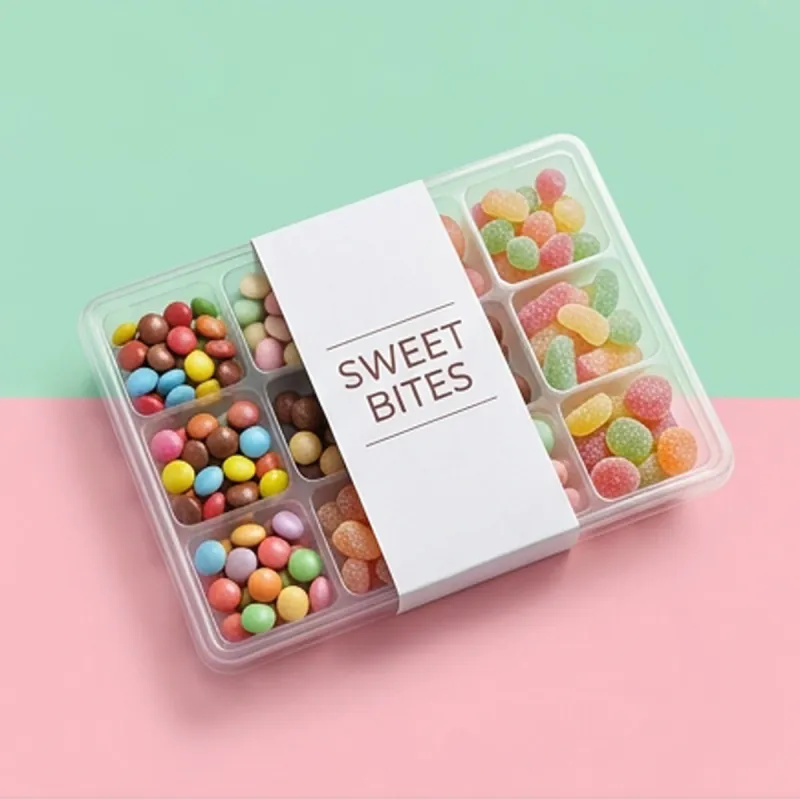
Confectionery is sold by arrangement. A box of chocolates in a fitted tray reads as a considered gift; the same chocolates loose in a bag are a commodity. That gap is almost entirely created by the insert.
These trays are the component that sits inside a confectionery box: rigid, compartmented, and cut to hold each piece in a fixed position so the box opens the way it was packed.
- Wells cut to your specific pieces, not generic sizes
- Layouts from four pieces up to large assortment boxes
- Rigid enough that the tray lifts out with the pieces in place
- Works with printed outer boxes, sleeves and window lids
Pricing starts from $0.30 per tray
The unit price depends on the size, board, printing, finishing, quantity and delivery country, so every quote is worked out for your specification rather than taken from a list.
Get pricing for rigid candy trays
Send the size and the run length. We reply with pricing, material options and a production date — usually within one working day.
01 — Specification
Specification at a glance
Every element below is set when we quote. Nothing here is a fixed catalogue entry — if a line does not match what you need, say so and we will change it.
- Layouts
- From 4 pieces to large assortments; custom grids
- Wells
- Cut to your piece dimensions with clearance
- Material
- Rigid board or moulded insert depending on piece shape
- Finishes
- Plain, foiled or printed
- Outer
- Supplied alongside a matched box, sleeve or window lid

02 — Build the spec
Design this tray in five steps
The same five questions we would ask on a phone call, with the rigid candy tray already selected. You get a properly detailed brief at the end, which is what makes a first quote accurate rather than approximate.
Prefer the full builder with a live sketch? Open the tray designer.
03 — In detail
Insert types
Die-cut board grid
A flat board with square or rectangular apertures. Cheapest, quick to tool, and appropriate for uniform pieces such as squares, bars and truffles of consistent size.
Moulded insert
Formed wells that follow the shape of each piece. More expensive to tool, but it holds irregular shapes and gives the deep, precise look associated with premium confectionery.
Divided tray
Larger compartments holding several pieces each rather than one per well. Suits mixed sweets and pick-and-mix ranges where the count varies.
Getting the fit right
- Send actual pieces, not drawings — confectionery varies in size between production runs more than most products.
- Allow clearance for temperature: chocolate expands slightly in warm conditions and a tight well becomes a scuffed piece.
- Consider how the piece is lifted out — a well with no finger clearance means the customer tips the box.
- Decide whether the tray lifts out as a unit, which affects rigidity and rim design.
- Think about a second layer, which needs a supporting shoulder inside the box.
Format by price point
| Positioning | Insert | Outer |
|---|---|---|
| Everyday retail | Die-cut board grid | Printed folding carton with a window |
| Gift range | Moulded insert | Rigid box with a lift-off lid |
| Seasonal and occasion | Board grid with a printed liner | Printed carton with a seasonal sleeve |
| Corporate gifting | Moulded insert, two layers | Rigid box with foiling or embossing |
| Pick and mix | Divided tray | Simple carton or bag |
04 — Nearby
Trays that work alongside this one
Chosen because operators who buy the rigid candy tray usually need one of these in the same order, not because they happen to sit in the same category.
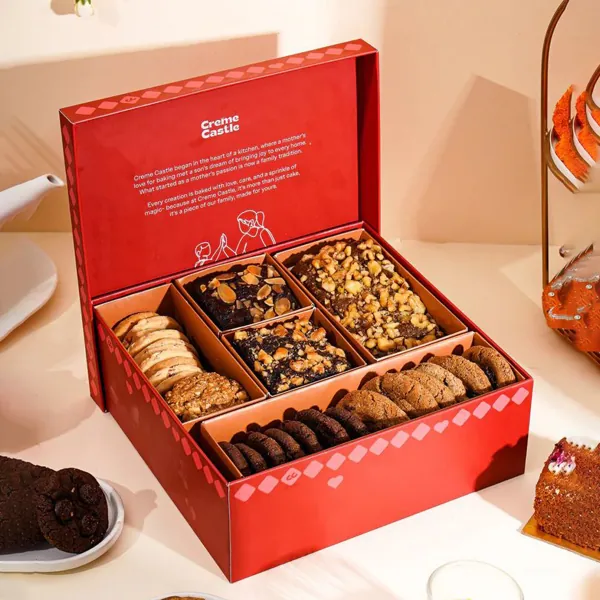
Rigid Catering Platter
Rigid platters are what you use when the packaging is part of the price.
View tray & get pricing →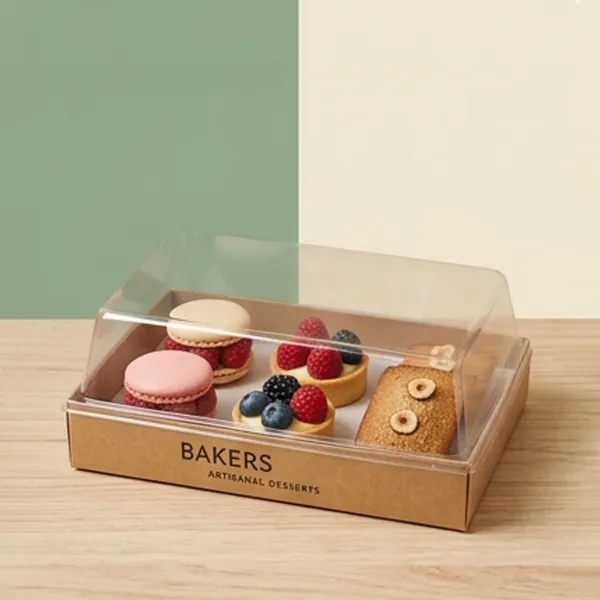
Kraft Dessert Tray with Dome
A dome over a kraft tray is the standard presentation for a mixed patisserie selection sold from a counter.
View tray & get pricing →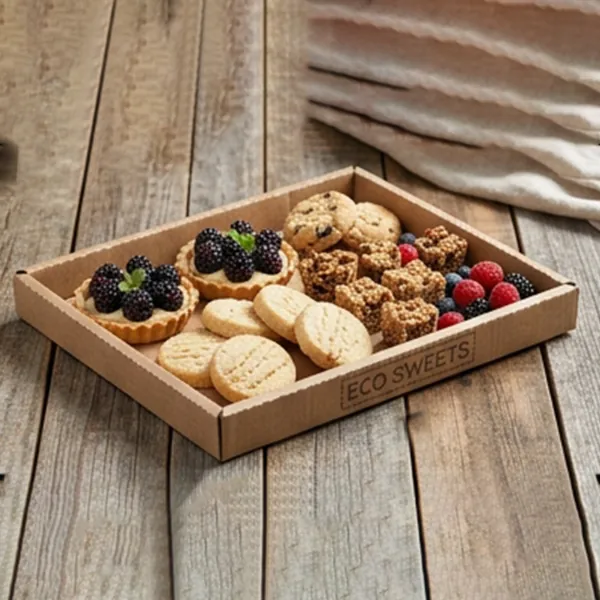
Corrugated Dessert Platter
Dessert is the one course where the packaging is photographed.
View tray & get pricing →05 — Questions
Rigid Candy Tray questions
How do I size the compartments?
Send us actual pieces. Confectionery varies between production runs, and a well cut from a drawing will be either tight or loose. We size from physical samples and build in clearance for warm conditions.
Should I use a die-cut board insert or a moulded one?
A board grid for uniform square or rectangular pieces — it is cheaper and quicker to tool. A moulded insert for irregular shapes and for premium ranges where the deep formed well is part of the look.
How much clearance should a well have?
Enough that a piece drops in without pressure at warm room temperature, and enough that a customer can get a finger to it. Too tight and pieces scuff on the way out; too loose and they rattle.
Can I have two layers in one box?
Yes, with a supporting shoulder or a second tray sitting on the first. It is a common structure for gift assortments. Tell us at design stage, because the box depth and the tray rim both change.
Can the tray be printed or foiled?
It can, though most of the tray is covered by product. Print budget usually goes further on the outer box and the sleeve. A foiled tray is worth it for high-end gifting where the tray is visible around the pieces.
Do you supply the outer box as well?
Yes, and it is better to order them together so the fit is right first time. A tray and box sourced separately almost always need an adjustment round.
Will chocolate mark the tray?
In warm conditions, chocolate can soften and mark an untreated board. A coated or laminated surface prevents it. If your product ships in summer or to warm markets, mention it at quote stage.
Can I run seasonal versions?
Yes. The tray tooling stays the same across designs; only the printed outer and sleeve change. That makes a seasonal range far cheaper than most confectioners expect.
Before you order, read
- Food Tray Coatings and Finishes — Barriers, laminates and decorative finishes, and their trade-offs.
- Food Tray Size Guide — What tray sizes mean, and how to pick one from your own portions.
Who buys this tray
Ready to price the rigid candy tray?
Send the dimensions, the quantity and the country you want it delivered to. We come back with a full quote — material, print, finishing, freight and a production date.