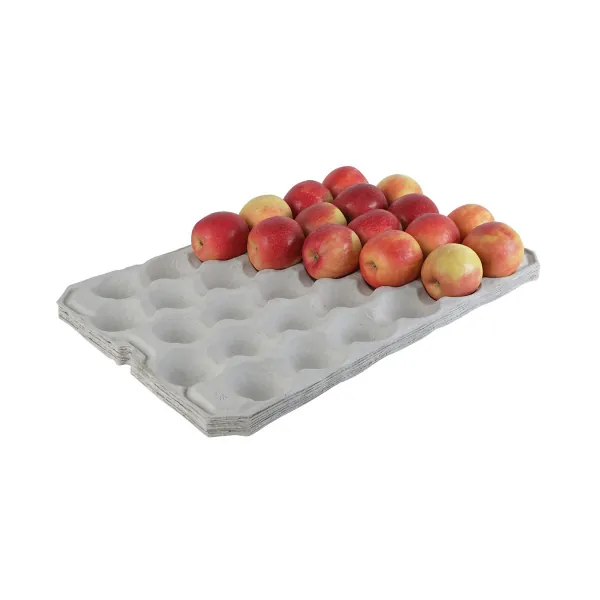
Corrugated Food Trays
Corrugated Veggie Trays and Produce Platters
- Ventilated options
- Stacks when loaded
- Retail display ready
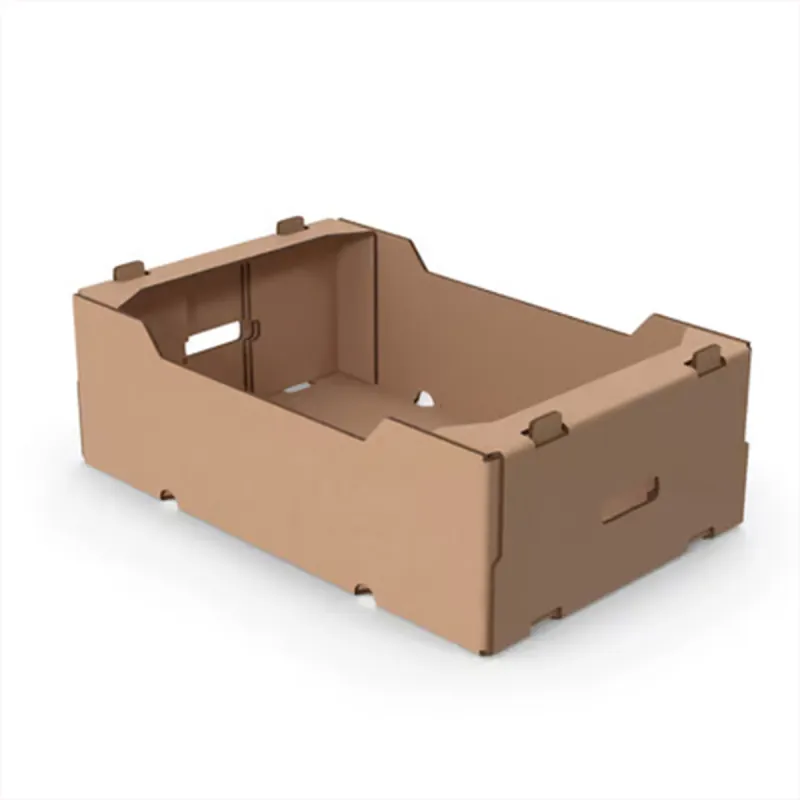
Vegetables need two things from a tray that most food packaging does not have to provide: airflow and stack strength. Produce respires after harvest, and trapped moisture in a sealed tray shortens shelf life measurably. At the same time, trays of produce are stacked several high in a chiller or on a shop floor, so the walls have to carry the weight of everything above them.
These trays are built around those two requirements, then finished so they work as a retail display rather than only as transport.
- Ventilation cut into walls and base where the produce needs airflow
- Corner posts sized for real stack loads
- Hand holes for shop-floor handling
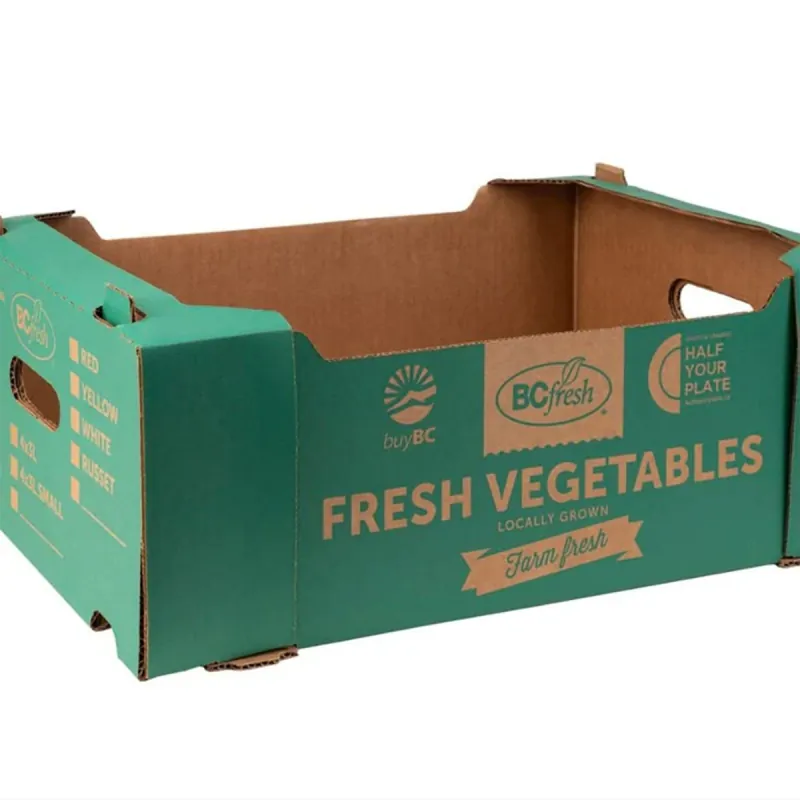
- Printed sides that let the tray become the display
Pricing starts from $0.30 per tray
The unit price depends on the size, board, printing, finishing, quantity and delivery country, so every quote is worked out for your specification rather than taken from a list.
Get pricing for corrugated veggie platters
Send the size and the run length. We reply with pricing, material options and a production date — usually within one working day.
01 — Specification
Specification at a glance
Every element below is set when we quote. Nothing here is a fixed catalogue entry — if a line does not match what you need, say so and we will change it.
- Board
- B flute standard for stack strength; BC for heavy bulk
- Ventilation
- Die-cut apertures in walls and base, positioned to your produce
- Stacking
- Corner posts specified to your stack height
- Hand holes
- Standard on transport formats
- 1–4 colours; the long side becomes the shelf-facing panel
02 — Build the spec
Design this tray in five steps
The same five questions we would ask on a phone call, with the corrugated veggie platter already selected. You get a properly detailed brief at the end, which is what makes a first quote accurate rather than approximate.
Prefer the full builder with a live sketch? Open the tray designer.
03 — In detail
Ventilation is not a detail
Freshly harvested produce continues to respire, giving off moisture and heat. In a closed tray that moisture condenses on the board and on the produce itself, and the result is faster spoilage and a tray that softens from the inside.
Ventilation apertures let that moisture out. Where they go depends on what is in the tray: leafy produce wants airflow across the top, root vegetables want it at the base, and soft fruit wants gentle airflow without direct draught on the fruit. It is worth a two-minute conversation rather than accepting a standard vent pattern.
Tray choices by produce type
| Produce | What the tray needs | Typical format |
|---|---|---|
| Leafy greens and brassicas | High airflow, shallow depth | Ventilated tray with open corners |
| Root vegetables | Strength over airflow, deeper walls | B flute, base ventilation |
| Soft fruit and berries | Cushioning and gentle airflow | Shallow tray, often with a moulded fibre insert |
| Citrus and apples | Stack strength, moderate airflow | Ventilated tray with corner posts |
| Crudité and prepared vegetables | Chilled display, moisture control | Shallow tray with a moisture-resistant liner |
When the tray is also the display
Retail produce increasingly sells from the transport tray rather than being decanted, which changes what the tray has to do.
- The front wall becomes the shelf-facing panel and needs to carry the brand and the product name.
- A tear-off or fold-down front lets a full tray become an open display without unpacking it.
- Print quality matters more, so E-flute or a white liner may be worth the cost premium over plain B-flute.
- The tray has to look acceptable after being handled in a depot, which affects board choice.
Shipping produce internationally? Phytosanitary and packaging rules differ substantially between the US, UK, Canada and Australia, and they apply to the packaging as well as the produce. Tell us the destination market at quote stage so we can flag anything relevant before you commit to a run.
04 — Nearby
Trays that work alongside this one
Chosen because operators who buy the corrugated veggie platter usually need one of these in the same order, not because they happen to sit in the same category.
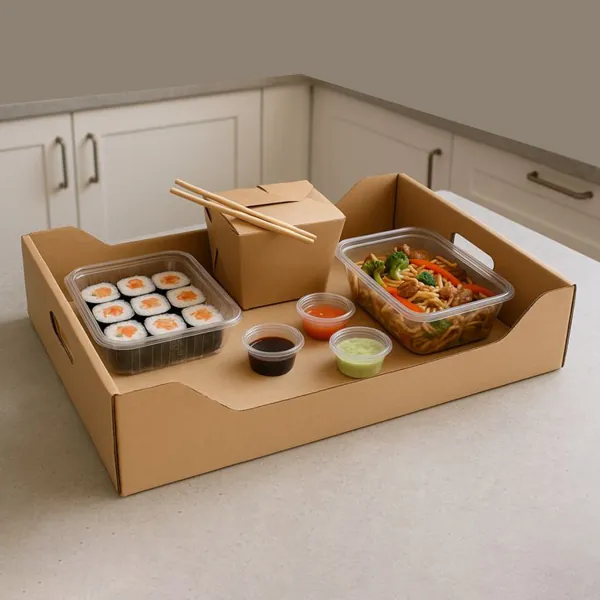
Corrugated Food Tray
Corrugated trays exist for one reason: a loaded tray that has to be picked up from the middle without folding in half.
View tray & get pricing →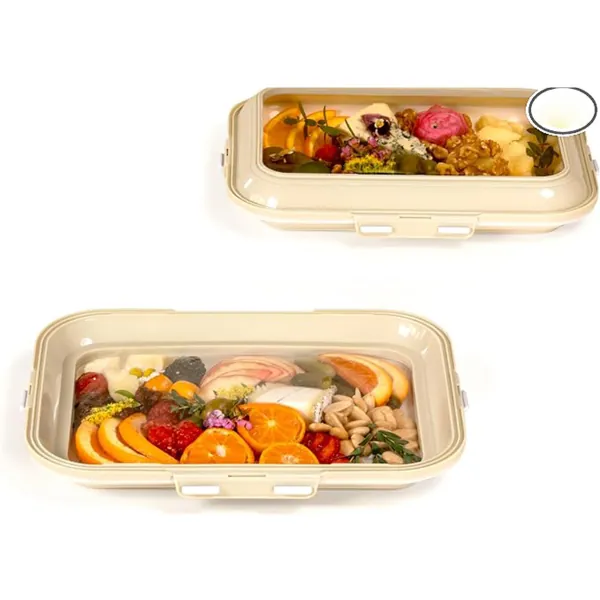
Crudite Tray with Dome
A crudité platter has a problem that other platters do not: the food is meant to stand up.
View tray & get pricing →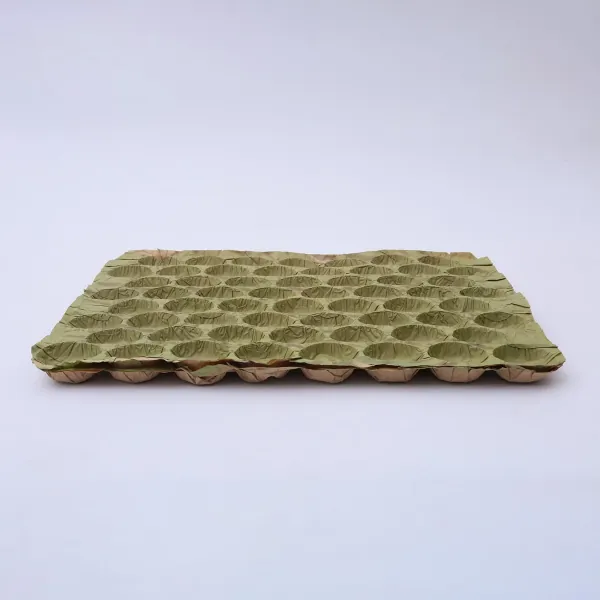
Kraft Fruit Tray
This is the pocketed fibre tray used to move and display fruit, made in a warm kraft tone rather than the grey of a standard pulp tray.
View tray & get pricing →05 — Questions
Corrugated Veggie Platter questions
Do produce trays need ventilation?
Most do. Produce respires after harvest and trapped moisture shortens shelf life and softens the board. Where the vents go depends on the produce — leafy crops want airflow across the top, roots want it at the base. Tell us what is going in and we will position them.
How many trays can be stacked?
That is a specification, not a fixed number. Stack strength comes from the corner posts. Tell us the loaded weight of one tray and how many go on top of each other, and we will build in real margin.
Can these trays go straight onto a shop floor?
Yes, and increasingly that is the point. A tray with a printed front panel and a fold-down or tear-off front becomes a display unit, which removes a labour step for the retailer.
Will the tray hold up in a chilled cabinet?
With a moisture-resistant liner, yes. Chilled environments cause condensation as trays move between temperatures, and plain board absorbs that. Say if the tray is chilled and we will specify accordingly.
Can you match a standard produce tray size?
Yes. Most produce supply chains run on standardised footprints so trays fit pallets and shelving efficiently. Tell us the standard you work to, or send a tray, and we will match it exactly.
Are these suitable for prepared crudité platters?
A shallow, lined version works for chilled prepared vegetables. For a presentation-led crudité platter with a dip well and a dome, look at the crudité tray with dome instead.
What print quality can I get on a produce tray?
On B-flute, good but not perfect — large solid areas can show faint ridging over the flutes. If the tray is a shelf-facing display, consider E-flute or a white liner for a noticeably better result.
Do you supply plain unprinted produce trays?
Yes. Many growers run plain trays for transport and printed trays only for lines that go on display. We can quote both on the same order.
Before you order, read
- Food Tray Materials Explained — Kraft, corrugated, moulded fibre and rigid board compared honestly.
- Food Tray Size Guide — What tray sizes mean, and how to pick one from your own portions.
Who buys this tray
Ready to price the corrugated veggie platter?
Send the dimensions, the quantity and the country you want it delivered to. We come back with a full quote — material, print, finishing, freight and a production date.