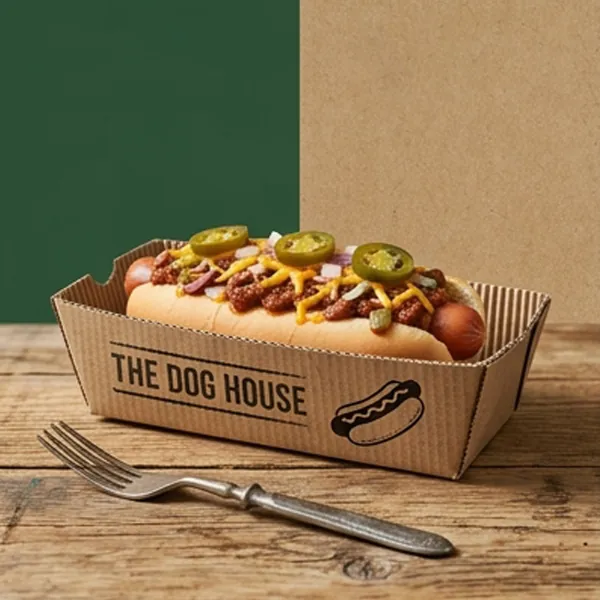
Kraft Hot Dog Tray
The hot dog tray is one of the oldest shapes in food packaging and it has barely changed, because it does not need to.
View tray & get pricing →Custom food packaging · US · UK · Canada · Australia
Custom Printed Food Trays
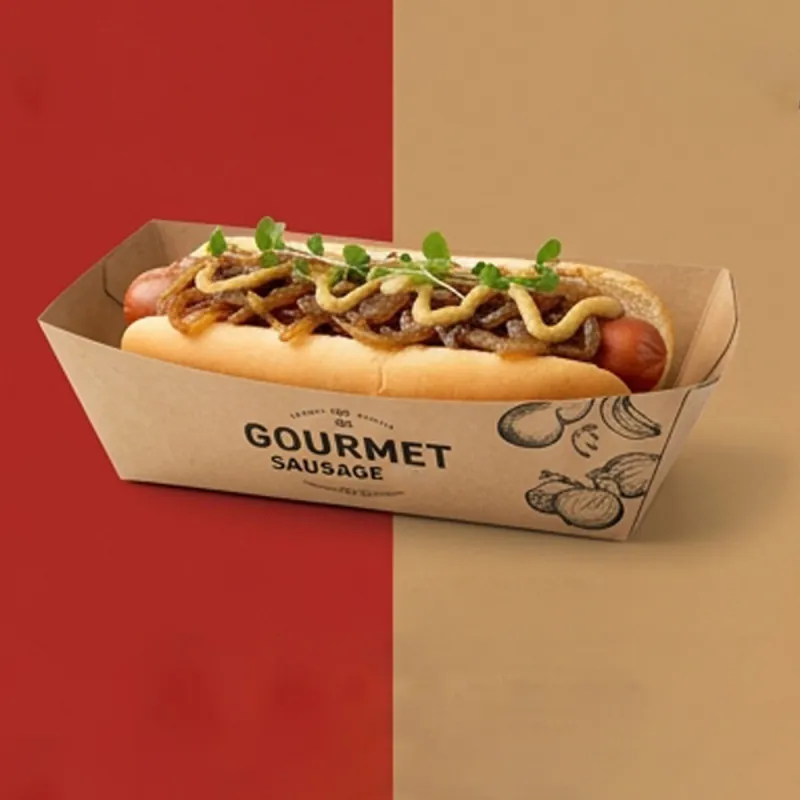
A hot dog tray is a small piece of packaging with an unusually large branding opportunity. The customer holds it at chest height for several minutes, the side wall faces outward the whole time, and the shape is instantly recognisable — which means a printed design on one reads as a brand rather than as packaging.
Stadiums, ballparks, diners, street carts and festival stands all use this format, and the printed version is what separates a stand that looks established from one that looks temporary.
Pricing starts from $0.30 per tray
The unit price depends on the size, board, printing, finishing, quantity and delivery country, so every quote is worked out for your specification rather than taken from a list.
Send the size and the run length. We reply with pricing, material options and a production date — usually within one working day.
01 — Specification
Every element below is set when we quote. Nothing here is a fixed catalogue entry — if a line does not match what you need, say so and we will change it.
02 — Build the spec
The same five questions we would ask on a phone call, with the custom printed hot dog tray already selected. You get a properly detailed brief at the end, which is what makes a first quote accurate rather than approximate.
Prefer the full builder with a live sketch? Open the tray designer.
03 — In detail
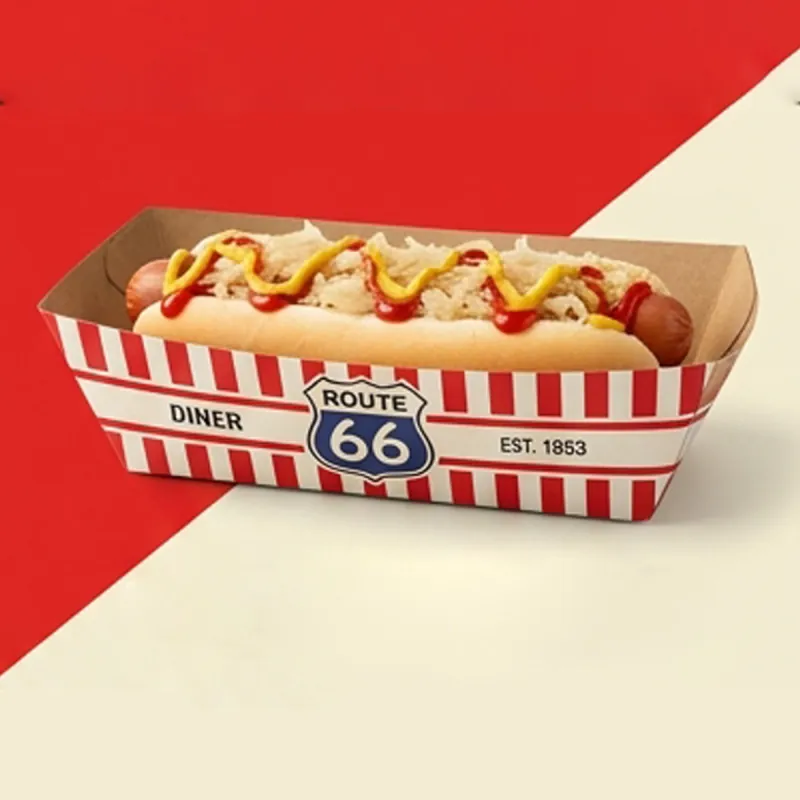
Almost every other piece of food packaging is looked at from above. A hot dog tray is looked at from the side, held horizontally, at roughly chest height, by somebody who is usually standing and often moving. That is an unusual and rather good position for a piece of branding.
It also means the design should be laid out landscape and read left to right along the length, rather than centred as a badge. A name across the full length at a decent size will be read from ten feet away in a crowd. A small centred logo will not be read at all.
It is worth saying plainly, because operators often assume more colours means more professional. A single dark ink on natural kraft board is the look most premium street food brands deliberately choose. It is legible, it photographs well, it does not clash with the food, and it is cheap enough to make short runs viable.
Four-colour process on white board has its place — bright, playful, family-facing brands genuinely need it. But if your brand is craft, artisan or heritage in tone, one colour on kraft is the correct answer as well as the cheapest one.
The bun determines the internal length, and buns vary between suppliers by more than you would expect. Measure several, take the longest, add clearance.
A plain dog needs low walls. A chilli-cheese dog with onions needs more depth and a treated food-contact face, because the toppings sit against the board for the whole time it is held.
At a busy stand, a flat-packed tray that takes two seconds to fold costs real time across a shift. Pre-glued formats cost more per unit and save labour. Which wins depends on your queue.
04 — Nearby
Chosen because operators who buy the custom printed hot dog tray usually need one of these in the same order, not because they happen to sit in the same category.
The hot dog tray is one of the oldest shapes in food packaging and it has barely changed, because it does not need to.
View tray & get pricing →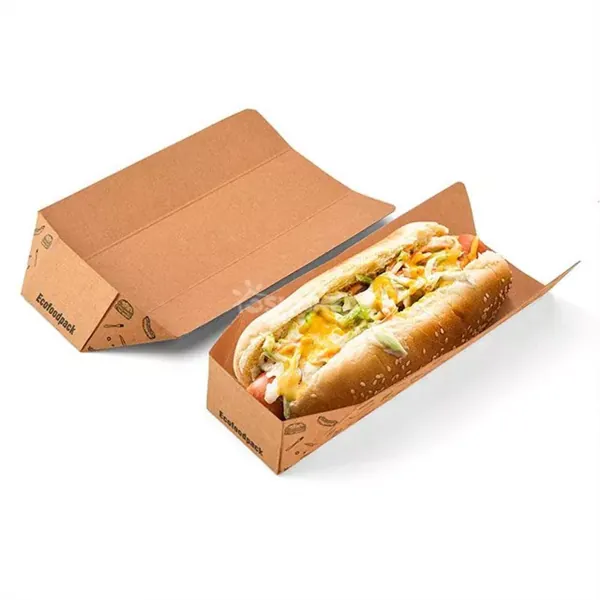
Corn dogs are eaten from a stick, which sounds like it removes the need for packaging entirely.
View tray & get pricing →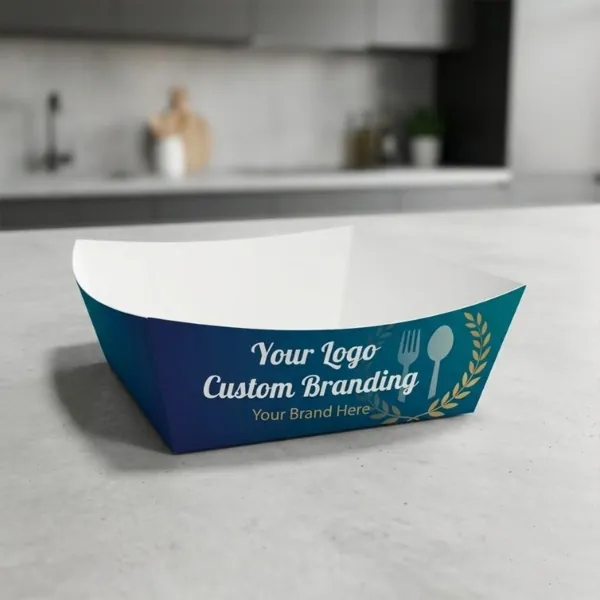
This is the general-purpose printed tray: any of our shapes, in your board, carrying your artwork.
View tray & get pricing →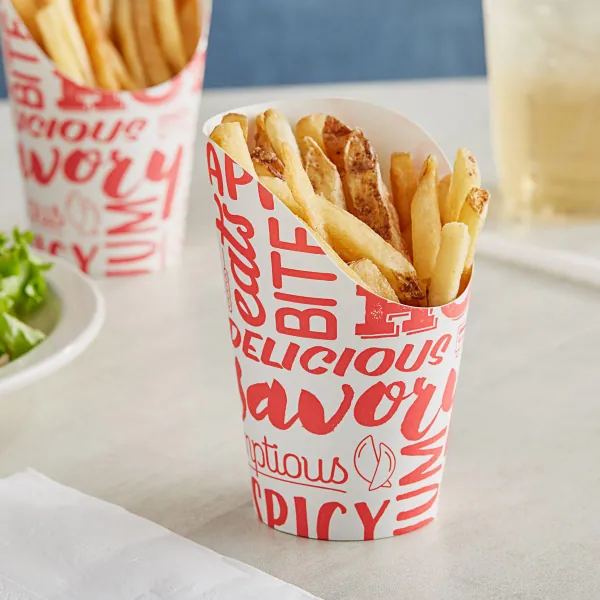
The fry scoop exists because of a specific piece of ergonomics: a member of staff should be able to fill it from a fryer basket with one hand, in one mo…
View tray & get pricing →05 — Questions
Measure your bun rather than your sausage, take the longest of several, and add clearance. Buns differ noticeably between bakeries and between batches, and a tray sized to the average will be tight on part of your stock.
Yes. Both long walls and both ends are printable. Many operators put the brand name on one long wall and ordering or social details on the other, so the tray works whichever way it is held.
On plain board, eventually. A grease-resistant food-contact face handles a normal service comfortably. If loaded dogs are a core menu item, treat that as a standard specification rather than an option.
One or two on kraft is where most of the best-looking hot dog trays sit, and it makes short runs affordable. Full process is worth it only if your identity depends on photography or a wide palette.
Flat-packed as standard, with pre-glued options where service speed matters more than freight cost. Tell us the pace of your busiest hour and we will recommend which suits.
Yes. Post one to us or photograph it with a ruler in shot. Matching an existing size means your carriers, racks and portioning stay unchanged.
Structurally, yes — the difference is the print. If you want the same shape without branding, see the kraft hot dog tray, which many customers run while their artwork is being developed.
Yes. The cutting die is shared, so additional designs only carry plate cost. Running an event-specific design alongside your standard tray is a common and inexpensive thing to do.
Yes, to the United States, United Kingdom, Canada and Australia. Trays ship flat, which keeps freight efficient. Give us the delivery country at quote stage so pricing reflects the landed position.
Send the dimensions, the quantity and the country you want it delivered to. We come back with a full quote — material, print, finishing, freight and a production date.