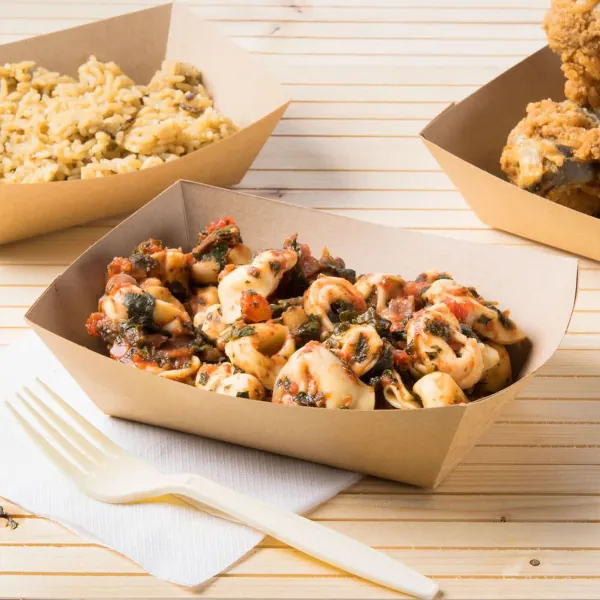
Kraft Paper Food Tray
The kraft paper food tray is the one shape that every counter ends up buying.
View tray & get pricing →Custom food packaging · US · UK · Canada · Australia
City · United Kingdom
Manchester’s food-service market has been reshaped by food halls and a large arena and events sector, both of which need packaging that works for people eating standing up, in a crowd, without a table.
A large student population adds a third characteristic: high-volume, value-led service where packaging cost per unit matters more than it does in a fine-dining setting.
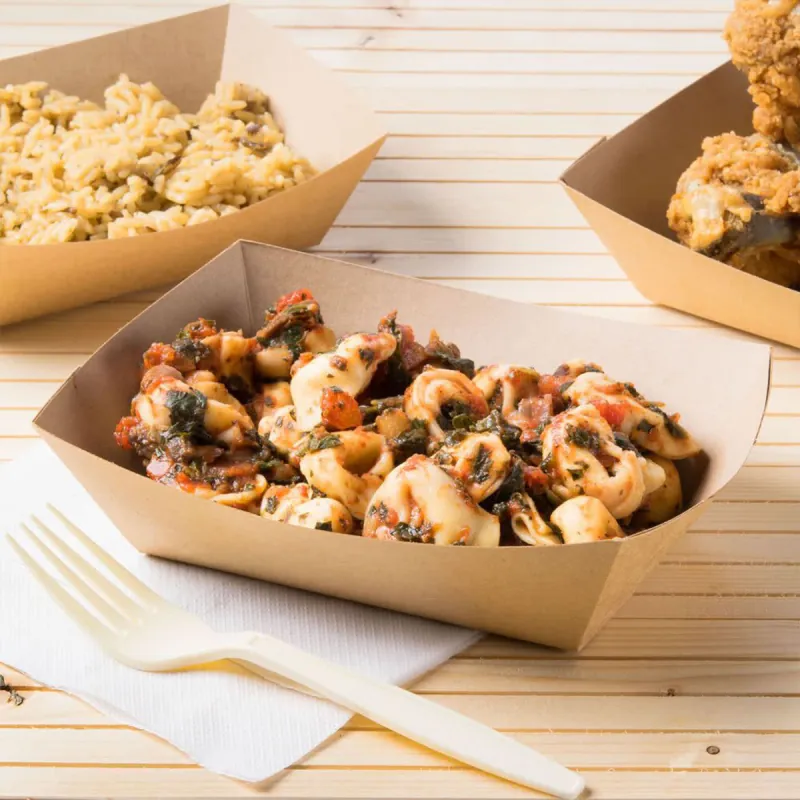
Tell us the tray, the quantity and where it is going. Freight is quoted to your address rather than added later.
A food hall customer typically collects food from one counter, carries it to a shared table, and often has a drink in the other hand. That rules out large flat platters and rewards compact formats with a defined grip point — a boat, a holder, a scoop.
It also puts several operators’ packaging side by side on the same table, which makes printed branding unusually valuable. In a shared hall your packaging is the only thing identifying whose food somebody is eating.
Chosen against the requirements described above, not as a general catalogue listing.
The kraft paper food tray is the one shape that every counter ends up buying.
View tray & get pricing →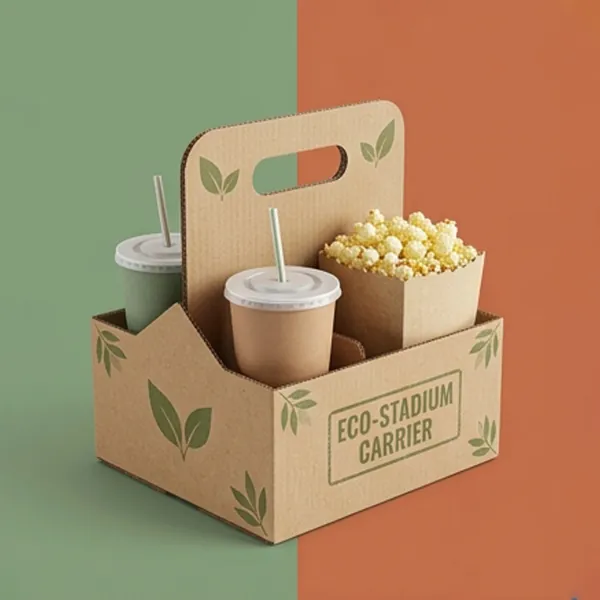
A stadium carrier has to be usable by somebody walking up concrete steps in a crowd, holding a phone, wearing a coat, in the dark.
View tray & get pricing →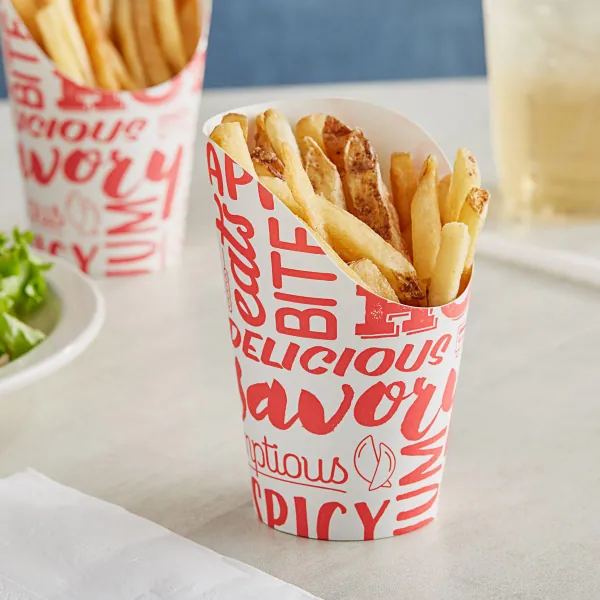
The fry scoop exists because of a specific piece of ergonomics: a member of staff should be able to fill it from a fryer basket with one hand, in one mo…
View tray & get pricing →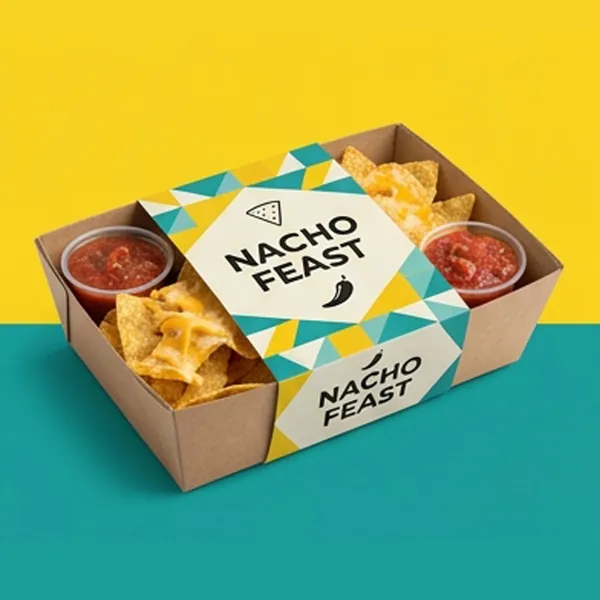
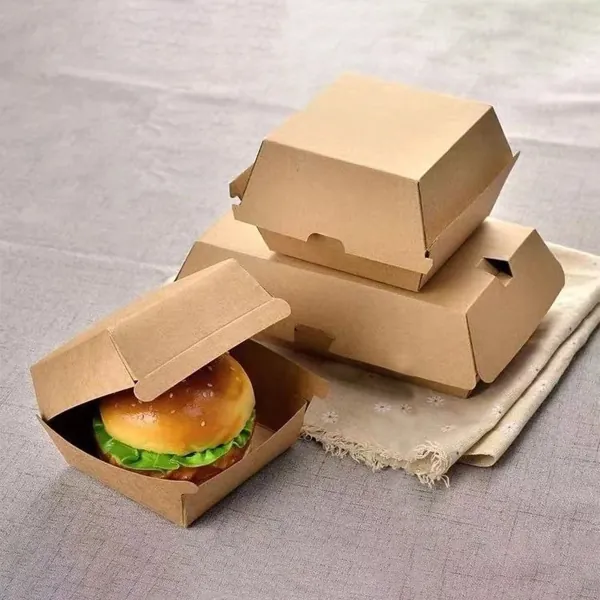
A burger clamshell is a hinged box that closes around a burger, and its whole purpose is to stop the build collapsing between the pass and the customer.
View tray & get pricing →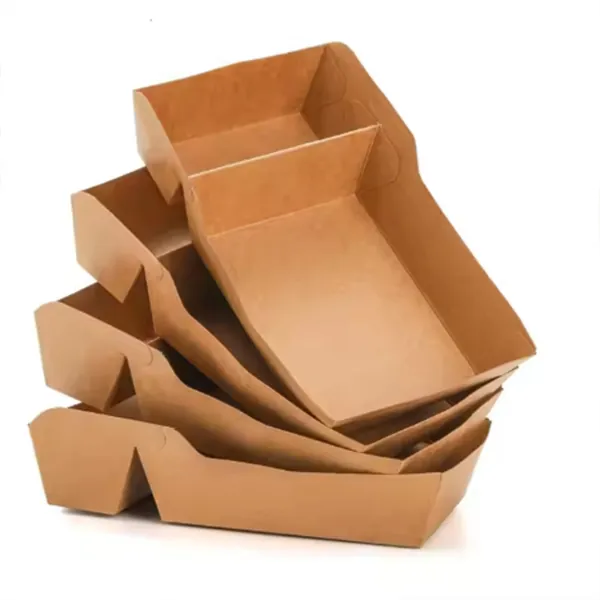
The chip and dip tray is the simplest divided format there is: a main bay and one or two smaller wells.
View tray & get pricing →Compact formats with a defined grip point — boats, holders and scoops rather than flat platters. Customers carry food to a shared table, usually with a drink in the other hand.
Unusually so. Several operators’ packaging ends up on the same table, and yours is the only thing identifying whose food a customer is eating.
A carrier tray cut to your cups. It sets how much one customer can carry, and therefore buy, at the busiest moment of an event.
Consolidate formats so one container covers several menu items. Concentrating volume on a single line is the most reliable way to bring the unit price down.
Yes. Flat-packed stock helps considerably, and staged delivery from a single production run is worth asking about if space is the binding constraint.
Send the specification, the quantity and the delivery address. We come back with unit price, tooling if any, freight and a real production date.