
Compartment Tray with Lid
The lidded compartment tray is the format that meal-prep businesses, bento services and premium takeaway have converged on.
View tray & get pricing →Custom food packaging · US · UK · Canada · Australia
City · United States
Charlotte’s food-service packaging demand is driven by two markets that have grown together: a large corporate catering sector serving the banking and professional services economy, and a brewery and taproom scene that has expanded substantially.
They need almost opposite packaging — one individually portioned and presentation-led, the other shared and communal — and a good number of caterers here serve both.

Tell us the tray, the quantity and where it is going. Freight is quoted to your address rather than added later.
Corporate catering in Charlotte, as in most business districts, has shifted towards individually packed meals rather than shared platters. The packaging requirement changes accordingly: each unit has to look composed on its own, keep elements separate, stack in numbers for delivery, and carry a dietary label.
A compartment tray with a lid does all four. The specifications worth getting right are full-height dividers so nothing migrates, a lid that carries the stack load rather than the food below it, and a flat panel designed for the label from the outset rather than added afterwards.
Food eaten communally over a long period. Visibility matters more than containment, so low walls and a flat rigid base.
For cans and bottles as well as cups. Different profiles and weights from cup carriers, so send the actual containers.
Taproom menus skew fried, and untreated board darkens within minutes.
Patio and beer garden service means wind and ambient moisture; a slightly heavier board earns its cost.
Chosen against the requirements described above, not as a general catalogue listing.
The lidded compartment tray is the format that meal-prep businesses, bento services and premium takeaway have converged on.
View tray & get pricing →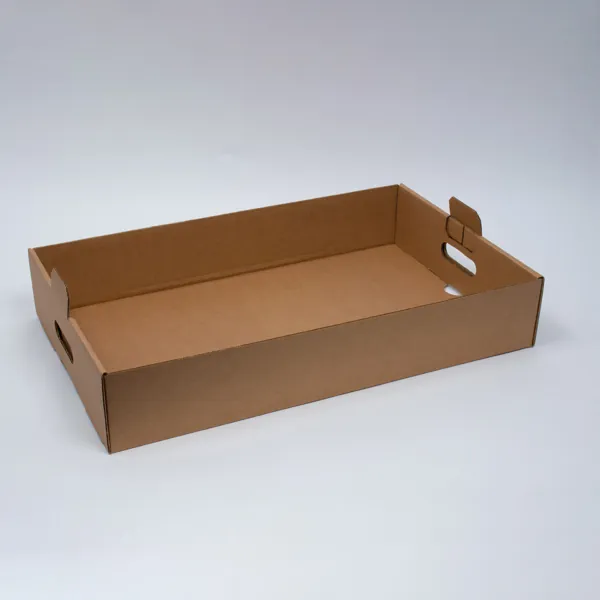

A drink carrier is a mechanical problem before it is a packaging one.
View tray & get pricing →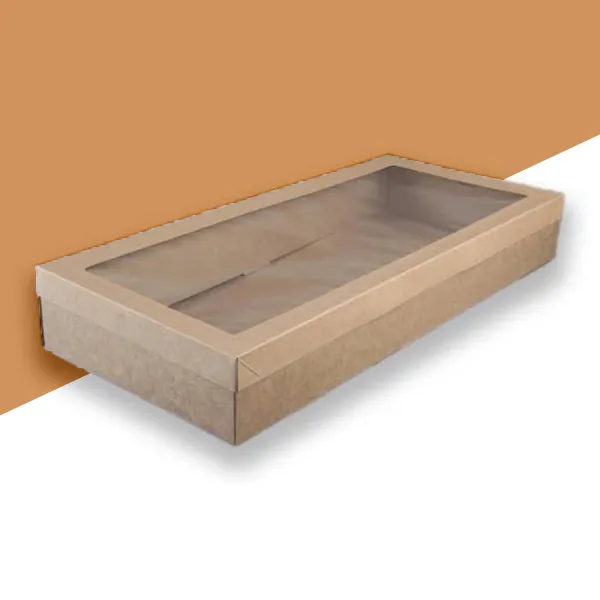
The lidded catering tray is the format that most drop-off caterers standardise on, because it is the only one that solves the whole journey.
View tray & get pricing →
The lunch tray sits between a takeaway container and a proper meal tray.
View tray & get pricing →
The chip and dip tray is the simplest divided format there is: a main bay and one or two smaller wells.
View tray & get pricing →A compartment tray with a lid: full-height dividers so nothing migrates, a lid that carries the stack load, and a flat panel designed for a dietary label from the outset.
Almost entirely. Corporate is individually portioned and presentation-led; taproom is shared, shallow and communal. If you serve both, design them as one family so they share board, artwork and tooling.
Yes. Cans and bottles are heavier with straight rather than tapered profiles, so the hole design and the board grade both change. Send us the actual containers you serve.
On a flat panel designed in from the start, usually the lid. A label across a fold will not sit flat and will peel; we mark the label area on the dieline.
Yes, and it is cheaper than two projects because setup and tooling are shared. Send the full list of formats and we will quote it as one programme.
Usually a slightly heavier one. Wind lifts light trays off outdoor tables and ambient moisture softens untreated board. It is a small cost difference.
Send the specification, the quantity and the delivery address. We come back with unit price, tooling if any, freight and a real production date.