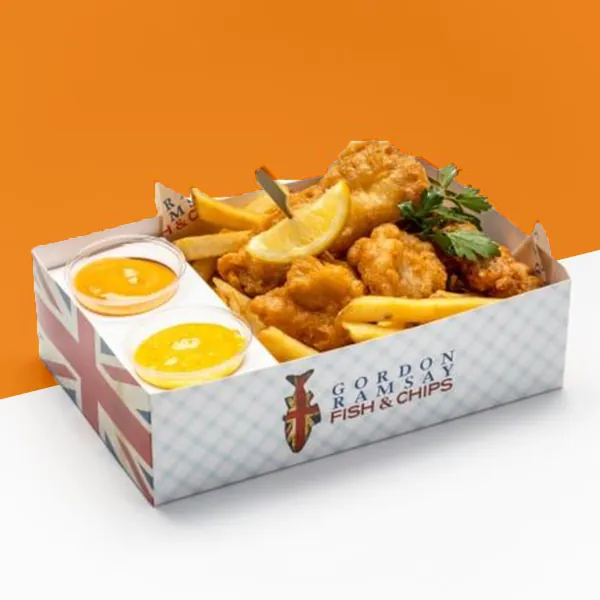
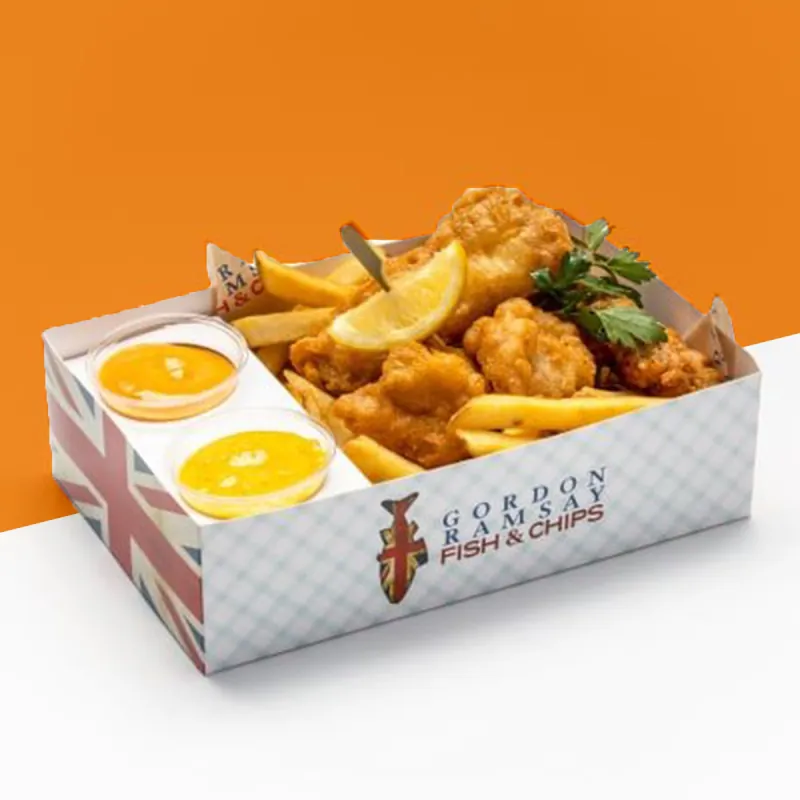
Fish and Chips Tray
Fish and chips is the hardest test a board tray faces.
View tray & get pricing →Custom food packaging · US · UK · Canada · Australia
City · United States
Boston combines a seafood trade with strong local conventions, an unusually concentrated campus and institutional catering market, and a physical city that makes both storage and delivery harder than in a modern grid.
All three shape packaging decisions, and the third one — access and storage — is the constraint operators here mention most.
Tell us the tray, the quantity and where it is going. Freight is quoted to your address rather than added later.
A fried seafood platter produces more oil and more steam than almost anything else a board tray holds, and the customer judges it entirely on whether the coating is still crisp. The two specifications that matter are a grease-resistant food-contact face and venting on anything closed.
The third is depth. A mixed seafood portion should be filled loosely rather than pressed down, because compacting fried food is exactly what makes it soft. That means sizing the tray for a loose fill, which is usually a size larger than people first estimate.
Servery rails, trolley shelves and tray return apertures are fixed. The tray is designed inward from those numbers.
Design the compartments for the most demanding service in the cycle rather than a typical one.
Different products with different materials and economics. Decide before seeking pricing.
One footprint across a campus simplifies procurement, storage and training simultaneously.
Chosen against the requirements described above, not as a general catalogue listing.
Fish and chips is the hardest test a board tray faces.
View tray & get pricing →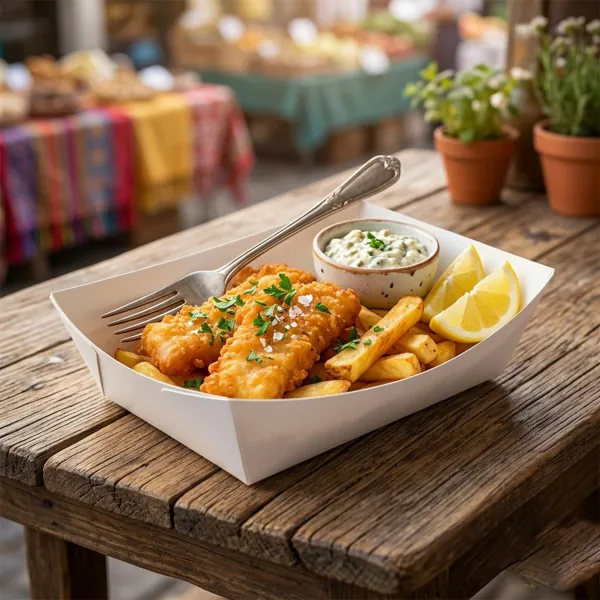
The white paper food tray is the same shape as the kraft version with a different surface underneath.
View tray & get pricing →
The lidded compartment tray is the format that meal-prep businesses, bento services and premium takeaway have converged on.
View tray & get pricing →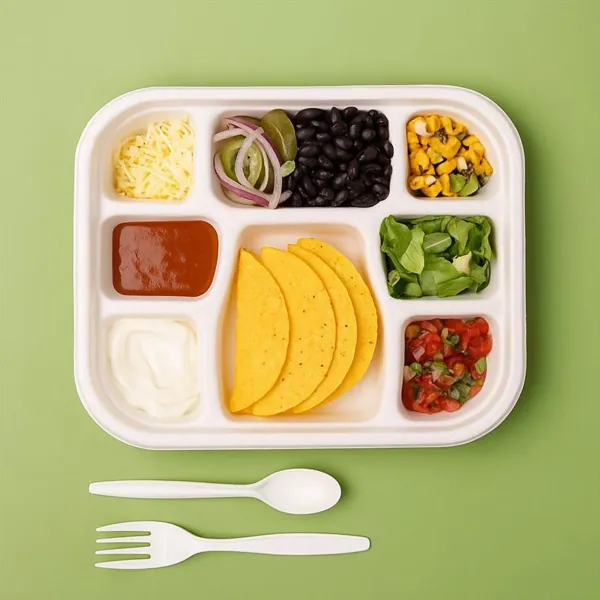
School meal trays have a specification nobody else has to meet.
View tray & get pricing →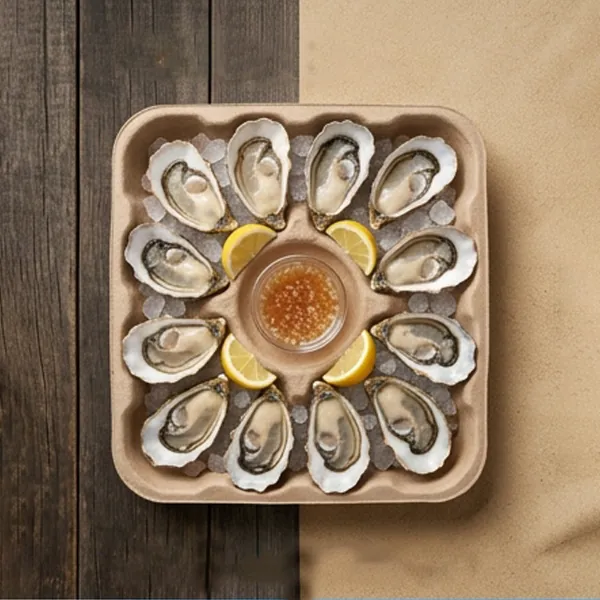
Oysters on the half shell have one packaging requirement above all others: they must stay level.
View tray & get pricing →
The lunch tray sits between a takeaway container and a proper meal tray.
View tray & get pricing →A grease-resistant food-contact face, venting on anything closed, and enough depth to fill loosely rather than pressing the food down. Compacting fried food is what makes it soft.
From the servery fixtures inward — rail spacing, trolley shelf and tray return. Those are expensive to change and the tray is not, so they set the footprint first.
No. A returnable tray has to survive washing and repeated handling, which changes the material and the economics entirely. Decide which you need before asking for pricing.
Flat-pack everything, consolidate to as few formats as possible, and ask about staged delivery — production in one run with delivery in instalments.
Tell us the access situation at quote stage. Pallet versus parcel, loading dock or street, and delivery window all change how we pack and ship.
Yes. Retail needs absorbent fibre trays with a flat panel for the barcode and legal information; restaurant service needs grease resistance and venting.
Send the specification, the quantity and the delivery address. We come back with unit price, tooling if any, freight and a real production date.