Operations
A Packaging Checklist for Opening a Food Truck
Storage, not cost, is the binding constraint on a truck. That single fact should decide almost every packaging choice you make.
Published March 6, 2026 · About 8 minutes to read
Most advice about food truck packaging is about cost. In practice, the binding constraint on a truck is almost never cost — it is the cubic space behind the counter, and the fact that when you run out mid-service there is no stockroom to go to.
Design your packaging around that and the rest tends to follow.
The order to do it in
-
Write the menu, then group it
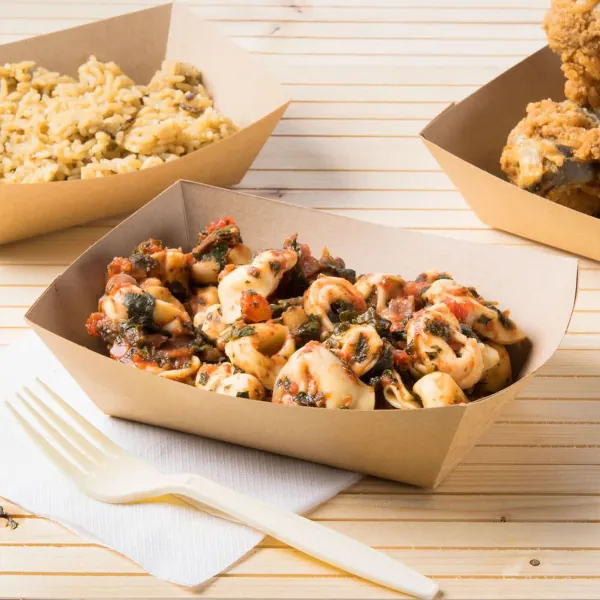
Which items could realistically share a container? Most street food menus can run three or four items out of one open tray. That is the single biggest saving available.
-
Measure the storage you actually have
In cubic terms, behind the counter and in the van. Not what you hope to have — what exists. This number caps everything else.
-
Choose flat-packed formats
An assembled tray is mostly air. Everything that can flat-pack, should, and you assemble in batches during quiet periods.
-
Specify grease resistance
Truck menus are disproportionately fried. This is not the place to save a few cents.
-
Concentrate volume, then print
With three menu items on one tray, you have the volume to print it affordably. A printed tray on a truck is a mobile brand, and it costs less than most people assume.
A typical starting range
Four lines cover a great many street food menus. Fewer lines means less storage and fewer stock-outs.
| Line | Format | Covers |
|---|---|---|
| 1 | Open tray, 2lb | Loaded fries, rice bowls, mixed portions, sides |
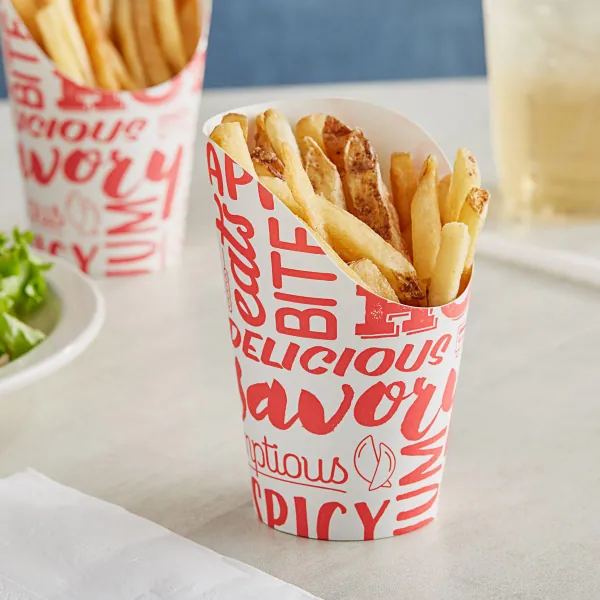
| 2 | Fry scoop | Fries, onion rings, fried sides |
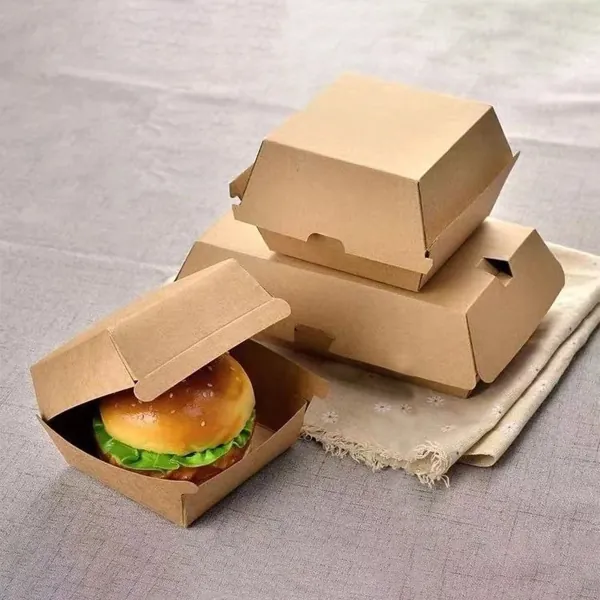
| 3 | Clamshell | Burgers and anything tall |
| 4 | Napkins, cutlery, bags | Everything else |
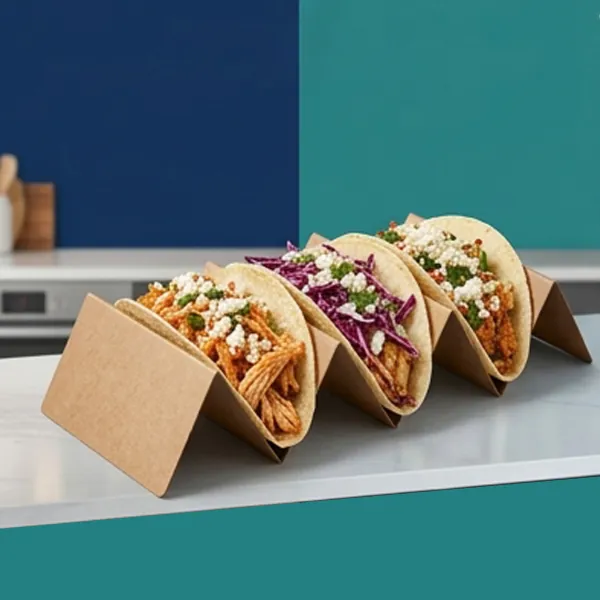
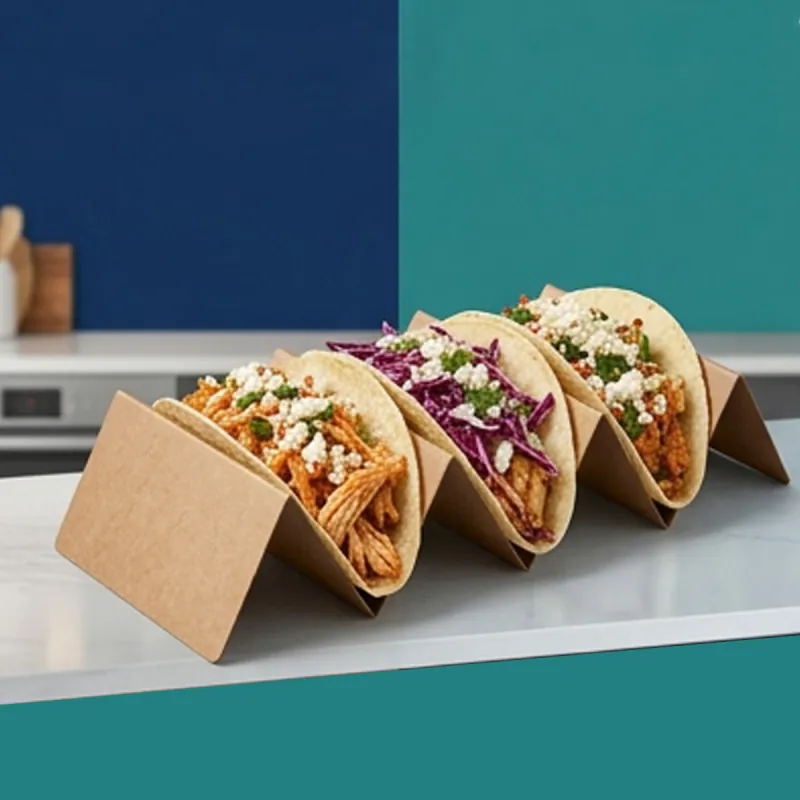
A taco-led menu would swap line 3 for a kraft taco holder, and a hot dog menu for a long open boat. The principle is the same either way: as few lines as the menu allows.
Mistakes new trucks make
- Buying a different container for every menu item, then running out of three of them at once.
- Buying pre-assembled packaging because it saves time, then losing half the counter storage to it.
- Skipping grease resistance to save money, then handing customers stained trays all season.
- Ordering per event instead of per season, paying more per unit and risking a mid-weekend stock-out.
- Leaving printing until "later", which usually means never.
When to commission custom
Not on day one. Run stock packaging for the first season while the menu settles, the portions stabilise and you find out which items actually sell. Trucks change their menu more than they expect in the first year.
Once one format is doing the majority of your volume and the portion size has stopped moving, commission that one — custom size, plain or one colour. It will usually cost less per unit than the stock equivalent, fit your food properly, and give you the branding you have been meaning to sort out.
A rule of thumb: if a container can hold three different things on your menu acceptably, it should. Every additional line you stock costs storage, ties up cash, and adds another thing to run out of at the worst possible moment.
If your menu is taco-led
Taco menus change the packaging shortlist more than most, because a holder is doing a mechanical job nothing else does. The taqueria packaging guide covers slot widths and combination formats.
Quick answers
How much packaging should a truck hold?
As much as fits, reordered on a fixed cycle rather than when you notice you are low. Running out mid-event is far more expensive than holding a little more than you need.
Should a new truck order custom packaging immediately?
Usually not. Run stock for a first season while the menu and the portions settle, then commission the format doing most of your volume. Trucks change their menu more in year one than they expect.
Is printed packaging affordable for a single truck?
More often than people assume, because a truck concentrates its volume on one or two formats. Ask for pricing at your realistic annual usage of your busiest tray and the number is frequently lower than expected.