Materials
What Food Businesses Get Wrong About “Eco-Friendly” Packaging
The risk of an unsupported environmental claim sits with whoever prints it on the pack. Here is how to say something true instead.
Published July 3, 2026 · Updated August 25, 2026 · About 10 minutes to read
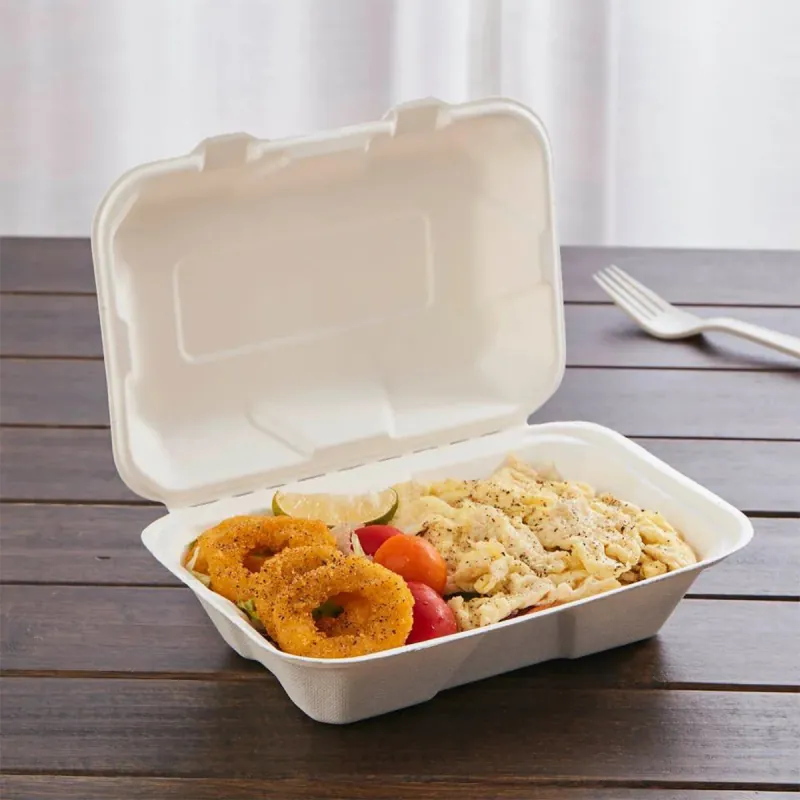
A food business asks a supplier for eco-friendly packaging. The supplier says the tray is made from bagasse and is compostable. The business prints "100% compostable" on the pack. Six months later somebody asks which standard, in which market, and under what conditions — and nobody has an answer.
This is an extremely common sequence and it puts the regulatory exposure on the business rather than the supplier. What follows is how to avoid it while still saying something meaningful.
The words are not synonyms
Biodegradable
Means something breaks down through biological action — eventually, under unspecified conditions. Without a timeframe and defined conditions attached, it means very little, which is why several markets now restrict its use in marketing.
Compostable
Means breaking down within a defined period under defined conditions, verified against a specific standard. Industrial and home composting are separate certifications with different requirements — home is the harder one.
Recyclable
Means it can be processed in an existing recycling stream. That depends on the material, on any coating applied, and on whether the local infrastructure actually accepts it. A claim that is true in one city can be false in the next.
Made from renewable material
A statement about the feedstock only. It says nothing about what happens at end of life. It is frequently accurate, and frequently used to imply something it does not say.
The market problem
These definitions and the rules around using them differ between the United States, United Kingdom, Canada and Australia. Standards differ, permitted wording differs, and — critically — the collection infrastructure differs. A pack legitimately certified industrially compostable is not much use in a region with no industrial composting facility, and in some markets making that claim in those circumstances is itself problematic.
For a business selling into more than one of those markets, the practical consequence is that a single set of environmental claims across all of them is unlikely to be correct everywhere.
Five questions to ask your supplier
Ask all five, and ask for the answers in writing.
- What is the feedstock — specifically, not "plant-based"?
- What barrier or coating has been applied to the food-contact face?
- Does the material hold any certification, and to which named standard?
- In which market or markets does that certification apply?
- Can you supply the certificate or the specification document?
A supplier who cannot answer all five in writing is not necessarily selling you a bad product — but you should not repeat their environmental claims on your packaging.
How to say something true instead
Describe the material
"Made from sugarcane fibre" or "uncoated kraft paperboard" are specific, verifiable and require no certification to state.
Describe what you have removed
"No plastic lid" is a factual claim about your own product and is easy to support.
Give a disposal instruction rather than a badge
"Please recycle with paper where facilities accept it" is honest about the dependency on local infrastructure.
Cite the certification, not the adjective
If the material genuinely holds a certification, name the standard. That is stronger than the word "eco" and it is defensible.
The uncomfortable part
Sometimes the honest answer is that a plain uncoated board tray is the simpler product at end of life than a treated fibre one, even though the fibre one sounds greener. Barriers and coatings — the things that make a tray work with wet or hot food — are frequently what complicates its end-of-life position.
That does not mean fibre is a bad choice. It means fibre should be chosen for what it genuinely does well: holding hot food, absorbing liquid, forming deep wells. Those are real, documentable advantages. Choosing it purely for a marketing claim, without the certification to back that claim, is where businesses get into difficulty.
Our position: we will tell you the feedstock, the process, any treatment applied, and any certification the specific material holds, in writing. We will not describe a tray as compostable or biodegradable unless the material you order carries that certification in the market where you sell it. That is not caution for its own sake — it is because the risk of the claim sits with you.
Quick answers
Can I say my packaging is eco-friendly?
"Eco-friendly" is vague enough to be treated as a general environmental claim, which several markets regulate. A specific factual statement — the material, or a named certification — is both stronger and safer.
Is bagasse automatically compostable?
Bagasse is a plant fibre, but whether a specific product made from it is certified compostable depends on that product, any treatment applied, and the standard in your market. Ask for the documentation rather than assuming.
Does a grease-resistant coating stop a tray being recyclable?
It can, and it depends on the specific coating and on the facility. This is exactly why the construction matters: two fibre trays with different barriers can have completely different end-of-life profiles.