
Compartment Tray with Lid
The lidded compartment tray is the format that meal-prep businesses, bento services and premium takeaway have converged on.
View tray & get pricing →Custom food packaging · US · UK · Canada · Australia
City · United States
Two things dominate San Francisco packaging enquiries: a very large corporate catering market with high presentation expectations, and kitchens that are physically small even by urban standards.
The combination produces a specific requirement — packaging that looks considered enough for a corporate client but flat-packs tightly enough to store in a kitchen with almost no spare space.

Tell us the tray, the quantity and where it is going. Freight is quoted to your address rather than added later.
Corporate catering here has shifted substantially towards individually packed meals rather than shared buffet platters, and that changes the packaging requirement. An individual meal tray has to look composed on its own, hold a full meal with separated elements, stack for delivery in numbers, and carry a label.
That points to a compartment tray with a lid, printed well enough to represent both the caterer and the client, and sized so a whole number fits the delivery containers you actually use. Fifty individual meals is a lot of stacking, and it should be designed for rather than discovered.
An assembled tray is mostly air. Batch-assemble during quiet periods rather than storing formed containers.
One tray covering several menu items halves the storage requirement and lowers the unit price by concentrating volume.
If space is genuinely the constraint, accept a slightly higher unit price for more frequent deliveries.
Production in one run, delivery in instalments, gives volume pricing without needing storage for it all.
Chosen against the requirements described above, not as a general catalogue listing.
The lidded compartment tray is the format that meal-prep businesses, bento services and premium takeaway have converged on.
View tray & get pricing →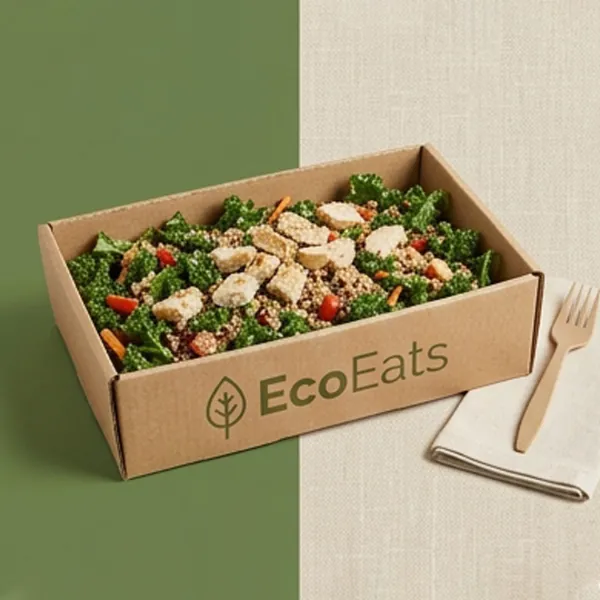
The lunch tray sits between a takeaway container and a proper meal tray.
View tray & get pricing →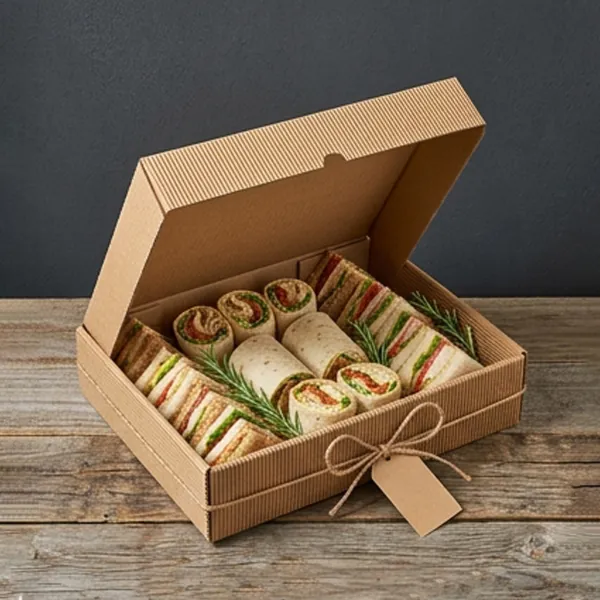
The corporate sandwich platter is one of the highest-volume formats in catering, and the specification is almost entirely determined by how you cut your…
View tray & get pricing →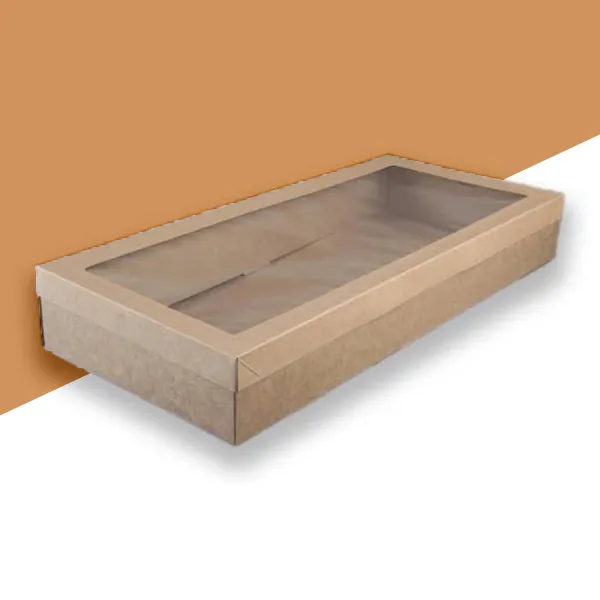
The lidded catering tray is the format that most drop-off caterers standardise on, because it is the only one that solves the whole journey.
View tray & get pricing →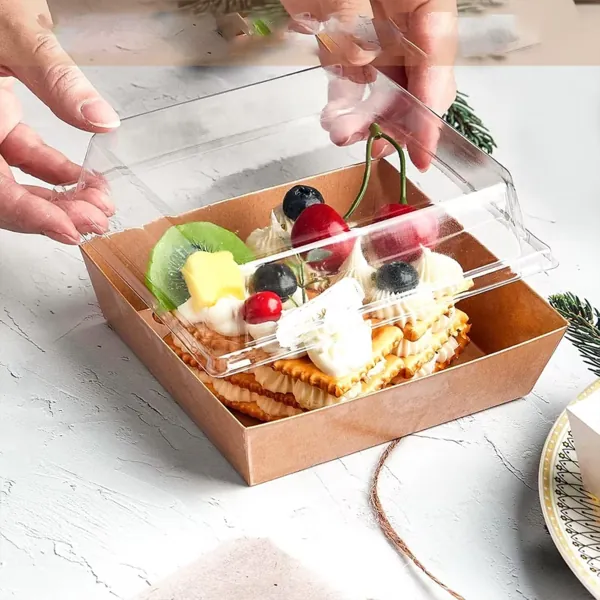
Individual grazing boxes have grown from a novelty into a substantial category, driven by corporate catering that needs single-serve portions and by ret…
View tray & get pricing →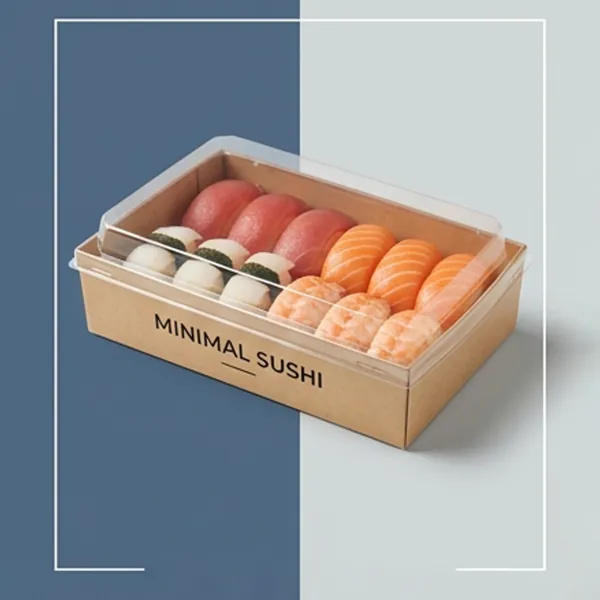
This is the retail sushi pack: a kraft base sized to a specific piece count, with a clear lid so the customer can see exactly what they are buying.
View tray & get pricing →A compartment tray with a lid, sized so a whole number stacks in your delivery containers, with a flat panel for a dietary label and print on the lid. Fifty meals is a lot of stacking and it should be designed for.
Flat-pack everything, consolidate to as few formats as your menu allows, and consider more frequent smaller deliveries or staged delivery from a single production run.
Gloss reflects office and studio lighting straight back at a camera, and corporate catering gets photographed. Matt removes the highlight and the fingerprints, and it usually costs the same.
On a flat panel designed in from the start, usually the lid. A label across a fold will not sit flat and will peel. We mark the label area on the dieline.
Yes. The cutting die is shared, so a client-specific design carries plate cost only. Caterers with a few large contract clients often run a house design plus client versions.
Tell us the access situation at quote stage — pallet or parcel, delivery window, loading dock or street. It changes how we pack and ship and is much easier to plan than to fix.
Send the specification, the quantity and the delivery address. We come back with unit price, tooling if any, freight and a real production date.