Design
How Packaging Size Changes What Customers Think They Are Getting
The same weight of food can look generous or mean depending entirely on the container. Four rules for getting it right.
Published February 27, 2026 · About 8 minutes to read

Two identical portions, one in a container it fills to the brim and one in a container it half fills, will be judged very differently by the same customer. This is not a subtle effect, and food businesses routinely lose margin to it in both directions — either giving away food to fill an oversized container, or making a fair portion look mean.
Four rules that hold up
Fill to about 85 per cent, with food standing proud
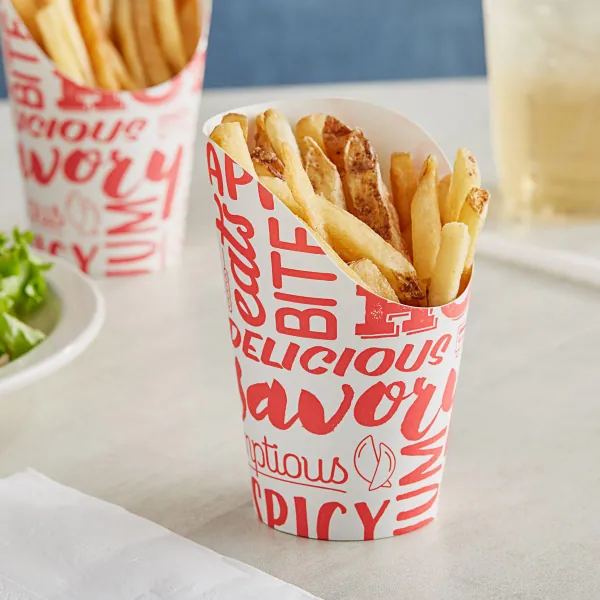
A container filled to the brim spills at the first movement, and — counterintuitively — often looks less generous than one filled slightly less with food visible above the rim. Height above the rim reads as abundance; a flat surface level with the rim reads as measured.
Wide and shallow beats narrow and deep
The same volume spread over a larger area is more visible. This is why sharing platters are shallow and why a deep container makes a portion disappear. If the food is meant to look generous, spread it.
Compartments read as more
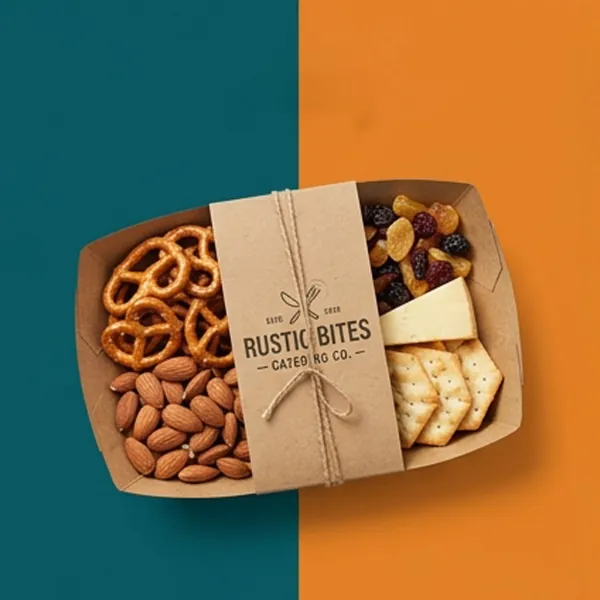
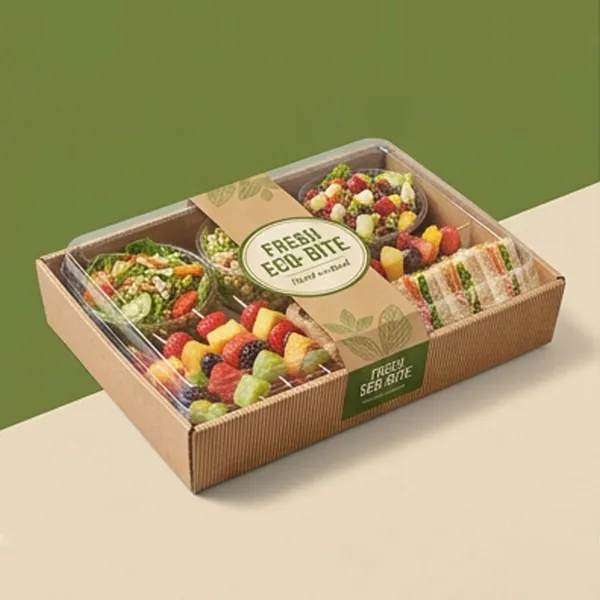
Four small sections of different things read as a more substantial offering than the same total volume loose in one space. It is why grazing boxes and snack trays are divided, and it is a genuinely large effect at retail price points.
Visible variety beats visible quantity
Three items the customer can see beats one larger item they can see. If your price point is under pressure, adding a third small element is often cheaper than increasing the main portion, and it does more for perceived value.
The size-step problem
If you sell a regular and a large, they need to look different from three metres away, on a lit counter, to somebody deciding in four seconds. A twenty per cent volume difference is invisible at that distance, and the upsell simply does not happen.
The fix is to make the step larger than feels necessary and to change the proportion as well as the volume. A taller container reads as bigger than a wider one of the same capacity, because people judge size by height more readily than by footprint.
Sizing for value rather than volume
| Goal | What to do |
|---|---|
| Make a fair portion look generous | Wider, shallower container; fill to 85 per cent |
| Make an upsell visible | Bigger size step; change the height, not just the width |
| Justify a premium price | Compartments and visible variety rather than more of one thing |
| Stop staff over-filling | A container sized so the correct portion fills it properly |
| Reduce food cost without complaints | A slightly smaller, better-proportioned container |
A test you can run this week
- Portion your standard serving into three containers of different proportions.
- Photograph all three from a customer’s eye level, not from directly above.
- Show the photographs to people who do not work for you.
- Ask which one they would pay more for. Do not tell them the portions are identical.
- The answers are usually consistent, and frequently not the container you are currently using.
The honest caveat: this is about presenting a fair portion well, not about disguising a small one. A container designed to make a mean portion look generous works exactly once per customer, and the review it generates lasts considerably longer.
Quick answers
Does a bigger container always look more generous?
No — the opposite, past a point. The same portion in an oversized container looks mean because the empty space is visible. Fill level and proportion matter more than absolute size.
How different should my regular and large be?
Enough to be obvious from three metres on a lit counter. Twenty per cent is not enough. Change the height as well as the width, because people judge size by height more readily than footprint.
Is a divided container really worth the extra cost?
At retail price points, frequently yes. Visible variety across several compartments supports a higher price than the same total volume loose in one space, and the packaging difference is a few cents.