Buying
Minimum Order Quantities Explained
MOQs are not arbitrary, but they are more negotiable than most buyers assume. Here is what drives them and how to work with them.
Published March 19, 2026 · About 8 minutes to read
Minimum order quantities are the single most common obstacle between a small food business and packaging that fits its product. They also generate more frustration than almost anything else in the buying process, largely because suppliers rarely explain where the number comes from.
What actually sets a minimum
A minimum is not a policy decision. It falls out of four physical constraints:
- Make-ready. Setting a press or a die-cutter up takes the same time whether you run two thousand or two hundred thousand, and that time has to be paid for.
- Material. Board is bought in sheets and reels. A run below a certain size wastes more material in setup than it produces in product.
- Handling. Packing, palletising and paperwork are largely fixed per order rather than per unit.
- Tooling. A die or a mould is a one-off, and amortising it over a very small run makes the unit price absurd.
Notice that none of these are about the supplier preferring big customers. They are about the point below which a run stops making physical sense.
Why minimums differ so much between formats
| Format | Relative minimum | Driven by |
|---|---|---|
| Plain folding board tray | Lowest | Simple die, no plates, fast setup |
| One-colour printed folding board | Low | One plate, short make-ready |
| Four-colour printed board | Moderate | Four plates and a longer make-ready |
| Corrugated with hand holes | Moderate | More complex die, more finishing |
| Moulded fibre | High | Formed metal tool and a continuous forming process |
| Rigid with foiling | High | Multiple assembly and decoration steps |
Five legitimate ways around a minimum
Simplify the specification
Drop from four colours to one, or from a complex die to a simpler one. This lowers the minimum directly because it shortens make-ready.
Order plain and brand separately
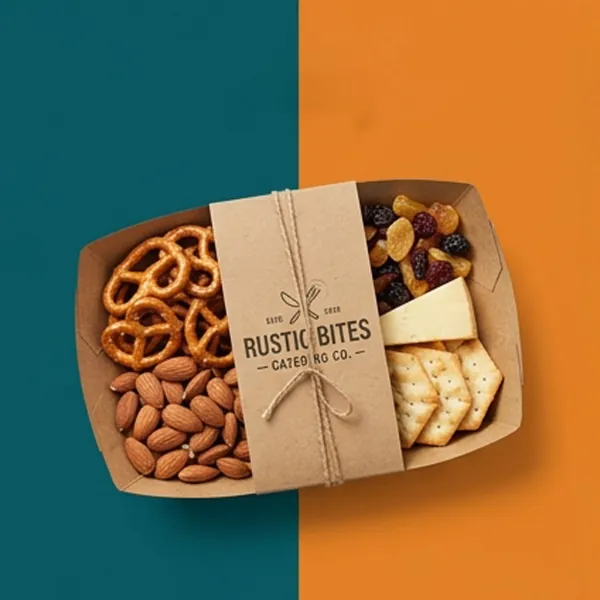
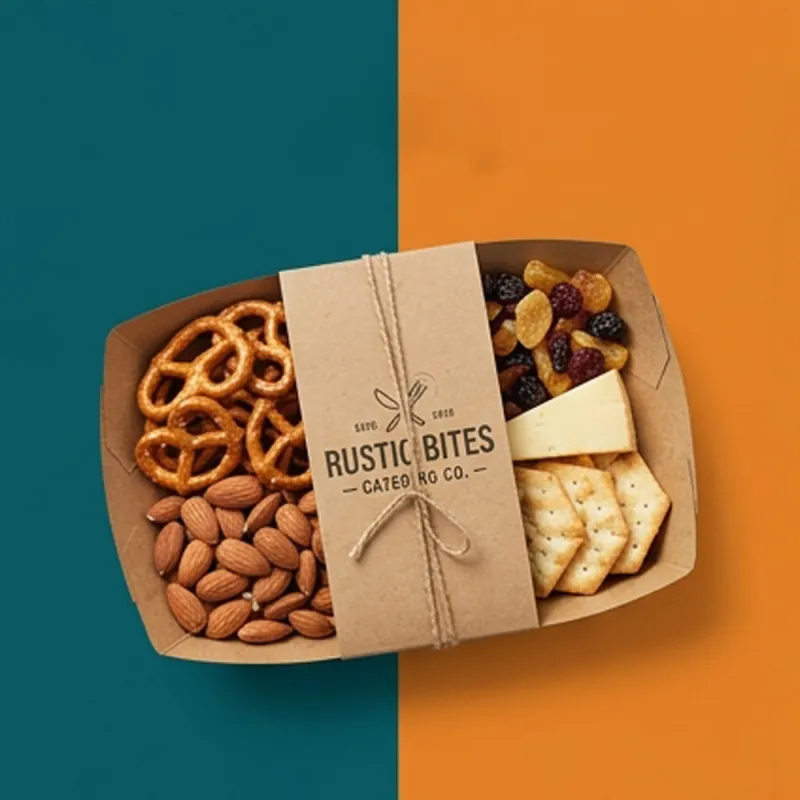
A plain tray with a printed band or an applied label. Bands and labels have far lower minimums than trays, and they are easier to change.
Combine formats on one order
Two or three sizes on the same board and the same setup often clears a minimum that none of them would individually.
Use one tray across several menu items
Concentrating volume on a single format is the most reliable way to reach a sensible run length, and it reduces the number of lines you stock.
Ask for a staged delivery
Produce the full run, take delivery in instalments. You get the volume price without needing storage for all of it at once. Not every supplier offers this; it is always worth asking.
What not to do
Do not order a quantity you will not use within a reasonable period simply to reach a price break. Board absorbs moisture, designs change, phone numbers change, and packaging sitting in a store room for three years is money spent on nothing. A slightly higher unit price on a quantity you will actually use is the better outcome.
And do not assume the first minimum you are quoted is fixed. Ask what would need to change to lower it. A good supplier will tell you — usually it is the colour count or the finishing rather than the quantity itself.
Ask this question: "What is the lowest quantity that makes commercial sense for this specification, and what would I need to change to bring it lower?" It is a far more productive question than "can you do fewer", and it usually produces a specific, actionable answer.
A sector where this bites hardest
Small producers running seasonal ranges feel minimums more than anyone. The bakery packaging guide explains why a shared die makes a seasonal range far cheaper than it first appears.
Quick answers
Are minimum order quantities negotiable?
The number itself usually is not, but the specification that drives it almost always is. Simplify the print, the die or the finishing and the minimum falls with it. Ask what would need to change rather than asking for an exception.
Why is the minimum higher for moulded fibre?
Because the tooling is a formed metal mould rather than a set of blades, and the forming process runs continuously at scale. Both push the economic floor up considerably compared with a folding board die.
Can I split a run across two designs?
Often yes, if both designs use the same die and the same board. You pay plates for each design but share the setup and the material. It is one of the cheapest ways to get variety out of a single run.